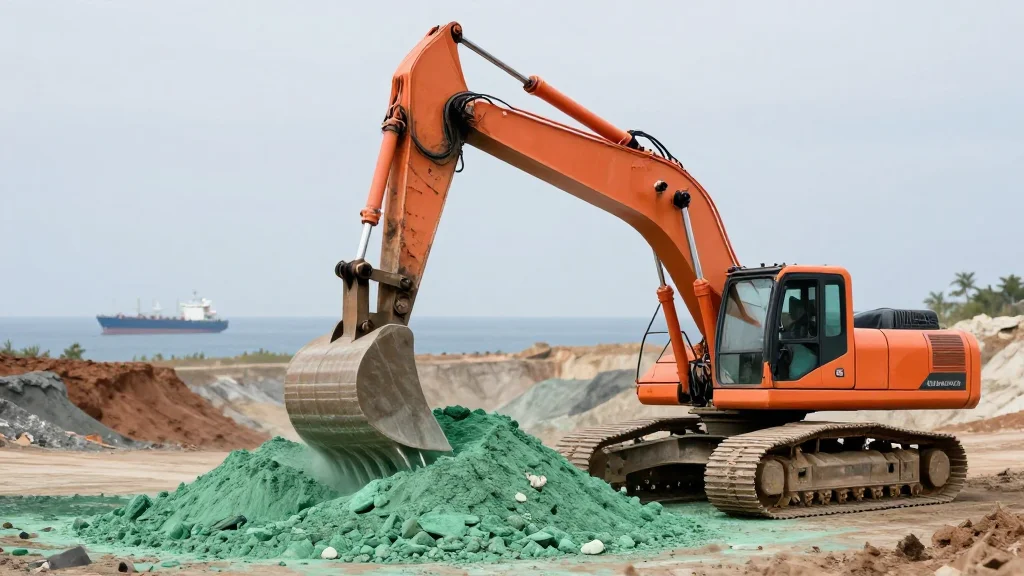
Trump Leaves Beijing with No Rare Earth Deal Confirmed
Why It Matters
Without a deal, U.S. manufacturers face continued supply‑chain vulnerability, pressuring policymakers to diversify away from China’s near‑monopoly on rare‑earths.
Key Takeaways
- •China controls ~90% of rare‑earth refining capacity.
- •US rare‑earth imports rose, yet remain 50% below pre‑tariff levels.
- •No formal rare‑earth agreement emerged from Trump‑Xi summit.
- •Export licensing delays keep critical mineral shipments constrained.
- •US cannot out‑mine or out‑process China in near term.
Pulse Analysis
The rare‑earth market has become a flashpoint in the broader U.S.–China rivalry, as Beijing commands the lion's share of refining and processing capabilities. With over 60% of mined supply and 90% of downstream capacity, China can influence global prices and availability of elements like yttrium, dysprosium and terbium—materials that power electric‑vehicle motors, advanced semiconductors and military systems. The 2025 export curbs, imposed as retaliation for U.S. tariffs, demonstrated how quickly supply disruptions can halt production lines across the West, underscoring the strategic leverage China holds over critical mineral flows.
During his May 2026 visit, President Trump emphasized a "very successful" trip and hinted at "fantastic trade deals," yet no formal rare‑earth pact was announced. U.S. Trade Representative Jamieson Greer noted modest gains in import volumes, but customs data reveal shipments are still roughly half of what they were before the restrictions. The lingering licensing delays and the absence of a renewed truce keep the market in a state of uncertainty, prompting American firms to seek alternative sources and prompting policymakers to consider incentives for domestic mining and processing.
The lack of a breakthrough agreement signals that critical minerals have eclipsed traditional tariffs as the primary lever in U.S.–China negotiations. Analysts warn that the United States cannot out‑mine, out‑process, or outspend China in the short term, making supply‑chain resilience a priority for both industry and government. Options on the table include expanding rare‑earth projects in allied nations, investing in recycling technologies, and crafting a multilateral export‑licensing framework. As the geopolitical stakes rise, firms that secure diversified sources will gain a competitive edge, while continued dependence on Chinese rare‑earths could expose them to future policy shocks.
Trump leaves Beijing with no rare earth deal confirmed
Comments
Want to join the conversation?
Loading comments...