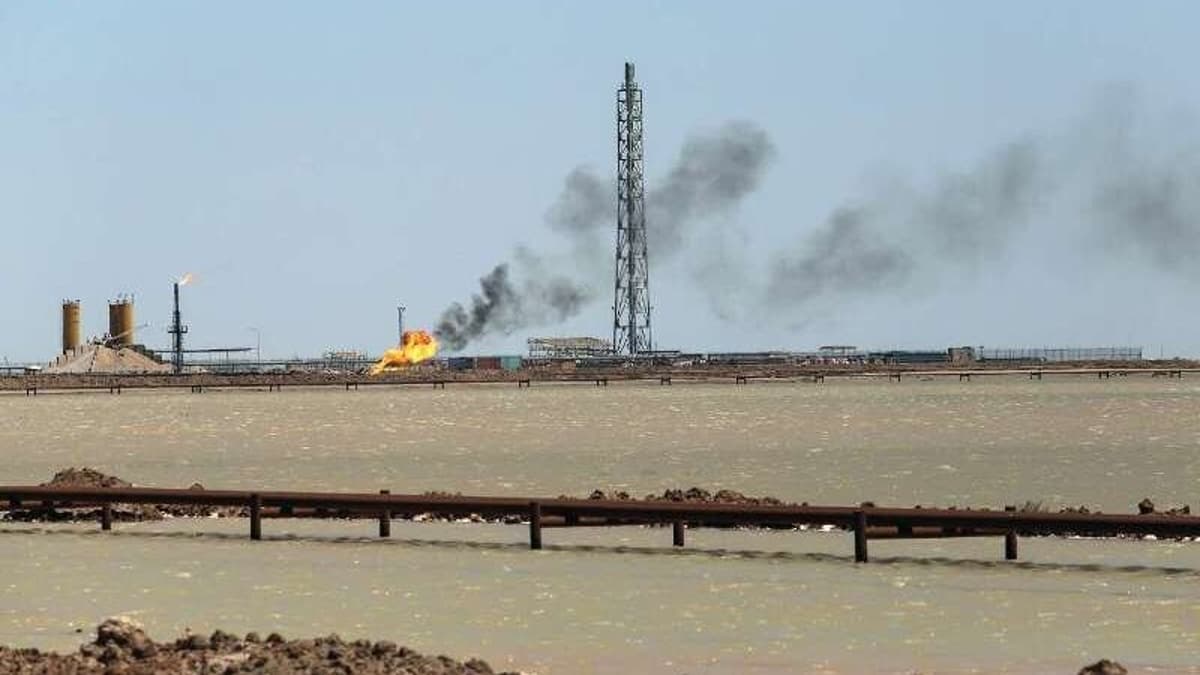
Trump’s Iran Signals Send Oil Markets Into Chaos
Companies Mentioned
Why It Matters
Oil price turbulence threatens supply‑chain stability and profit margins for refiners, while the emerging climate‑driven LNG demand and corporate restructurings reshape capital flows in the sector.
Key Takeaways
- •Brent fell 6% on US‑Iran deal speculation, rebounded to $100 after strikes
- •Super Niño could boost LNG demand, pushing Asian JKM above $18/MMBtu
- •Saudi Aramco exits $7 billion Malaysia JV, transferring 50% stake to Petronas
- •Egypt targets clearing $440 million oil‑gas arrears by June 10 to attract investors
- •BP removes chairman Albert Manifold, names Ian Tyler interim amid governance review
Pulse Analysis
The latest flare‑up between Washington and Tehran has reminded markets how quickly geopolitical headlines can rewrite oil price fundamentals. When reports surfaced that a U.S.–Iran framework might be on the table, Brent futures slumped 6%, only to surge back to the $100‑a‑barrel threshold after the United States launched limited strikes on southern Iran. Traders interpreted the back‑and‑forth as a signal that any diplomatic progress remains fragile, prompting refiners to hedge aggressively and shippers to reassess cargo routes through the Strait of Hormuz.
Compounding the geopolitical shock is an unprecedented climate event: a potential Super Niño that could push sea‑surface temperatures more than 2 °C above normal. The resulting heatwave is already inflating power demand in China and Japan, driving Asian LNG spot prices (JKM) above $18 per MMBtu, while European delivered LNG hovers near $16.4. The mismatch between regional price signals and the lack of viable arbitrage for U.S. exporters suggests a longer‑term shift toward Asian contracts, pressuring European buyers to secure higher‑priced supply or accelerate renewable transitions.
Corporate strategists are also reacting to the heightened risk environment. Saudi Aramco’s decision to unwind its $7 billion, 50% stake in Malaysia’s Pengerang Refining & Petrochemical complex signals a retreat from capital‑intensive overseas ventures amid market uncertainty. In parallel, BP’s board overhaul—removing Albert Manifold and appointing Ian Tyler as interim chairman—highlights governance scrutiny in a volatile sector. Egypt’s pledge to settle $440 million of oil‑gas arrears by early June aims to restore investor confidence, while the broader industry watches for further realignments in supply chains, storage capacity, and financing as the twin forces of geopolitics and climate reshape the energy landscape.
Trump’s Iran Signals Send Oil Markets Into Chaos
Comments
Want to join the conversation?
Loading comments...