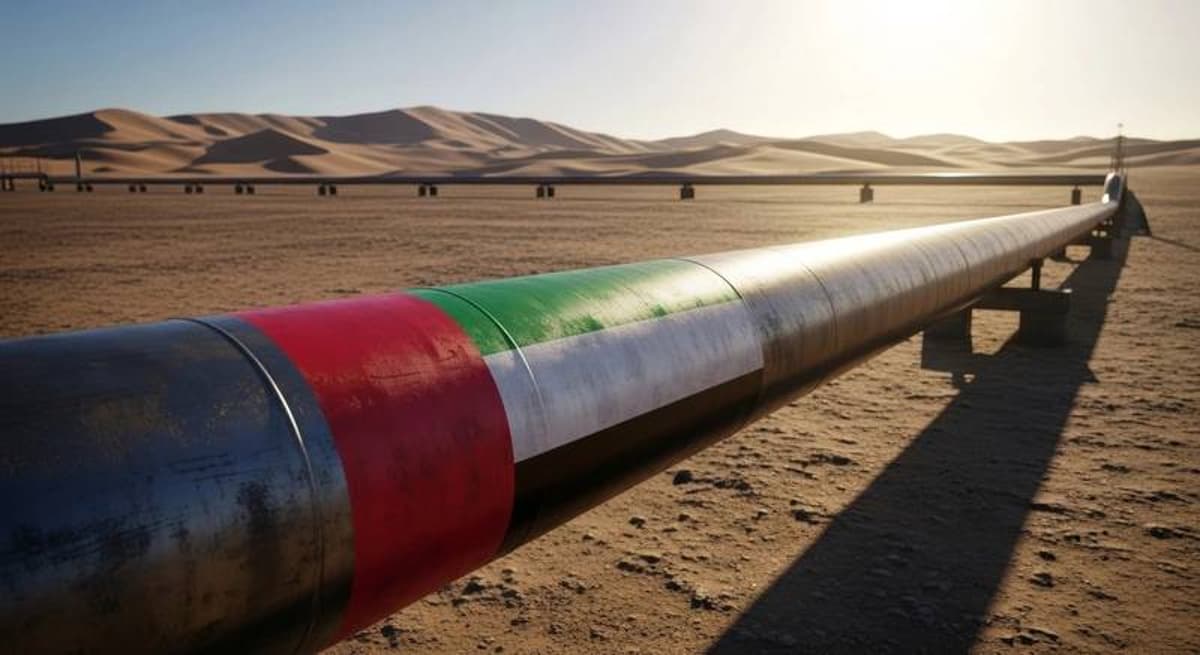
UAE Speeds Up Pipeline Project to Help Bypass Hormuz
Companies Mentioned
Why It Matters
By securing an alternative export route, the UAE reduces its exposure to geopolitical disruptions in the Hormuz chokepoint, stabilizing global oil supply and supporting price resilience. The accelerated capacity also positions the UAE to capitalize on its recent OPEC exit and potential output expansion.
Key Takeaways
- •UAE fast‑tracks West‑East pipeline to double Fujairah capacity by 2027
- •New pipeline aims to bypass Strait of Hormuz amid Iranian expansion
- •ADNOC targets 5 million bpd capacity, moving goal three years forward
- •Fujairah becomes critical export hub as regional maritime threats rise
- •UAE exit OPEC frees it from quotas, enabling rapid output scaling
Pulse Analysis
The Strait of Hormuz has long been a strategic bottleneck for global oil flows, and recent Iranian actions—including a 300‑mile maritime claim and drone attacks on tankers—have heightened the risk of supply interruptions. When the waterway is threatened, oil markets react sharply, with price spikes that can ripple through the global economy, affecting everything from fuel costs to inflation rates. Analysts therefore watch closely for any developments that could mitigate this chokepoint risk.
In response, the UAE is accelerating its West‑East pipeline, a project that will effectively double the capacity of the Fujairah export corridor to around 3.6 million barrels per day. The new line complements the existing Habshan‑Fujairah pipeline, which already handles 1.8 million bpd, and mirrors Saudi Arabia’s East‑West pipeline strategy that has become a "critical lifeline" for the kingdom. By fast‑tracking construction and targeting a 2027 operational date, ADNOC aims to meet a revised 5 million‑bpd output goal, a target advanced three years ahead of schedule.
The strategic shift carries significant implications for investors and energy traders. A reliable, Hormuz‑independent export route enhances the UAE’s credibility as a stable supplier, potentially attracting long‑term contracts and supporting higher price premiums. Moreover, the UAE’s recent departure from OPEC frees it from production quotas, allowing rapid scaling to meet demand surges. As regional tensions persist, the pipeline’s completion could serve as a bellwether for broader Middle‑East energy security and influence global supply dynamics.
UAE Speeds Up Pipeline Project to Help Bypass Hormuz
Comments
Want to join the conversation?
Loading comments...