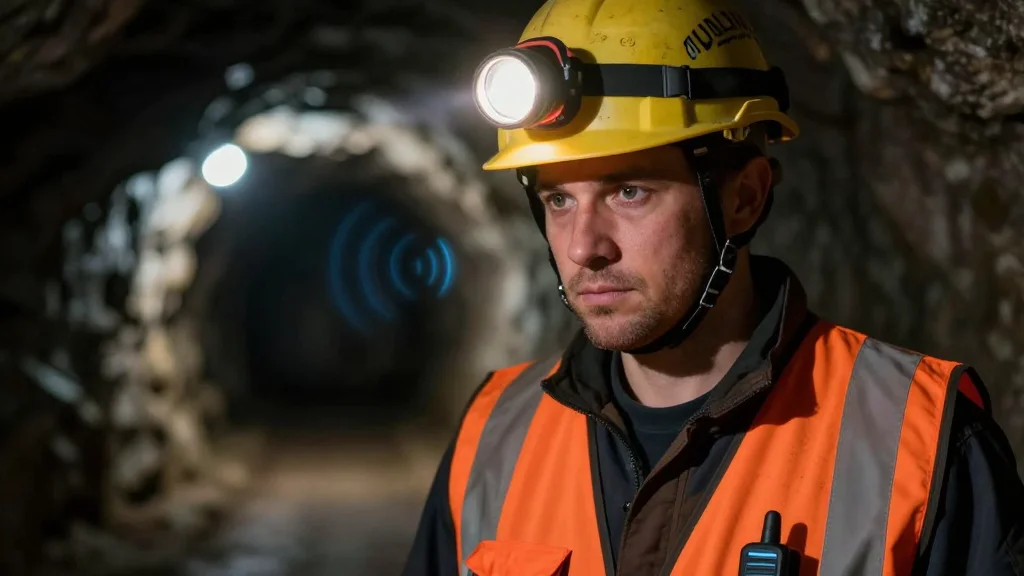
Underground Mining Safety: Why Accidents Persist and What Technologies Help
Why It Matters
The persistence of accidents despite overall metric improvements highlights a structural safety gap that technology must bridge to protect workers and stabilize industry risk profiles.
Key Takeaways
- •Underground accidents cluster at intersections, blind corners
- •Fatalities fell to 3.1 per company in 2024
- •Line‑of‑sight sensors miss hazards in tunnels
- •V2X communication extends awareness beyond visual range
- •High costs hinder adoption for smaller mines
Pulse Analysis
1 in 2024, and a slight drop in injury frequency rates. Yet the improvement is uneven; large operators such as Coal India still reported dozens of fatalities, while a handful of firms logged zero deaths. Analysts attribute part of the progress to portfolio reshuffling—companies shedding high‑risk assets—rather than systematic hazard reduction. Consequently, the sector’s safety trajectory remains fragile, demanding solutions that work across diverse mine sizes and geographies.
The core technical obstacle is the reliance on line‑of‑sight sensors—cameras, radar, LiDAR—that perform well in open pits but lose effectiveness in confined tunnels. Dust, moisture and abrupt bends create blind zones that truncate detection ranges, often leaving less distance than a vehicle’s stopping length. Moreover, underground environments lack GNSS signals, stripping operators of a continuous spatial reference. Current workarounds such as RFID tags, Wi‑Fi triangulation or inertial navigation provide only patchy coverage, leading to fragmented situational awareness and increasing the likelihood that a collision will be recognized too late.
Emerging vehicle‑to‑everything (V2X) networks and wearable tags are reshaping underground safety by shifting from visual detection to real‑time communication. At Rio Tinto’s Oyu Tolgoi mine, each truck and worker carries a transceiver that broadcasts position and status, allowing hazards to be identified around corners and through dust. While pilots report faster reaction times, widespread rollout faces steep capital costs, the need for robust underground radio infrastructure, and labor‑union concerns about monitoring. If these barriers can be managed, the combined digital layer could narrow the human‑reaction gap and move the industry toward a more consistent safety baseline.
Underground mining safety: why accidents persist and what technologies help
Comments
Want to join the conversation?
Loading comments...