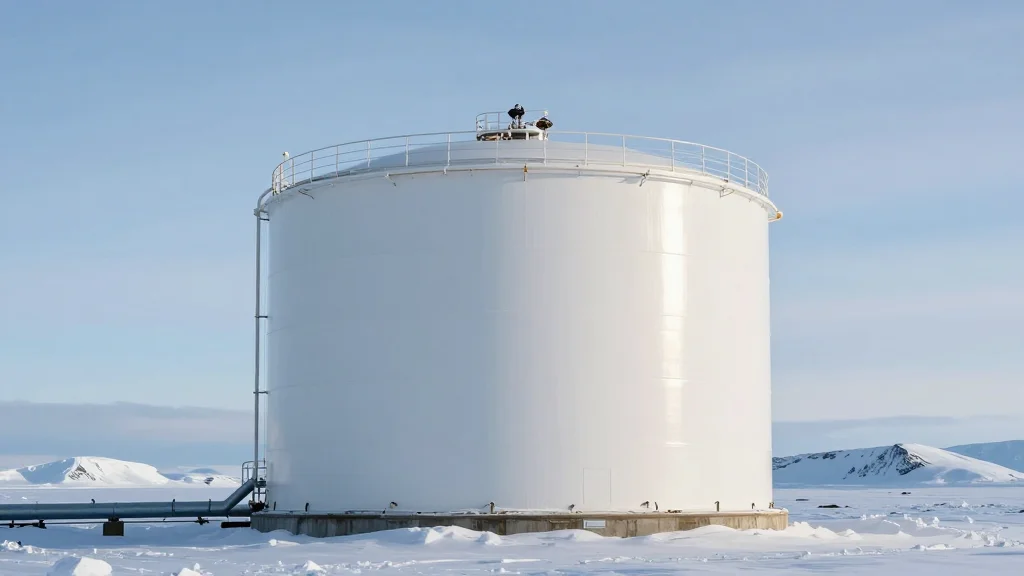
Up to $9B Nearshore Project on Arctic’s Horizon with Polar LNG Unleashing Alaska’s Gas
Why It Matters
The development could unlock a vast untapped U.S. gas resource, diversifying global LNG supply and reinforcing America’s geopolitical leverage in the Pacific while delivering significant economic benefits to Alaska.
Key Takeaways
- •$8‑9 billion investment targets 7 mtpa near‑shore LNG capacity
- •Modular gravity‑based plant cuts on‑shore construction time and cost
- •3,600‑mile route to Japan halves Gulf Coast shipping distance
- •Project could generate up to 21 mtpa, boosting US export potential
Pulse Analysis
The Arctic is emerging as a critical frontier for energy diversification, especially after recent Middle‑East disruptions that rattled global supply chains. Polar LNG’s near‑shore approach leverages existing Prudhoe Bay pipelines, allowing the United States to bring a historically stranded gas resource to market without the extensive on‑shore footprint typical of conventional LNG projects. By employing modular, gravity‑based structures, the company can accelerate construction, reduce capital exposure, and mitigate environmental concerns—key factors that investors and regulators scrutinize in high‑cost, remote developments.
From a logistics perspective, the Alaskan location offers a decisive competitive edge. A 3,600‑mile sea lane to Japan is roughly one‑third the distance from the Gulf Coast, translating into lower fuel consumption, reduced emissions, and faster delivery times for buyers in the Pacific basin. This proximity also aligns with the growing demand for reliable, low‑carbon LNG in Asia, where nations are seeking to replace coal and secure stable energy imports amid geopolitical tensions. The near‑shore design further simplifies cargo handling, as specialized ice‑class carriers can load directly from the floating facility year‑round, ensuring uninterrupted supply even in harsh winter conditions.
Strategically, the project bolsters U.S. energy security and geopolitical influence. By establishing a permanent Arctic energy presence, the United States counters expanding Russian and Chinese activities in the region while creating high‑paying jobs and generating state and borough revenues for Alaska. The anticipated 21 mtpa expansion would position the U.S. as a major LNG exporter, diversifying the global market and providing allies with a reliable, allied source of fuel. In sum, Polar LNG’s initiative not only unlocks a lucrative domestic resource but also reshapes the geopolitical calculus of Arctic energy development.
Up to $9B nearshore project on Arctic’s horizon with Polar LNG unleashing Alaska’s gas
Comments
Want to join the conversation?
Loading comments...