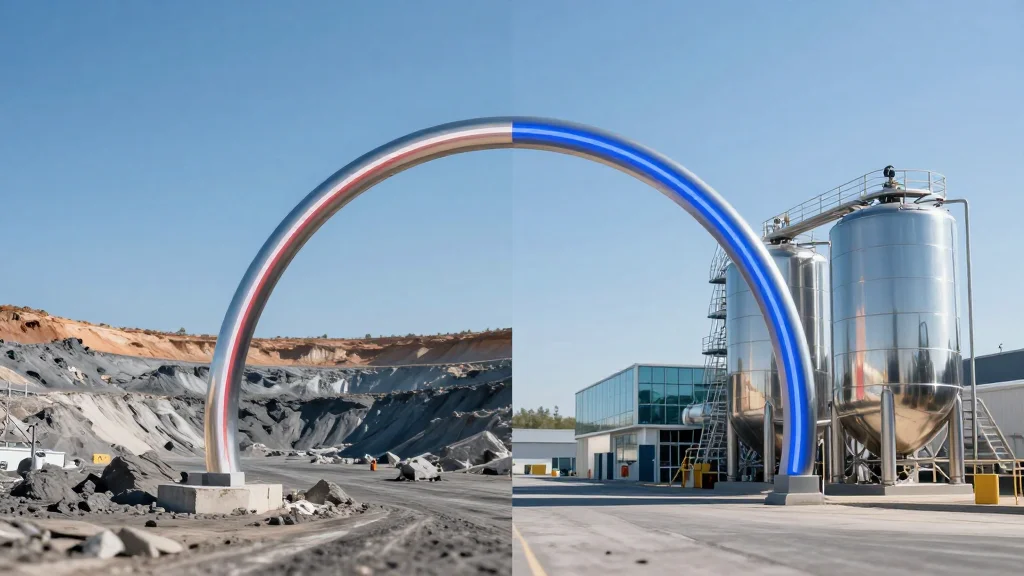
US and EU Sign Critical Minerals Pact to Cut China Dependence

Why It Matters
The US‑EU critical minerals pact marks a decisive shift in how Western economies manage supply‑chain risk for technologies that underpin national security and climate goals. By aligning policy, financing and standards, the agreement could unlock billions of dollars of investment in new mining and processing capacity outside China, reducing price volatility and strategic exposure. For the mining sector, the pact creates a clearer regulatory environment and a larger, coordinated customer base, potentially accelerating the transition to greener energy systems. Beyond economics, the deal sends a geopolitical message that democratic allies are willing to coordinate on resource security, challenging China’s long‑standing dominance. If successful, the framework could expand to include other allied nations, forming a de‑facto bloc that dictates the rules of the global critical‑minerals market.
Key Takeaways
- •U.S. Secretary of State Marco Rubio and EU Trade Commissioner Maros Sefcovic signed the MOU on April 27, 2026.
- •The pact covers the full supply chain—from exploration to recycling—for rare earths, lithium, cobalt and other critical minerals.
- •Both parties will coordinate subsidies, stockpiles and research investments to reduce reliance on China.
- •European mining indices rose ~2% and U.S. mineral ETFs gained ~1.8% after the announcement.
- •A joint steering committee will be formed to set concrete subsidy levels and stockpile targets by end‑2026.
Pulse Analysis
The US‑EU minerals agreement is more than a diplomatic footnote; it is a market catalyst that could reshape the global supply chain for high‑tech metals. Historically, Western reliance on Chinese rare‑earth processing has given Beijing leverage in trade negotiations, a fact that became starkly apparent during the 2020‑2021 export curbs. By creating a parallel supply network, the pact reduces that leverage and introduces competitive pressure that could drive down processing costs outside China.
From an investment perspective, the coordinated approach lowers the political risk premium that has traditionally deterred capital in frontier mining projects. When governments align on subsidies and guarantee demand, project finance becomes more predictable, encouraging private equity and sovereign wealth funds to allocate capital to regions like the Democratic Republic of Congo, Australia’s Pilbara and Canada’s Arctic. This influx of capital could also accelerate the development of next‑generation processing technologies, such as solvent‑extraction methods that lessen environmental impact.
Looking ahead, the real test will be the implementation of concrete mechanisms—subsidy formulas, stockpile sizes, and research budgets. If the steering committee delivers clear, actionable policies, the pact could evolve into a binding multilateral framework that other allies, such as Japan and South Korea, may join. Conversely, vague commitments risk becoming a symbolic gesture that leaves the status quo unchanged. The mining industry, investors and policymakers will be watching the next six months closely to gauge whether the US‑EU partnership can translate strategic intent into tangible supply‑chain resilience.
US and EU Sign Critical Minerals Pact to Cut China Dependence
Comments
Want to join the conversation?
Loading comments...