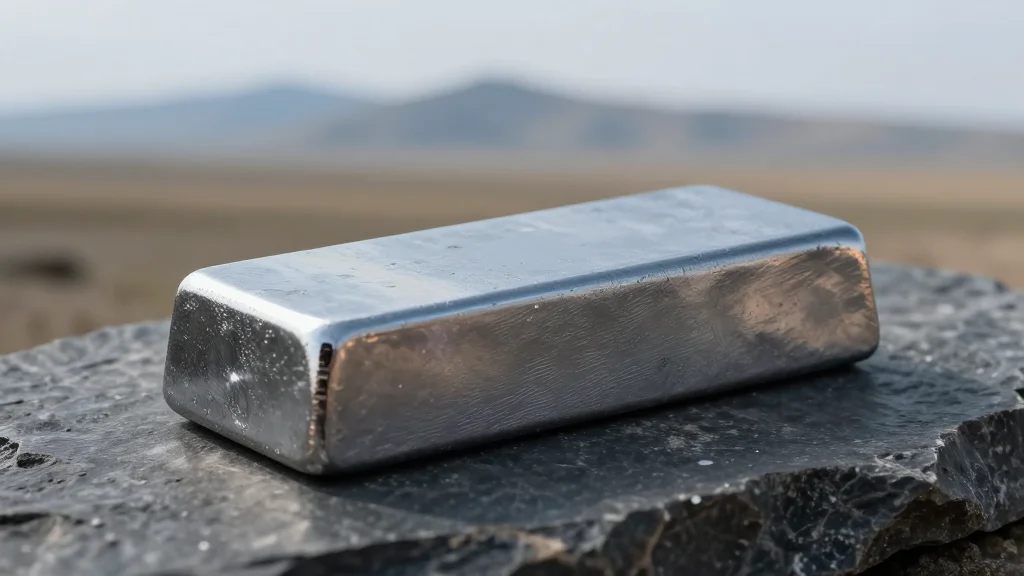
U.S. Backs $1.1 B Kazakhstan Tungsten Project to Secure Critical Metal Supply

Why It Matters
Securing a stable supply of tungsten is essential for U.S. defense contractors and manufacturers of high‑performance tools, sectors that are vulnerable to supply disruptions. By investing in Kazakhstan, the United States not only diversifies its source base but also strengthens diplomatic ties with a geopolitically pivotal region, potentially offsetting Chinese dominance in the market. The initiative also signals a broader policy shift toward leveraging public‑private partnerships to accelerate critical mineral development abroad. If successful, the model could be replicated for other metals such as nickel, cobalt and rare earths, reshaping the global supply landscape and reinforcing U.S. strategic autonomy.
Key Takeaways
- •U.S. backs a $1.1 billion tungsten mining project in Kazakhstan.
- •Cove Kaz Capital holds 70% of the venture; Tau‑Ken Samruk retains 30%.
- •Deposits contain an estimated 1.4 million tons of tungsten trioxide.
- •Feasibility study slated for 18 months, with production plans pending.
- •Merger with Skyline Builders aims to list the combined entity on Nasdaq.
Pulse Analysis
The Kazakhstan tungsten project illustrates how Washington is translating policy rhetoric into concrete investment. By anchoring a $1.1 billion effort in Central Asia, the United States is creating a counterweight to China’s near‑monopoly on tungsten, a metal that underpins everything from armor‑piercing ammunition to aerospace components. The 70/30 ownership split gives the private partner operational control while preserving a sovereign stake for Kazakhstan, a balance that could prove attractive to other resource‑rich nations wary of ceding too much control.
Politically, the deal walks a tightrope. The involvement of high‑profile Trump family investors adds a layer of domestic controversy that could complicate congressional support for future initiatives. Yet the strategic payoff—reducing supply risk for critical defense and industrial sectors—may outweigh the optics, especially as the Department of Energy and the Department of Defense continue to prioritize mineral security in their budgets.
Looking ahead, the project's success hinges on two variables: the outcome of the feasibility study and the ability to navigate Kazakhstan’s regulatory environment. A positive study could trigger a cascade of similar partnerships across the region, accelerating the United States’ diversification agenda. Conversely, delays or political pushback could stall momentum, leaving the U.S. exposed to supply shocks. Investors and policymakers will therefore monitor the feasibility timeline closely, as it will set the tempo for the next wave of critical mineral projects.
U.S. Backs $1.1 B Kazakhstan Tungsten Project to Secure Critical Metal Supply
Comments
Want to join the conversation?
Loading comments...