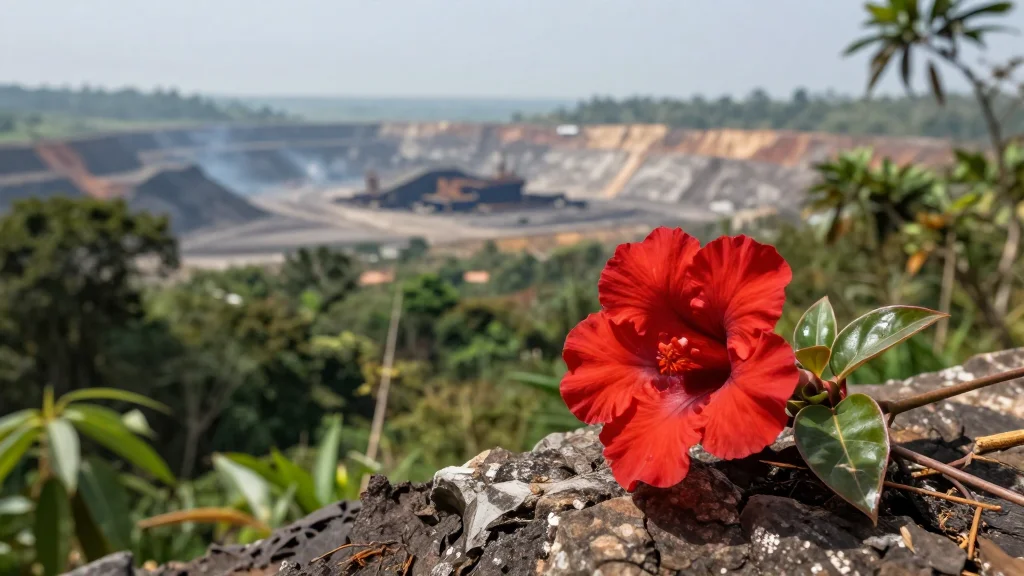
Vale's New Mine Could Seal Fate of Brazil's Rare Red Flower

Companies Mentioned
Why It Matters
The fate of Ipomoea cavalcantei illustrates the broader clash between mineral wealth and biodiversity in the Amazon. As global demand for iron ore surges, mining concessions increasingly encroach on ecosystems that host species found nowhere else. The loss of the flor‑de‑Carajás would not only erase a unique genetic lineage but also undermine ecosystem services such as pollination that support both wildlife and local communities. Moreover, the case spotlights the limits of corporate mitigation when a species’ survival hinges on a singular, irreplaceable habitat. If the fifth canga patch is mined without effective safeguards, Brazil could face heightened international scrutiny over its environmental commitments, potentially affecting trade relations and investment in its mining sector. Conversely, a successful restoration model could set a precedent for reconciling extractive activities with conservation in other biodiverse regions.
Key Takeaways
- •Vale received a license in Sep 2025 to mine the fifth canga patch in Carajás, with operations planned for H2 2026.
- •Ipomoea cavalcantei exists only in five canga patches; three will be mining sites after Vale's expansion.
- •Approximately 25% of canga habitats have already been destroyed by mining, per biologist Rita Portela.
- •Two of the five patches are protected within Carajás National Forest; the other three are owned by Vale.
- •Vale funds conservation and restoration research, but experts say habitat loss is largely irreversible.
Pulse Analysis
Vale’s decision to open the fifth canga patch underscores a strategic calculation: the Carajás belt holds some of the world’s highest‑grade iron ore, delivering a premium that can offset the higher operational costs of mining in remote, environmentally sensitive terrain. Historically, Brazil’s mining policy has prioritized export revenue, often at the expense of ecological safeguards. The current episode reflects a pattern where regulatory approvals outpace scientific assessments, leaving endemic species vulnerable.
From a market perspective, Vale’s expansion could bolster its iron‑ore output by an estimated 5‑7 million tonnes annually, reinforcing its position amid tightening global steel demand. However, the reputational risk associated with the loss of a flagship species may provoke backlash from NGOs, indigenous groups, and environmentally conscious investors. In recent years, ESG (environmental, social, governance) criteria have begun to influence capital allocation, and a high‑profile extinction event could trigger divestment pressures.
Looking ahead, the effectiveness of Vale’s funded research will be a litmus test for corporate‑led biodiversity mitigation. If restoration efforts can demonstrably preserve pollinator networks and prevent further species loss, the company may claim a model for responsible mining. Failure, however, would reinforce calls for stricter environmental licensing and could accelerate policy reforms that limit future expansions into fragile habitats. The flor‑de‑Carajás thus serves as both a biological and a strategic barometer for the mining industry’s ability to coexist with the Amazon’s irreplaceable ecosystems.
Vale's New Mine Could Seal Fate of Brazil's Rare Red Flower
Comments
Want to join the conversation?
Loading comments...