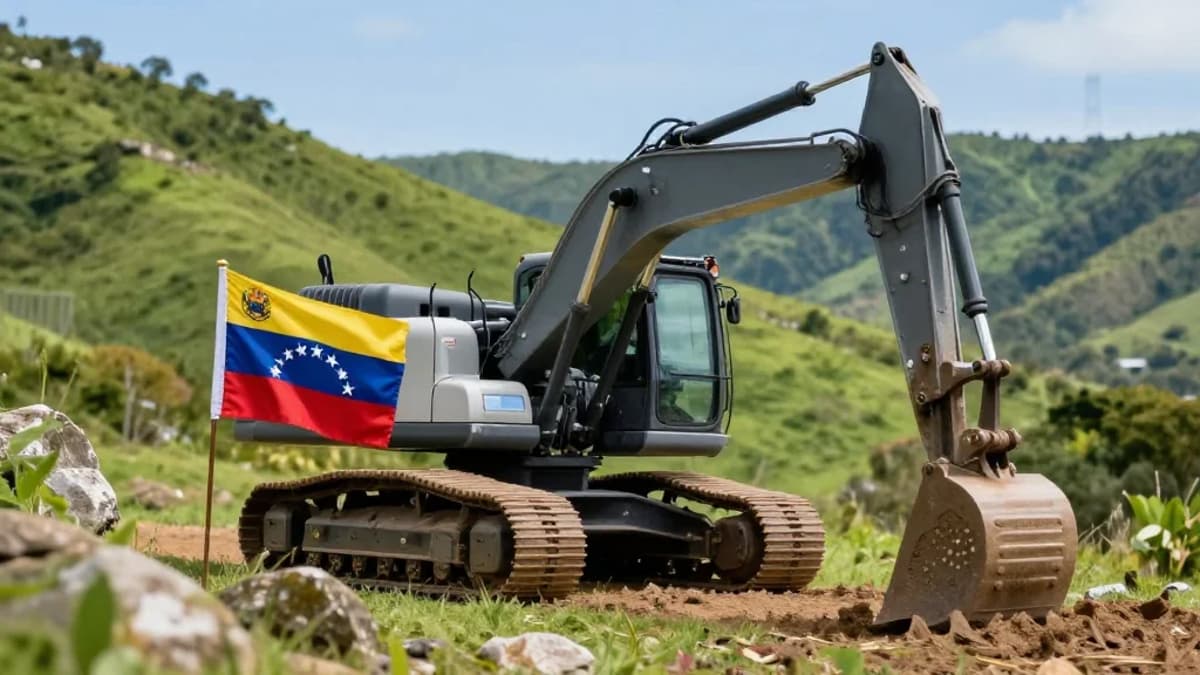
Venezuela Gains Initial Approval for New Mining Bill
•March 10, 2026
0
Why It Matters
It could unlock billions in capital for critical minerals as global demand surges. The move positions Venezuela as a potential supplier in the electric‑vehicle supply chain.
Key Takeaways
- •Preliminary approval granted; final vote still required.
- •Bill replaces three‑decade‑old mining code.
- •Introduces investor guarantees, mediation, arbitration mechanisms.
- •Targets bauxite, gold, strategic mineral projects.
- •Aims to attract foreign capital amid rising critical‑minerals demand.
Pulse Analysis
Venezuela’s mining sector has long been hampered by an outdated legal framework that deters modern investment. As the International Energy Agency projects a four‑fold increase in critical‑minerals demand by 2040, Caracas sees an opportunity to monetize its abundant bauxite, gold and other resources. The preliminary approval of a new mining bill signals a strategic pivot, aligning the country with global supply‑chain trends driven by electric‑vehicle production and renewable‑energy projects.
The draft legislation introduces several investor‑friendly provisions that were absent from the previous code. It guarantees clearer property rights, establishes independent mediation, and provides arbitration after domestic courts are exhausted, reducing political risk for foreign firms. Lawmakers cite the recent liberalisation of Venezuela’s oil sector—where U.S. companies gained limited access after the 2023 political transition—as a template for success. The visit of U.S. Interior Secretary Doug Burgum underscored bipartisan interest in a "win‑win" framework that could channel U.S. capital into the country’s mineral projects.
If enacted, the reform could reshape Venezuela’s economic outlook, but challenges remain. Illegal mining by Colombian guerrilla groups and entrenched corruption threaten both the credibility of the new regime and the security of prospective investments. Nonetheless, the promise of legal certainty and the global scramble for battery‑grade minerals may attract multinational miners seeking diversification. Successful implementation would not only boost state revenues but also embed Venezuela more firmly in the emerging clean‑energy supply chain, offering investors a high‑growth, albeit risky, frontier market.
Venezuela gains initial approval for new mining bill
0
Comments
Want to join the conversation?
Loading comments...