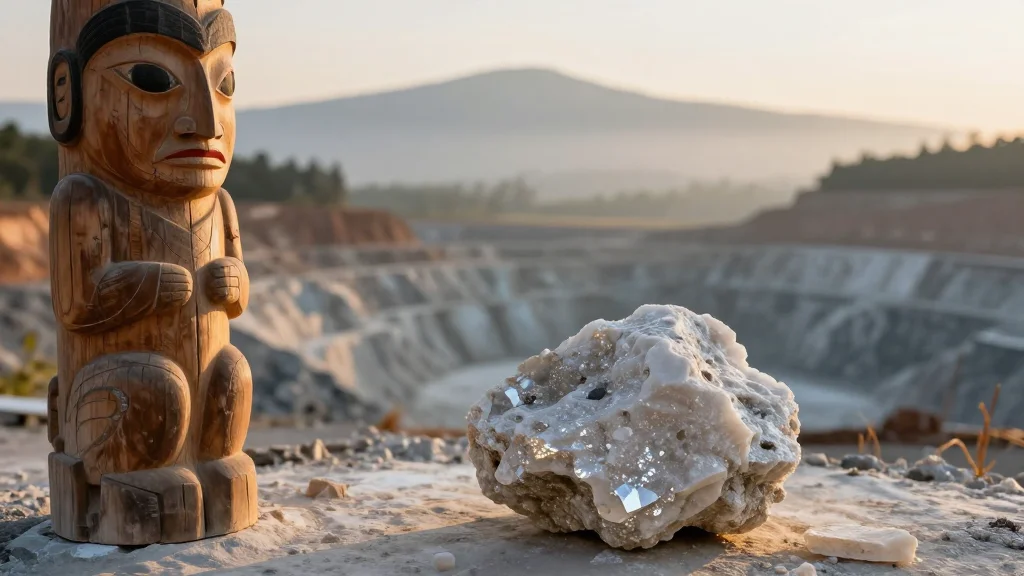
What the US Could Learn About Mining on Indigenous Peoples’ Ancestral Lands
Companies Mentioned
Why It Matters
Stronger tribal consultation can mitigate legal challenges, accelerate permitting and align mining projects with emerging ESG expectations, reshaping the U.S. resource sector. It also offers a pathway for Indigenous communities to secure economic benefits while protecting cultural heritage.
Key Takeaways
- •US 19th‑century mining law omits mandatory tribal consultation
- •NZ, Norway, Canada embed Indigenous consent in resource legislation
- •Canada’s Integra Resources signed enforceable partnership with Shoshone‑Paiute
- •Tribe gains revenue share and on‑site monitoring rights
- •Early tribal engagement can lower permitting risk and attract investors
Pulse Analysis
The United States’ reliance on an antiquated General Mining Law means that federal agencies can approve lithium and other mineral projects without first seeking the consent of tribes whose ancestral territories lie outside reservation borders. This regulatory gap has sparked growing tension as the country races to secure critical minerals for clean‑energy technologies, while Indigenous groups argue that their cultural sites and water resources are being jeopardized without meaningful input. Investors are increasingly aware that projects lacking tribal buy‑in face heightened litigation risk and potential delays, prompting a search for more collaborative approaches.
Across the Pacific, New Zealand’s Treaty of Waitangi principles, Norway’s ratification of ILO 169, and Canada’s constitutional duty to consult have created legal frameworks that require early, good‑faith engagement with Indigenous peoples. These countries have instituted mechanisms such as land‑return settlements, co‑management agreements, and revenue‑sharing models that not only address historic grievances but also provide economic incentives for communities. For example, Norway transferred control of nearly 95% of a county to a joint Sámi‑state estate, while New Zealand’s settlements have combined financial compensation with cultural recognition. Such policies have demonstrated that respecting Indigenous rights can coexist with robust resource development.
The partnership between Integra Resources and the Shoshone‑Paiute tribe illustrates how U.S. mining firms can adopt these best practices. By drafting a legally enforceable contract that grants the tribe a seat at the permitting table, on‑site monitoring capabilities, and a share of future profits, Integra is positioning the project as both socially responsible and financially predictable. This model signals to investors that early tribal collaboration can reduce permitting uncertainty, improve ESG scores, and open new revenue streams. As the lithium supply chain expands, more companies are likely to emulate this approach, potentially reshaping U.S. mining policy toward a more inclusive, risk‑aware paradigm.
What the US Could Learn About Mining on Indigenous Peoples’ Ancestral Lands
Comments
Want to join the conversation?
Loading comments...