Key Takeaways
- •Secret Flower blends pink erotica with existential and political despair
- •Film marks Wakamatsu’s shift from romantic nihilism to overt political cinema
- •Female protagonists embody resilience, contrasting male ideological suicide
- •Rusty ship and spiked chastity belt serve as potent visual metaphors
Pulse Analysis
Koji Wakamatsu’s Secret Flower occupies a unique niche in early‑1970s Japanese cinema, where the pink film market provided a low‑budget laboratory for experimental directors. While the film was commissioned as a commercial erotic piece, Wakamatsu infuses it with a stark existentialism that mirrors the disillusionment of Japan’s post‑student‑movement era. By embedding fragmented flashbacks of a former activist’s revolutionary past, the narrative captures the zeitgeist of a generation that traded overt protest for private despair, making the film a valuable cultural artifact for scholars of political film history.
Beyond its political subtext, Secret Flower stands out for its gendered perspective. The two female leads are portrayed as deeply internalized, their grief and yearning driving the story’s emotional core. This focus on women’s endurance against ideological nihilism anticipates later feminist critiques of Japanese cinema, positioning the film as an early example of female‑centric avant‑garde storytelling. The stark contrast between the men’s search for ideological martyrdom and the women’s insistence on living, even without purpose, offers a nuanced commentary on gendered responses to sociopolitical failure.
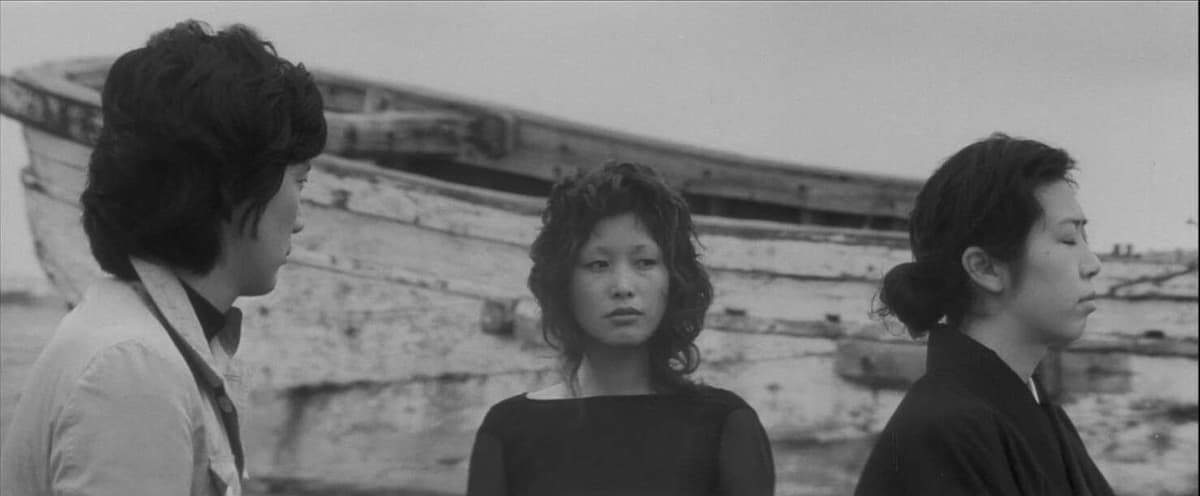
Visually, the film is a study in symbolic minimalism. Hideo Ito’s cinematography captures the desolate shoreline and a rusted ship that act as metaphors for emotional decay, while the infamous spiked chastity belt encapsulates the paradox of desire turned into confinement. The deliberate use of monochrome punctuated by selective color—most notably in a fire scene—enhances the haunting atmosphere. Combined with Isamu Nakajima’s disorienting editing and strong performances from Ken Yoshizawa and Rie Yokoyama, Secret Flower demonstrates how constrained resources can fuel creative ingenuity, a lesson that continues to resonate with independent filmmakers today.
Secret Flower (1971) by Koji Wakamatsu Film Review
Comments
Want to join the conversation?