Key Takeaways
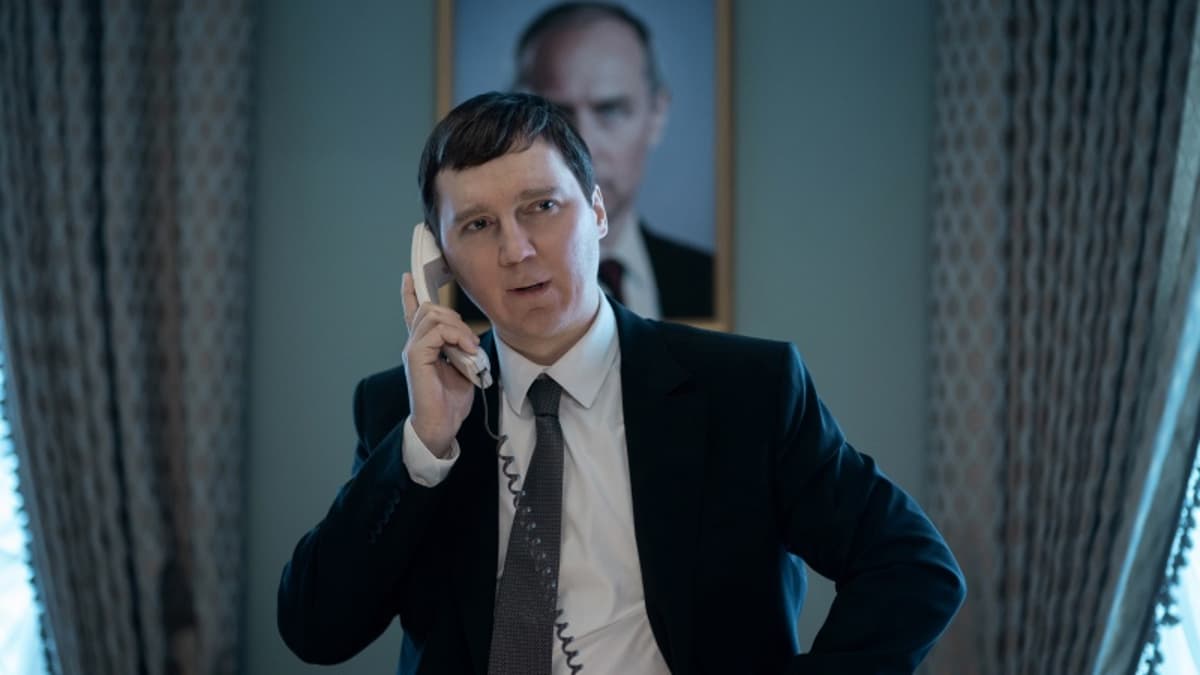
- •Paul Dano’s flat delivery hampers emotional depth
- •Film compresses Putin’s rise, missing nuanced context
- •Costuming and accents feel inauthentic, breaking immersion
- •Alicia Vikander provides strongest female presence
- •Narrative rushes, prioritizing events over character development
Summary
The Wizard of the Kremlin, directed by Olivier Assayas, adapts Giuliano da Empoli’s novel into a political thriller that follows a Surkov‑like figure recounting his rise alongside Vladimir Putin. Paul Dano delivers a deliberately flat performance, while the film rushes through key events from 1990s Moscow to the early 2020s. Production choices, such as inconsistent accents and costuming, undermine authenticity, though Alicia Vikander’s role stands out. The movie attempts to blend Cold‑War intrigue with contemporary Russian power dynamics, but its pacing sacrifices depth for checklist‑style storytelling.
Pulse Analysis
The Wizard of the Kremlin arrives at a moment when Western curiosity about Russian power structures has shifted from mystery to scrutiny. Adapted from Giuliano da Empoli’s novel and helmed by Olivier Assayas, the film attempts to fuse Cold‑War thriller aesthetics with a contemporary biographical study of a man modeled on Vladislav Surkov, the shadowy architect of modern Kremlin politics. By framing the story as a confession to a Western author, the narrative promises insight into the mechanics of proximity‑based authority that defines Putin’s regime. Yet the two‑and‑a‑half hour runtime forces a rapid sweep across the 1990s to the early 2020s, testing the limits of narrative depth.
Paul Dano’s portrayal of the titular ‘Baranov’ leans heavily on a deliberately flat vocal tone, a stylistic choice meant to underscore satire but which ultimately dulls emotional resonance. Supporting performances vary: Alicia Vikander’s Ksenia shines amid a largely forgettable ensemble, while Will Keen captures a fragile Boris Berezovsky. The film’s visual language falters; period‑accurate costuming and consistent Russian accents are sacrificed for expediency, pulling viewers out of the immersive world. Vladimir Law’s understated Putin offers a quiet, calculated menace, yet the script skirts deeper analysis of his strategic evolution, leaving the audience with a surface‑level portrait.
Despite its flaws, the movie signals a growing appetite for nuanced political cinema that interrogates the architecture of authoritarian power. Festival screenings in Glasgow and San Sebastian highlight a market eager for sophisticated, albeit dramatized, examinations of Kremlin dynamics. For distributors, the film’s blend of literary pedigree and recognizable talent provides a hook for both art‑house audiences and viewers drawn to current‑affairs storytelling. Critics and scholars will likely reference it when discussing the challenges of adapting dense political nonfiction for the screen, making it a touchstone for future projects that aim to balance historical fidelity with cinematic momentum.
Comments
Want to join the conversation?