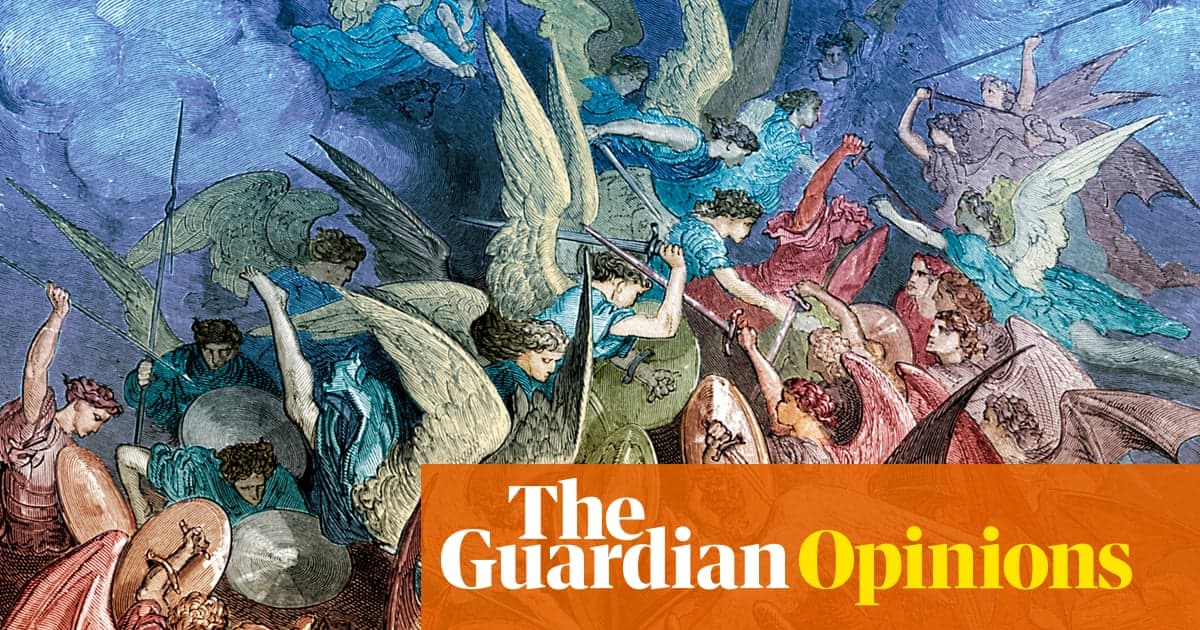
An AI Version of Milton’s Paradise Lost Is Fundamentally Unworthy of One of the Great Works of Art
Companies Mentioned
Why It Matters
If successful, AI‑based filmmaking could dramatically lower production budgets and reshape creative ownership, while a failure would underscore the limits of AI in handling complex literary adaptations. The debate highlights broader industry tensions over authenticity, intellectual property, and the future role of human artists.
Key Takeaways
- •Avary aims to film *Paradise Lost* using generative‑AI platforms
- •Current AI cinema still depends on extensive human curation
- •Critics label AI‑generated visuals as repetitive ‘AI slop’
- •Success could cut film budgets, but risk eroding artistic authenticity
Pulse Analysis
The announcement that director Roger Avary intends to turn Milton’s *Paradise Lost* into an AI‑generated blockbuster underscores a growing experiment in the film industry. Over the past few years, AI tools like Midjourney and Runway have been used to prototype scenes, but full‑length features still require human editors to stitch together coherent narratives. Avary’s ambition is to leverage these platforms to create the poem’s celestial battles and infernal landscapes without the massive crews that traditionally handle such spectacle, promising a fraction of the cost of a typical blockbuster.
Beyond the technical challenge, the project raises profound questions about artistic integrity and intellectual property. *Paradise Lost* is a public‑domain text, yet the visual interpretation, tone, and pacing remain deeply tied to human creativity. Critics warn that AI tends to produce "AI slop"—over‑polished, derivative imagery that lacks the nuance of a human director’s vision. Moreover, the reliance on algorithmic prediction could dilute the poem’s theological complexity, reducing a work celebrated for its moral and philosophical depth to a series of generic visual set‑pieces.
If Avary’s AI adaptation proves commercially viable, it could signal a paradigm shift: studios might commission AI‑driven productions to slash budgets and accelerate timelines, reshaping labor dynamics across VFX, cinematography, and post‑production. However, audience reception will be the ultimate litmus test; viewers may reject a film that feels soulless despite technical polish. The industry will watch closely, balancing the lure of cost efficiency against the risk of eroding the creative spark that has defined cinema for a century.
An AI version of Milton’s Paradise Lost is fundamentally unworthy of one of the great works of art
Comments
Want to join the conversation?
Loading comments...