Key Takeaways
- •Debut feature blends revenge, forgiveness, dark humor
- •Bullying narrative infused with cult and religious critique
- •Strong chemistry between Oh Woo-ri and Bang Hyo-rin
- •Final act tonal shift surprises yet works within story
- •Bright cinematography contrasts heavy themes, enhancing mood
Pulse Analysis
Lim Oh‑jeong arrives on the Korean indie scene after years assisting Hong Sang‑soo, a filmmaker known for his minimalist storytelling. “Hail to Hell” marks her first full‑length directorial effort, positioning her as a fresh talent capable of blending Hong’s calm aesthetic with a more kinetic, genre‑bending approach. The film’s release through Echelon Studios and its availability on niche streaming platforms reflect a growing pipeline for low‑budget Asian cinema to reach Western audiences. By leveraging her apprenticeship, Lim demonstrates that emerging directors can translate apprenticeship experience into a distinct cinematic voice that resonates beyond domestic borders.
The narrative tackles the pervasive issue of school bullying, but it does so through an unconventional lens that mixes revenge, dark comedy, and a critique of religious cults. After a botched suicide pact, the protagonists redirect their anger toward their former bully, now a born‑again Christian entangled in a quasi‑sect. This juxtaposition allows the film to explore forgiveness and redemption while questioning the manipulative structures of faith‑based groups. The abrupt tonal shift in the climax—moving from satirical to solemn—serves as a narrative catalyst, forcing viewers to reassess the moral calculus of vengeance versus absolution.
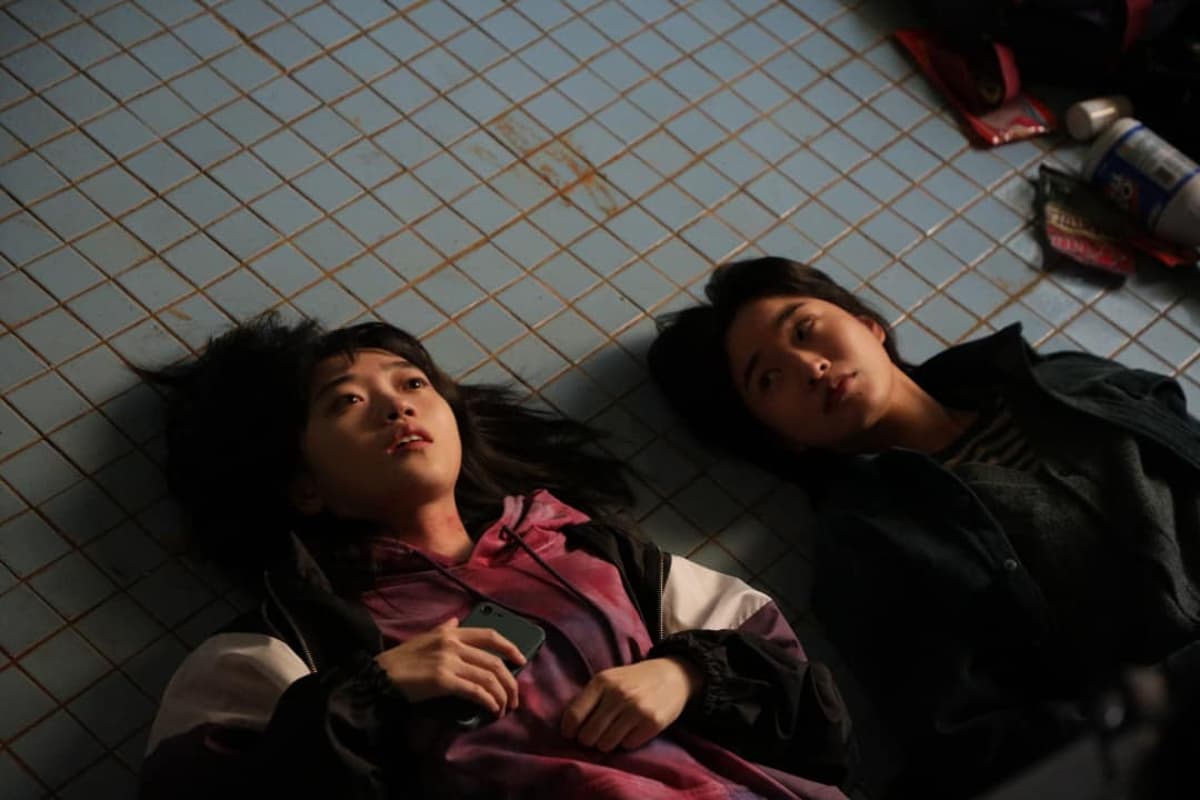
Performance-wise, Oh Woo‑ri and Bang Hyo‑rin deliver a nuanced chemistry that anchors the story, with each actress balancing vulnerability and determination. Supporting actor Jung Yi‑ju adds ambiguity to the reformed bully, while Park Sung‑hoon’s unsettling deacon heightens the cult atmosphere. Visually, the cinematography opts for bright, almost pastel palettes, softening the film’s darker moments and reinforcing its off‑beat tone. A carefully curated soundtrack punctuates quieter scenes without overwhelming them. Together, these elements position “Hail to Hell” as a compelling entry for distributors seeking fresh, socially aware content that can attract both festival circuits and streaming subscribers.
Hail to Hell (2022) by Lim Oh-jeong FIlm Review
Comments
Want to join the conversation?