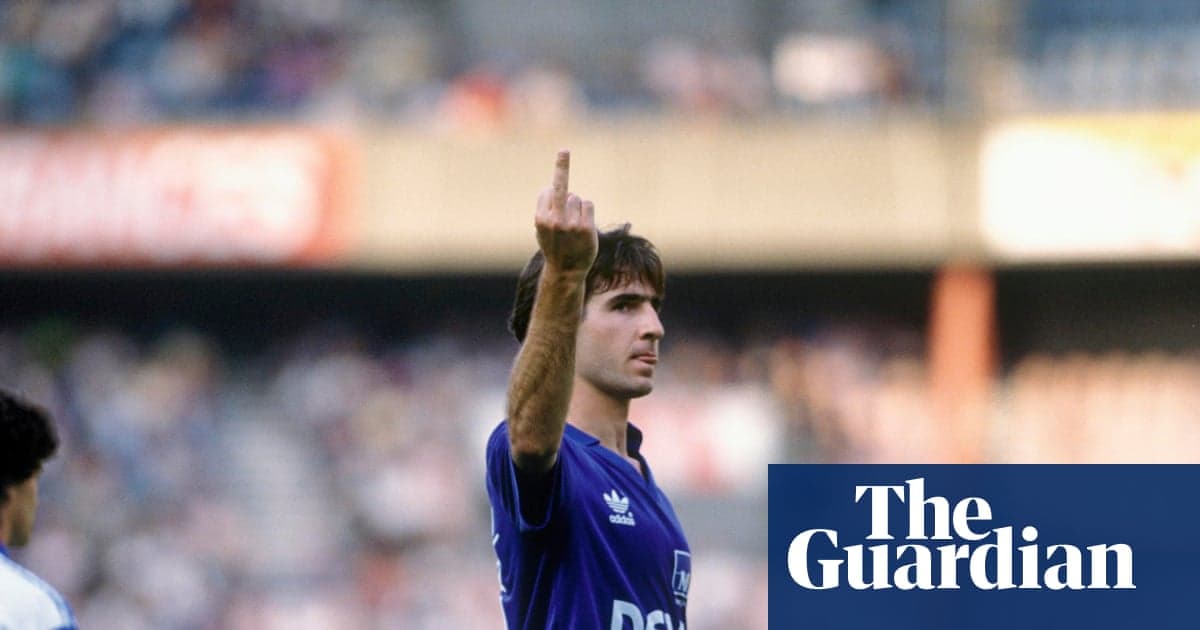
‘I Should Have Kicked Him Even Harder. He Deserved It’: Eric Cantona Comes Out Fighting
Companies Mentioned
Why It Matters
The documentary redefines sports biopics by securing unprecedented Premier League footage and framing Cantona’s legacy as a cultural touchstone, boosting interest in football‑centric storytelling for mainstream audiences.
Key Takeaways
- •Cannes selects Cantona documentary, first British directors in official lineup
- •Film secures unprecedented Premier League footage after six‑month negotiation
- •Directors portray Cantona‑Ferguson partnership as central redemption narrative
- •Soundtrack by Orbital’s Paul Hartnoll adds brooding electronic tone
- •Cantona approved final cut, boosting credibility for promotion
Pulse Analysis
The Cannes‑selected documentary on Eric Cantona arrives at a moment when sports films are craving fresh narrative angles. Rather than relying on typical match highlights, directors David Tryhorn and Ben Nicholas spent four years negotiating a historic six‑month licensing deal with the Premier League to obtain exclusive footage of Cantona’s infamous 1995 Crystal Palace incident. This unprecedented access not only enriches the visual archive but also signals a shift toward deeper, rights‑driven storytelling in football cinema, positioning the film as a benchmark for future productions seeking league cooperation.
Beyond the sensational kick, the film frames Cantona’s relationship with Alex Ferguson as a dramatic redemption arc. Interviews with Ferguson, David Beckham and Cantona himself illustrate how the manager’s mentorship transformed a volatile talent into a two‑season powerhouse, delivering Manchester United’s second league‑and‑cup double. By juxtaposing raw archival clips with Cantona’s childhood 8 mm reels, the directors emphasize the player’s paradoxical blend of artistic sensibility and on‑field aggression, reinforcing his status as a cultural icon whose influence extends beyond the pitch.
The documentary’s aesthetic choices further differentiate it from formulaic sports fare. A brooding electronic score by Orbital’s Paul Hartnoll replaces traditional orchestral swells, while lingering shots of Cantona painting in southern France add a contemplative layer that resonates with contemporary audiences seeking authenticity. Cantona’s approval of the final edit lends credibility, ensuring the narrative remains true to his complex persona. As the film rolls out from Cannes to global platforms, it is poised to attract both football enthusiasts and cinephiles, underscoring the commercial viability of nuanced, rights‑rich sports storytelling.
‘I should have kicked him even harder. He deserved it’: Eric Cantona comes out fighting
Comments
Want to join the conversation?
Loading comments...