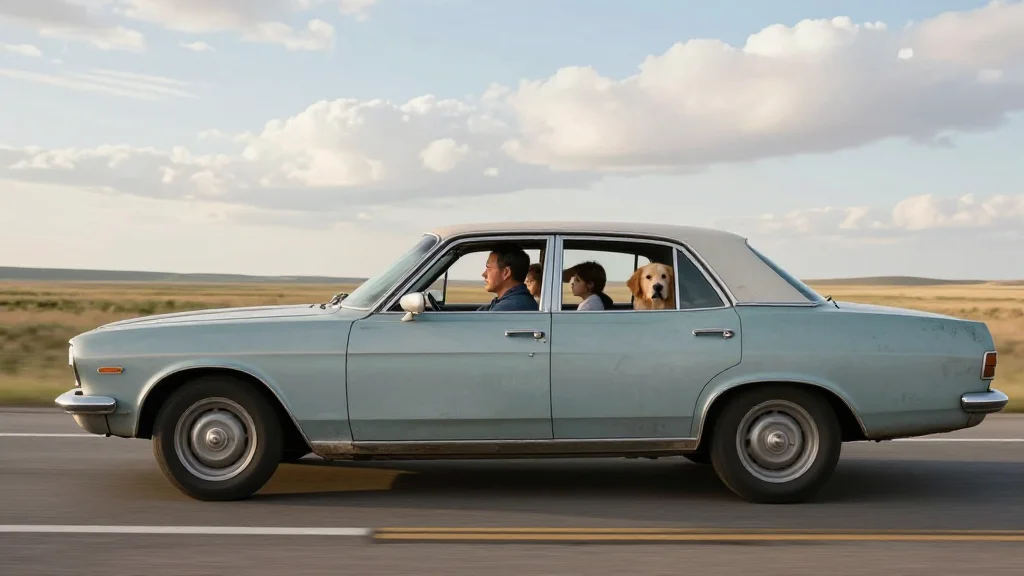
‘Omaha’ Review: Right Road, Wrong Destination
Companies Mentioned
Why It Matters
The film’s confusing resolution illustrates the risk of prioritizing stylistic ambition over clear storytelling, a lesson relevant for filmmakers and studios aiming for critical acclaim. It also signals audience fatigue with narrative gimmicks that sacrifice coherence.
Key Takeaways
- •Cole Webley's 'Omaha' follows a father and kids on a bleak road
- •Narrative pivots sharply in Omaha, leaving viewers confused
- •Ending adds unexpected text that reframes the entire journey
- •Strong performances can't compensate for unclear thematic resolution
- •Road‑movie aesthetic contrasts with the film's bleak emotional tone
Pulse Analysis
The American road movie has long served as a canvas for exploring loss, freedom, and the search for identity. In recent years, independent filmmakers have leaned into stark visual palettes and minimalist dialogue to evoke a sense of isolation, as seen in works like ‘Nomadland’ and ‘The Rider.’ ‘Omaha’ adopts this lineage, positioning a grieving single father and his children against endless plains, using wide‑shot cinematography and a sparse soundtrack to amplify the emotional vacuum left by the family’s upheaval. The film’s deliberate pacing mirrors the monotony of long‑haul travel, reinforcing the characters’ internal desolation.
Where ‘Omaha’ diverges from its predecessors is in its narrative payoff. The film builds tension through the gradual depletion of resources and the children’s dawning awareness, only to resolve the arc with a sudden textual overlay that recontextualizes the journey. Critics argue this device feels more like a post‑production gimmick than an organic revelation, leaving viewers to retroactively assign meaning. In an era where streaming audiences demand both visual flair and narrative clarity, such an abrupt shift can erode engagement and dilute critical goodwill. The decision also raises questions about the role of metafiction in mainstream cinema, where audience patience is limited.
For distributors and investors, the mixed reception of ‘Omaha’ underscores a broader market lesson: aesthetic ambition must be balanced with coherent storytelling to secure both festival accolades and commercial viability. Films that gamble on ambiguous endings risk alienating audiences, potentially limiting box‑office returns and streaming licensing value. As indie studios navigate a crowded content pipeline, the case of ‘Omaha’ serves as a reminder that innovative form should complement, not replace, a compelling narrative spine. Consequently, producers may opt for test screenings that gauge narrative clarity before committing to final cuts, safeguarding ROI.
‘Omaha’ Review: Right Road, Wrong Destination
Comments
Want to join the conversation?
Loading comments...