The House of Leaves Movies That Aren’t House of Leaves
Why It Matters
The roundup shows how indie horror is satisfying the demand for mind‑bending, spatial‑anomaly storytelling that *House of Leaves* fans crave, highlighting a growing market for experimental cinema. It also signals that audience appetite may eventually drive a legitimate adaptation or inspire similar original projects.
Key Takeaways
- •Markiplier's *Iron Lung* sparks House of Leaves adaptation chatter
- •Indie films like *Cube* explore endless maze concepts
- •*You Should Have Left* mirrors spatial anomalies directly
- •*Synecdoche, New York* layers narratives, blurring reality and fiction
- •*Coherence* delivers low-budget, high-concept reality‑bending thriller
Pulse Analysis
The cult novel *House of Leaves* has long been a benchmark for narrative complexity, blending metafiction, typographic experimentation, and a physical house that defies Euclidean geometry. Its reputation as "unfilmable" has turned adaptation talks into a niche obsession, especially after Markiplier’s *Iron Lung* proved that indie creators can translate unsettling spatial concepts to the screen. As fans debate potential scripts, the market has responded by surfacing movies that approximate the novel’s core experience, giving audiences a way to engage with similar themes without waiting for a studio green‑light.
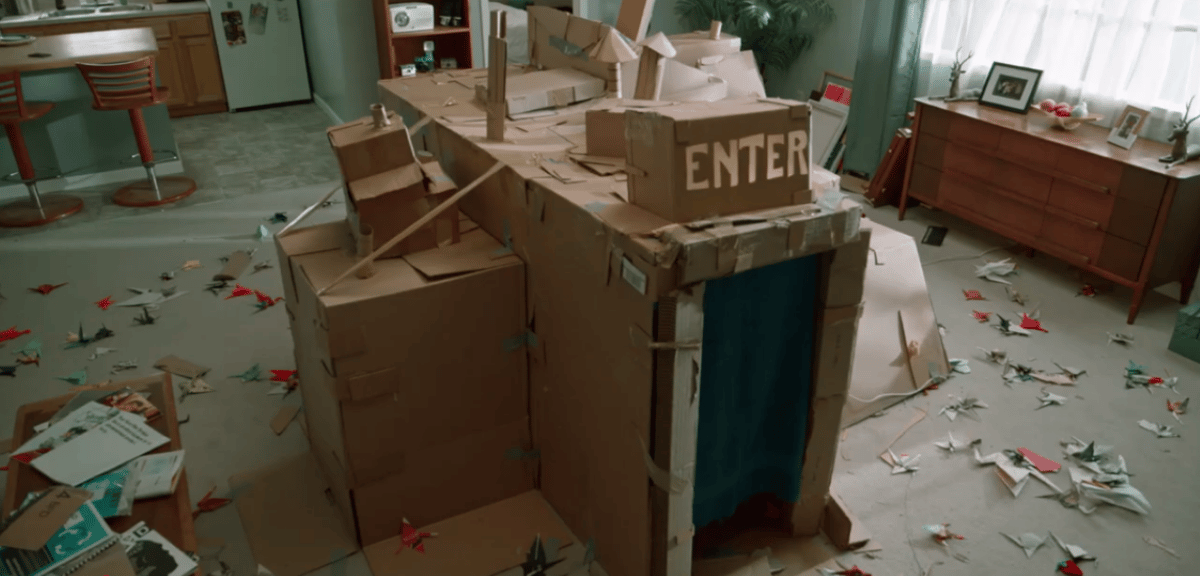
Across the curated list, a common thread emerges: confined environments that expand into psychological mazes. *Dave Made a Maze* uses a cardboard construct to trap characters in a shifting labyrinth, while *Cube* pits strangers against a grid of deadly rooms that feel infinite. *Vivarium* and *You Should Have Left* both trap protagonists in domestic settings that warp time and space, echoing the novel’s house that is larger inside than out. More abstract entries like *Synecdoche, New York* and *Inland Empire* amplify the narrative layering, turning set pieces into extensions of the characters’ consciousness, a technique Danielewski employs through footnotes and multiple narrators.
The appetite for such mind‑bending horror reflects broader trends in streaming and boutique cinema, where low‑budget productions can reach global audiences hungry for innovative storytelling. Films like *Coherence* and *Skinamarink* demonstrate that a minimalist approach—limited locations, small casts—can still deliver high‑concept twists that keep viewers dissecting plot threads long after the credits roll. This consumer enthusiasm not only validates the viability of experimental horror but also pressures larger studios to consider riskier adaptations, potentially paving the way for a faithful *House of Leaves* film in the near future.
The House of Leaves Movies That Aren’t House of Leaves
Comments
Want to join the conversation?
Loading comments...