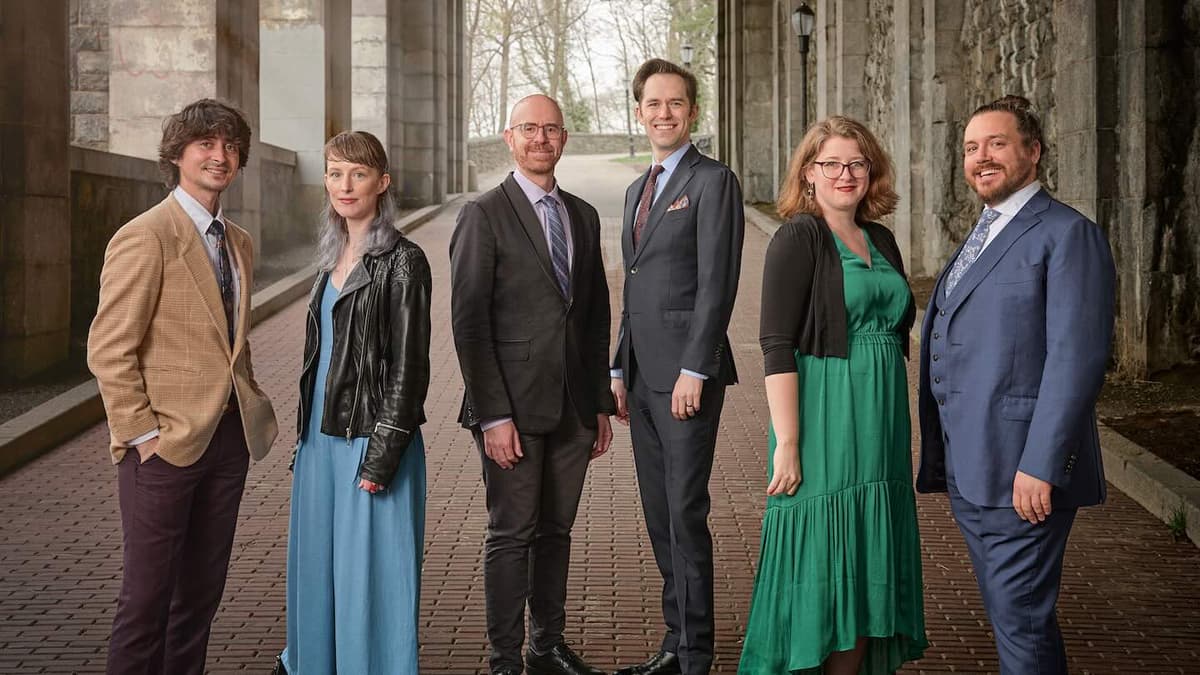
Microtonality and Virtuosity Collide on Ekmeles’ “Nonsongs”
Key Takeaways
- •Ekmeles releases "Nonsongs", a microtonal album on New Focus Recordings
- •Album features three pieces blending overtone singing, ratchets, and accordion
- •Tracks draw from Plainsong, Katherine Balch poem, and George Lewis composition
- •Ensemble achieves organ-like timbres and precise microtonal intervals without electronic aid
- •Critical acclaim highlights virtuosity, expanding audience acceptance of just intonation
Pulse Analysis
Microtonality, long a specialist corner of contemporary classical, is gaining broader cultural traction thanks to movements like Plainsound that champion just intonation and community‑driven experimentation. Originating in the late‑20th‑century European avant‑garde, Plainsound composers have refined the art of tuning‑fork precision and overtone manipulation, creating a sound world that challenges the equal‑tempered norm. Ekmeles, a collective of six virtuosos, channels this heritage into "Nonsongs," positioning the album as both a scholarly statement and an accessible listening experience for adventurous audiences.
The three tracks on "Nonsongs" illustrate a spectrum of microtonal possibilities. Wolfgang von Schweinitz’s Plainsound Motet begins with a single drone, gradually revealing overtone singing that maps the harmonic series before erupting into off‑kilter counterpoint. Katherine Balch’s "forgetting" juxtaposes a chorus with mechanically cranked ratchets, turning a minimalist poem into a kinetic soundscape that oscillates between fragility and aggression. George Lewis’s "Lone Coast" adds an accordion, weaving Nathaniel Mackey’s poetry into a dialogue of timbres that shifts from lyrical duets to snarling ensembles. Across the album, the ensemble achieves organ‑like resonance and razor‑sharp intervallic accuracy without electronic enhancement, underscoring their technical mastery.
Industry observers see "Nonsongs" as a bellwether for the commercial viability of high‑concept, microtonal projects. New Focus Recordings’ decision to back the album reflects a strategic pivot toward niche yet critically lauded repertoire, appealing to both academic circles and progressive concertgoers. Positive reviews highlight the record’s emotional immediacy, suggesting that future funding and programming may increasingly favor ensembles capable of translating complex theory into compelling performance. As listeners grow more receptive to unconventional tuning systems, ensembles like Ekmeles are poised to shape the next wave of contemporary classical innovation.
Microtonality and Virtuosity Collide on Ekmeles’ “Nonsongs”
Comments
Want to join the conversation?