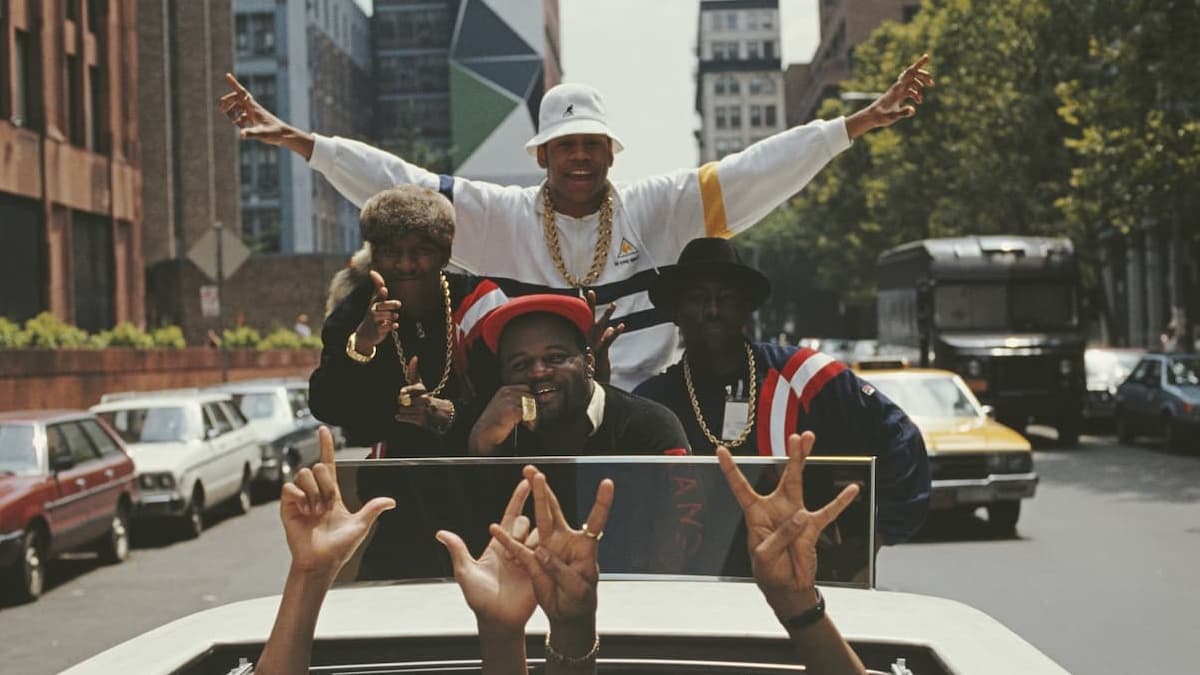
4 Hip-Hop Artists From The 80s Who Sound Just as Good Today as They Did in Their Prime
Why It Matters
Recognizing 80s icons highlights the genre’s foundational influence on contemporary music and validates the commercial value of legacy catalogs in streaming and licensing.
Key Takeaways
- •Rakim's minimalist flow set modern lyrical standards.
- •Big Daddy Kane pioneered sample-based storytelling.
- •Slick Rick's narrative style influences today’s rap storytelling.
- •LL Cool J introduced love songs and swagger to hip‑hop.
Pulse Analysis
The 1980s marked hip‑hop’s transition from block parties to recorded art, yet its contributions are often eclipsed by the 1990s "golden age" narrative. Pioneers like Rakim, Big Daddy Kane, Slick Rick, and LL Cool J forged the genre’s core techniques—complex rhyme schemes, inventive sampling, vivid storytelling, and a blend of street swagger with mainstream appeal. Their tracks, originally pressed on vinyl and early cassettes, now circulate on streaming platforms, exposing new listeners to the raw creativity that defined the era.
Rakim’s stripped‑down, rhythm‑centric delivery introduced a lyrical precision that modern emcees still emulate, while Big Daddy Kane’s seamless integration of funk and R&B samples set a template for today’s beat‑making. Slick Rick’s theatrical, narrative‑driven verses pioneered a storytelling tradition evident in contemporary concept albums, and LL Cool J’s dual focus on hard‑hitting anthems and tender love songs broadened hip‑hop’s emotional range. These stylistic hallmarks have been recycled, sampled, and reinterpreted across decades, proving that the 80s sound remains a fertile source for artistic innovation.
For the music business, the resurgence of 80s hip‑hop underscores the enduring revenue potential of legacy content. Labels are capitalizing on renewed interest through curated playlists, anniversary reissues, and licensing deals for film, TV, and advertising. Moreover, emerging artists cite these pioneers as inspirations, driving a cyclical demand for vintage production aesthetics. Understanding this lineage equips executives, producers, and marketers with insights to leverage nostalgia while fostering fresh collaborations that bridge generations of hip‑hop culture.
4 Hip-Hop Artists From The 80s Who Sound Just as Good Today as They Did in Their Prime
Comments
Want to join the conversation?
Loading comments...