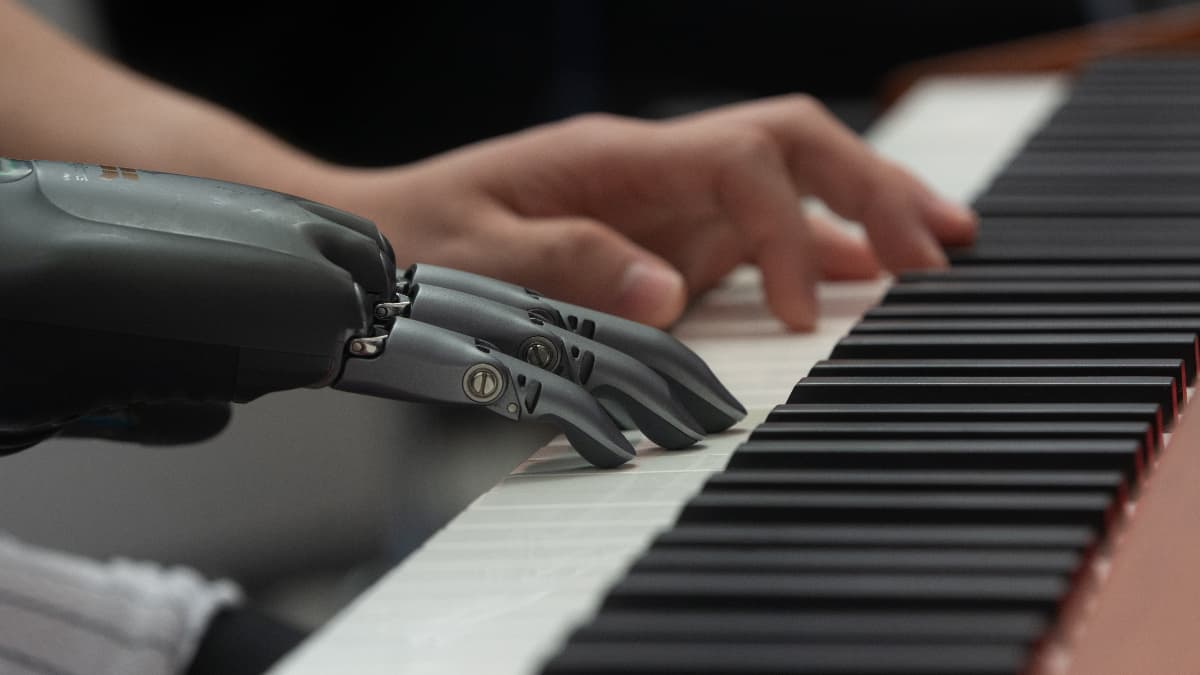
A Human Performed This Cringey, AI-Generated ‘Love Song,’ and Somehow It’s Even Weirder This Way
Companies Mentioned
Why It Matters
The episode illustrates how AI can produce content that challenges traditional songwriting standards, prompting industry stakeholders to reassess the balance between automation and human creativity.
Key Takeaways
- •Singer Natalie Janz performed AI‑written “Give Me Your Hand”.
- •Original track credited to Do Re Mi, an AI music generator.
- •Human rendition highlighted uncanny‑valley effect of AI lyrics.
- •AI lyrics criticized for nonsensical, cringeworthy romantic content.
- •Debate continues on AI’s role in creative songwriting.
Pulse Analysis
The rise of AI‑driven music platforms such as Do Re Mi has turned songwriting into a data‑heavy experiment, churning out tracks at scale for streaming services. These generators blend large language models with audio synthesis to produce melodies and lyrics in minutes, often landing on novelty playlists. While the technology promises cost‑effective content for advertisers and background music, the output frequently lacks the nuanced storytelling that human composers bring, resulting in songs that feel more like algorithmic pastiche than genuine art.
When Madame Madame performed “Give Me Your Hand,” the juxtaposition of a human voice with AI‑crafted verses highlighted the uncanny‑valley effect that many listeners experience. The lyrical content—awkward metaphors about Valentine’s Day and bizarre sexual innuendos—exposed the limitations of current language models in capturing authentic emotion. Audiences responded with a mix of amusement and discomfort, underscoring that a human performer does not automatically confer credibility on machine‑generated material. For artists, the experiment raises questions about whether adding a vocal layer can salvage AI songs or merely amplify their inherent oddities.
The broader industry impact hinges on how creators, labels, and platforms navigate intellectual property and creative ownership. As AI tools become more sophisticated, they could serve as collaborative co‑writers, but the risk of homogenized content and potential legal disputes over authorship looms large. Stakeholders must weigh the efficiency gains against the cultural cost of diluting human expression. Ongoing dialogue about ethical guidelines and revenue models will shape whether AI remains a novelty or evolves into a mainstream songwriting partner.
A Human Performed This Cringey, AI-Generated ‘Love Song,’ and Somehow It’s Even Weirder This Way
Comments
Want to join the conversation?
Loading comments...