An Ancient Philosophical Song Reconstructed and Played for the First Time in 1,000 Years
Why It Matters
Reviving the song provides rare insight into medieval musical theory and enriches our cultural heritage, informing both scholars and performers about lost soundscapes.
Key Takeaways
- •Cambridge scholars decoded 11th‑century 'Cambridge Songs' manuscript.
- •Reconstruction reveals melodic outlines missing from modern notation.
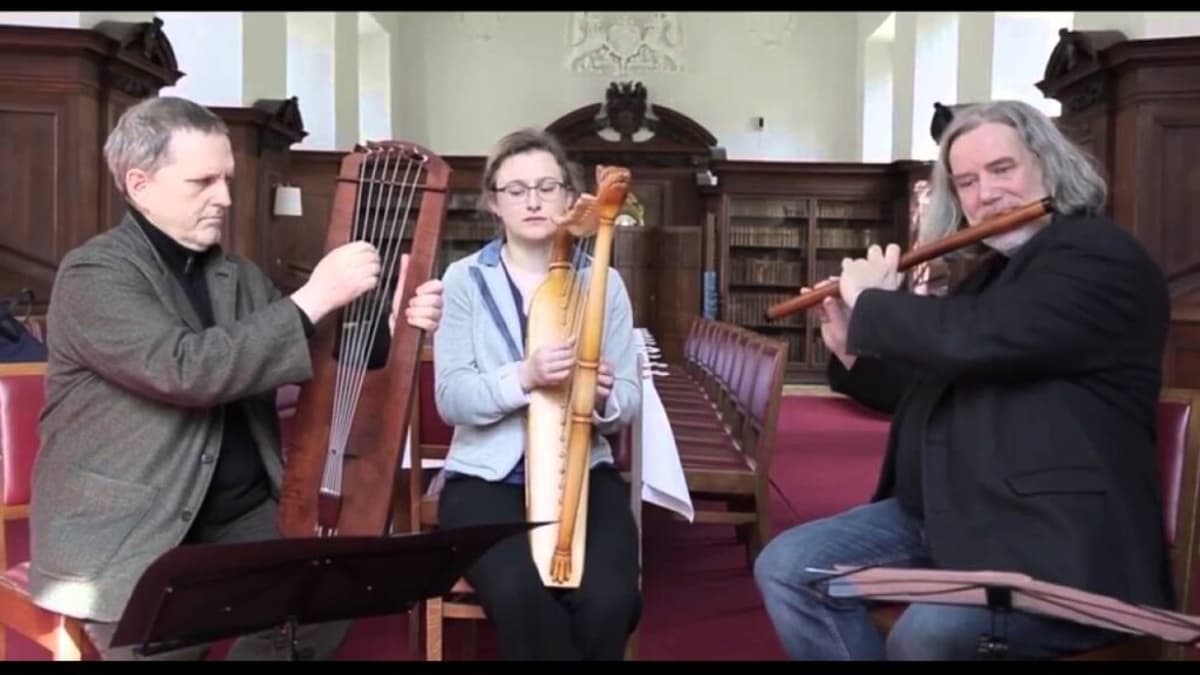
- •Sequentia performed the piece, first live rendition in a millennium.
- •Study bridges philology and musicology to revive lost medieval sound.
- •Revival deepens understanding of Boethius' philosophical and musical legacy.
Pulse Analysis
The discovery underscores how medieval notation differs fundamentally from modern staff notation. In the 11th‑century manuscripts, composers recorded only melodic contours, leaving pitch specifics to oral tradition. When that tradition vanished in the 12th century, scholars assumed many works were irretrievable. Recent advances in paleography and computational analysis, however, allow researchers to infer probable pitches by mapping verse forms to known modal patterns, turning cryptic symbols into audible melodies.
Dr. Sam Barrett’s two‑decade investigation focused on the so‑called Cambridge Songs, a collection of poetic‑musical pieces linked to Boethius’ *Consolation of Philosophy*. By cross‑referencing linguistic meter, historical chant practices, and surviving liturgical repertoires, Barrett reconstructed a plausible melodic line for the "Songs of Consolation." The collaboration with the early‑music ensemble Sequentia ensured that the theoretical reconstruction was tested in performance, revealing nuances that only live singers can expose, such as phrasing, ornamentation, and emotional resonance.
Beyond academic curiosity, the revival has broader implications for cultural preservation and interdisciplinary research. It demonstrates that lost art forms can be resurrected through a blend of textual scholarship, music theory, and modern technology, offering educators fresh material for curricula on medieval studies. Moreover, the public performance invites audiences to experience a sound world that shaped philosophical discourse a millennium ago, reinforcing the timeless connection between ideas and music.
An Ancient Philosophical Song Reconstructed and Played for the First Time in 1,000 Years
Comments
Want to join the conversation?
Loading comments...