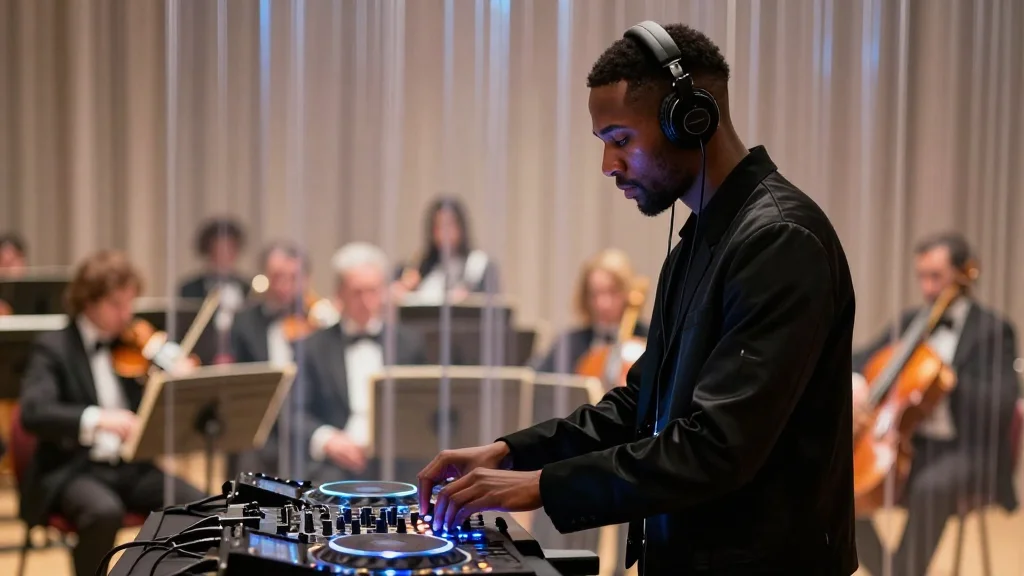
Black Coffee’s Three‑Hour Orchestral Set Rocks London’s O2 Arena

Why It Matters
The O2 orchestral set illustrates how electronic dance music can intersect with classical performance, expanding the commercial and artistic possibilities for both sectors. Black Coffee’s emphasis on sustainable infrastructure for African artists also spotlights a growing demand for systemic support, which could reshape talent pipelines and market dynamics across the continent. By positioning African talent within mainstream award categories and high‑profile venues, the event challenges existing narratives about regional music markets and may encourage more cross‑cultural collaborations. Furthermore, the success of such a large‑scale hybrid show could inspire other DJs and producers to explore similar formats, potentially creating a new sub‑genre of live electronic‑orchestral concerts. This evolution may attract new sponsorships, ticket‑sale models, and streaming partnerships, reshaping revenue structures within the live‑music ecosystem.
Key Takeaways
- •Black Coffee performed a three‑hour orchestral set at London’s O2 Arena with a live orchestra and Alicia Keys.
- •The show was billed as the Afropolitan House O2 spectacle and sold out on its first night.
- •Black Coffee highlighted the lack of sustainable infrastructure for African artists, calling for systemic change.
- •He rejected the label “African global players,” urging artists to compete on a universal stage.
- •The event reflects a growing trend of electronic DJs collaborating with classical ensembles.
Pulse Analysis
Black Coffee’s O2 performance is a textbook case of brand extension through experiential innovation. By marrying house music with a full orchestra, he not only differentiated his live offering in a crowded festival market but also tapped into a higher‑margin segment that appeals to both EDM fans and classical aficionados. Historically, similar experiments—such as Daft Punk’s 2006 orchestral tour—have yielded mixed commercial results, but Black Coffee’s timing aligns with a post‑pandemic appetite for immersive, ticket‑driven experiences.
From a strategic standpoint, the show serves as a launchpad for his upcoming Ibiza residency, reinforcing his positioning as a global tastemaker rather than a regional act. The inclusion of Alicia Keys adds star power and cross‑genre credibility, likely boosting streaming numbers for both artists in the weeks following the event. Moreover, his outspoken criticism of Africa’s music infrastructure could catalyze policy discussions, especially as multinational labels eye the continent’s burgeoning talent pool.
Looking ahead, the success of this hybrid format may prompt promoters to book more orchestral collaborations, potentially creating a niche festival circuit. For Black Coffee, the next logical step is to replicate the model in African capitals, leveraging local orchestras to showcase homegrown talent while maintaining his global brand. If executed well, this could redefine revenue streams for African artists and set a precedent for how electronic music integrates with traditional performance arts.
Black Coffee’s Three‑Hour Orchestral Set Rocks London’s O2 Arena
Comments
Want to join the conversation?
Loading comments...