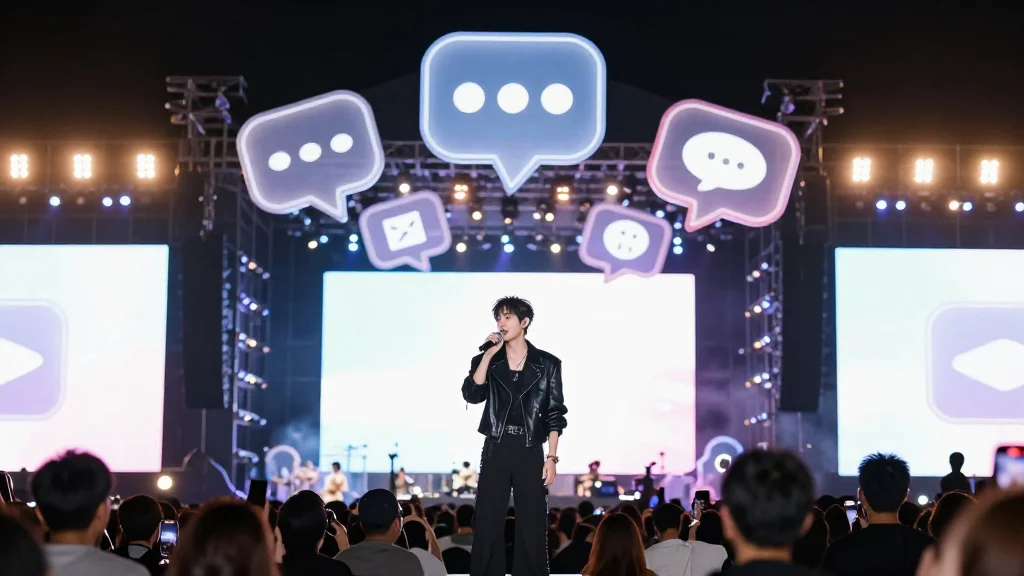
Coachella 2026: Justin Bieber's $10 M YouTube Set Sparks Debate as Karol G Makes History

Companies Mentioned
Why It Matters
Bieber’s $10 million, YouTube‑curated set spotlights the growing influence of real‑time digital engagement on live music, raising questions about the financial viability of such experiments for festival promoters. At the same time, Karol G’s historic headline signals a shift toward greater inclusion of Latin artists at mainstream U.S. festivals, reflecting broader market trends where Latin streaming numbers outpace many traditional genres. Together, these moments illustrate how Coachella is becoming a testing ground for both technological innovation and cultural diversification in the music industry. The divergent reactions also highlight a split among fans: some prioritize novelty and interactivity, while others value authentic, culturally resonant performances. How festivals navigate these competing demands will affect artist negotiations, sponsorship models, and the overall festival experience in the years ahead.
Key Takeaways
- •Justin Bieber performed a $10 million set at Coachella 2026, the highest fee ever paid to a festival act.
- •Bieber let YouTube commenters vote on his setlist, prompting a polarized online debate.
- •Karol G became the first Latina headliner in Coachella history, marking a milestone for Latin representation.
- •Guest appearances on Bieber’s set included Kid Laroi, Wizkid and Tems.
- •Industry analysts predict Bieber’s fee could reset headliner compensation benchmarks.
Pulse Analysis
Coachella 2026 functioned as a microcosm of two converging forces reshaping the live‑music economy: digital interactivity and demographic diversification. Bieber’s experiment leveraged the immediacy of YouTube comments, turning the set into a crowdsourced playlist. While this approach generated buzz, it also exposed the limits of audience‑driven curation; critics argued that the format reduced the artistry of a live performance to a series of algorithmic choices. The $10 million price tag further complicates the model, suggesting that festivals may be willing to pay premium fees for marquee names even when the performance deviates from traditional expectations. If future acts replicate this model, we could see a bifurcation where high‑budget headliners adopt tech‑heavy formats while mid‑tier artists double down on immersive, non‑digital experiences to differentiate themselves.
Conversely, Karol G’s headline underscores the commercial power of Latin music, which now commands a sizable share of U.S. streaming revenue. Her placement signals that festivals are not merely adding diversity for optics but are responding to measurable market demand. This could accelerate a pipeline of Latin talent moving from niche stages to main‑stage slots, prompting other festivals to reevaluate their lineups to capture similar audiences. The strategic timing—following Bieber’s polarizing set—offers Coachella a narrative balance: a high‑tech, high‑cost experiment paired with a culturally resonant, high‑energy performance that reaffirms the festival’s role as a cultural barometer.
Going forward, festival organizers will need to calibrate the cost‑benefit equation of interactive sets against audience satisfaction and brand integrity. Simultaneously, they must continue to broaden representation to stay relevant in an increasingly multicultural market. Coachella’s 2026 outcomes suggest that success will belong to those who can blend technological novelty with authentic cultural moments, rather than relying on either in isolation.
Coachella 2026: Justin Bieber's $10 M YouTube Set Sparks Debate as Karol G Makes History
Comments
Want to join the conversation?
Loading comments...