Corima Brings Doom to Zeuhl on “Hunab Ku” (Album Review)
Key Takeaways
- •Corima blends Mesoamerican doom with zeuhl aesthetics.
- •Album features complex cycles, jazzy chants, metal breakdowns.
- •Vocalists employ non-lexical, prophetic singing style.
- •Production includes diverse instrumentation, from glockenspiel to synth organ.
- •Release expands zeuhl’s reach beyond French and Japanese scenes.
Pulse Analysis
Zeuhl, a hybrid born in 1970s France, occupies the liminal space between jazz, progressive rock, and orchestral metal. Its hallmark is ritualistic intensity, repetitive motifs, and vocalizations that eschew conventional language, often likened to speaking in tongues. Over the decades, Japanese collectives such as Kōenjihyakkei refined the style into a hyper‑mechanical, chaotic form, cementing zeuhl’s reputation as a cult‑corner of avant‑garde music. Understanding these roots clarifies why Corima’s latest effort feels both familiar and revolutionary.
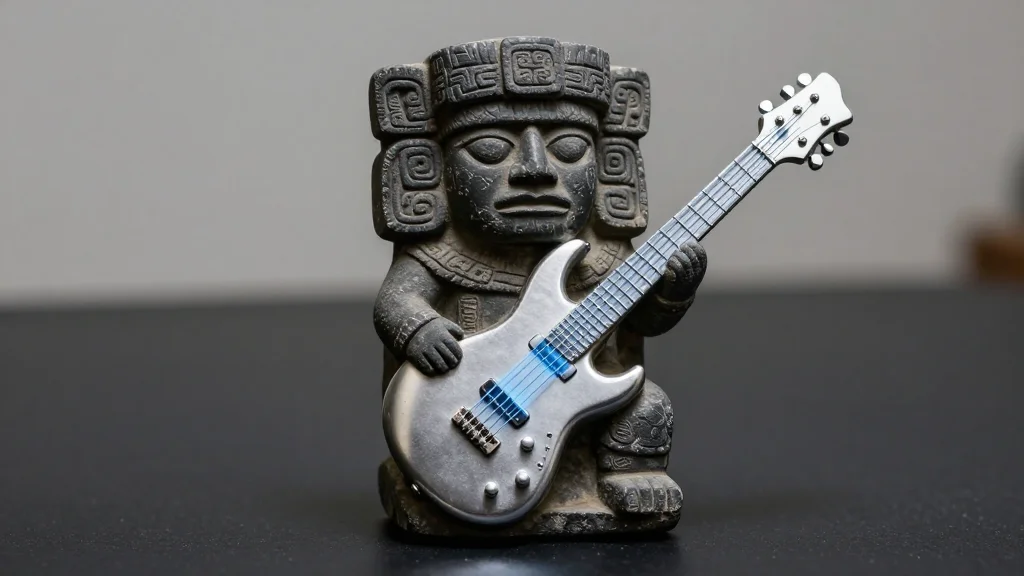
Corima’s "Hunab Ku" channels the ancient Mesoamerican concept of doom—an endless, self‑consuming spiral—through zeuhl’s sonic palette. Tracks like “Manla” and “K’iik” juxtapose jazzy, chant‑like passages with crushing metal breakdowns, while the inclusion of glockenspiel, synth organ, and even pipe motifs expands the genre’s timbral horizon. The vocal ensemble, led by Andrea Calderón, delivers non‑lexical, prophetic lines that reinforce the album’s mythic narrative, echoing the ritualistic chanting of early zeuhl while injecting a distinct cultural narrative drawn from Aztec and Mayan lore.
In a digital‑first music economy, releases like "Hunab Ku" illustrate how ultra‑niche genres can find sustainable audiences via platforms such as Bandcamp and specialized labels like Soleil Zeuhl. The album’s cross‑cultural synthesis broadens zeuhl’s appeal beyond its French and Japanese strongholds, attracting progressive‑rock enthusiasts seeking novel, immersive experiences. As streaming algorithms increasingly reward distinctive metadata, Corima’s blend of historical philosophy and avant‑garde composition positions them as a case study in how fringe artists can leverage cultural hybridity to expand market reach and influence future experimental music trends.
Corima Brings Doom to Zeuhl on “Hunab Ku” (Album Review)
Comments
Want to join the conversation?