Why It Matters
Borca’s breakthrough shows that unconventional instruments can thrive in free jazz, expanding the genre’s sonic palette and inspiring a new generation of improvisers.
Key Takeaways
- •Borca's 2024 *Entwined* is first bassoon-led studio album.
- •Collaborations with Cecil Taylor and Bill Dixon expanded avant‑garde horizons.
- •Her bassoon technique rivals traditional jazz horns in agility.
- •Reissues by NoBusiness Records spotlight her under‑recorded legacy.
- •At 77, she remains active, crafting reeds and performing.
Pulse Analysis
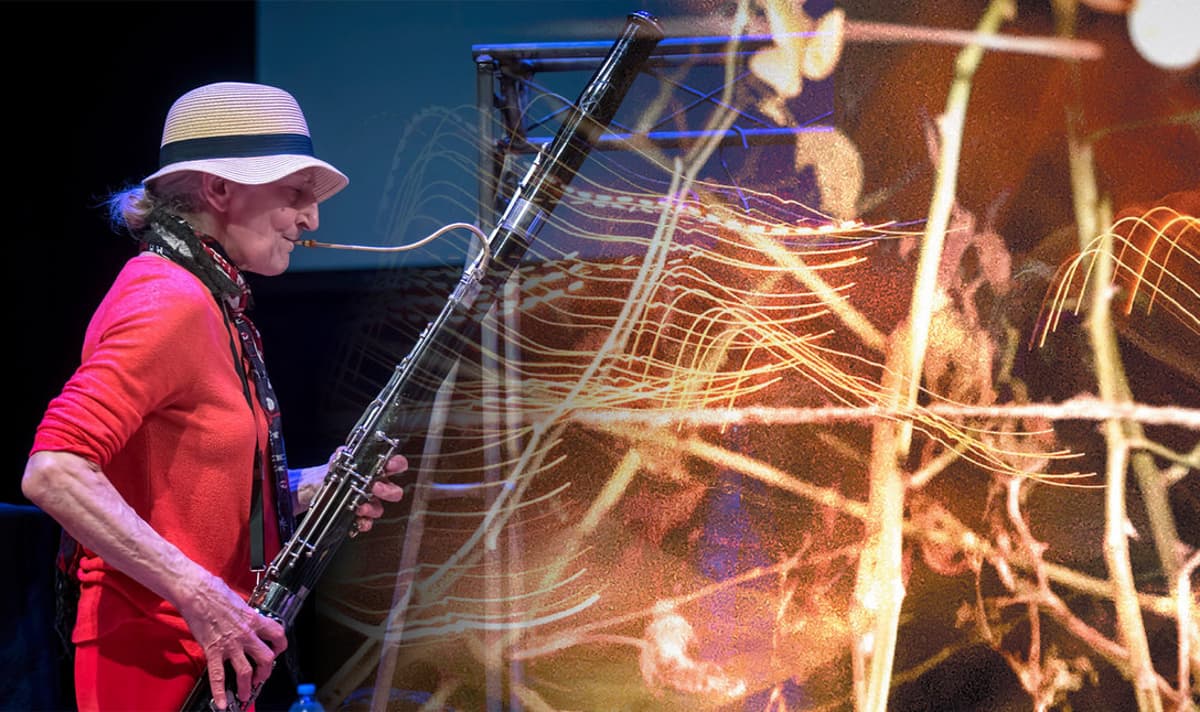
The free‑jazz movement of the 1960s and 1970s prized sonic experimentation, yet the bassoon remained a rarity, confined to classical orchestras or occasional novelty spots. By embracing the instrument’s low, woody timbre, Karen Borca challenged prevailing notions of jazz instrumentation, proving that the bassoon’s complex fingering and rich harmonic range could match the agility of saxophones and trumpets. Her early collaborations with avant‑garde pioneers such as Cecil Taylor and Jimmy Lyons positioned the bassoon as a legitimate voice in high‑energy improvisation, while recordings with Bill Dixon and Alan Silva highlighted its capacity for both textural depth and melodic clarity.
Borca’s career trajectory reflects a blend of perseverance and artistic curiosity. After decades of contributing to ensembles—often as the sole bassoonist—she finally stepped into the spotlight with *Entwined* (2024), a duo recording with drummer Paul Murphy that places the bassoon at the forefront of free‑form dialogue. The album’s extended, conversational structures echo historic drum‑sax pairings but replace the sax with a reed instrument that can glide from guttural growls to soaring upper registers. Parallel to this, NoBusiness Records’ reissue of her 1998 trio and 2005 quintet sessions re‑introduces her under‑recorded work to a new audience, underscoring her role as a bridge between the genre’s early experimental phase and contemporary improvisational practice.
The broader impact of Borca’s achievements lies in redefining the possibilities for non‑traditional jazz instruments. Her success encourages conservatories and independent musicians to explore cross‑genre applications, potentially expanding market demand for specialized reeds and custom bassoon accessories. Moreover, her story adds to the narrative of diversity in jazz, illustrating how gender, age, and instrument choice intersect to reshape artistic boundaries. As the avant‑garde community continues to evolve, Borca’s legacy serves as a blueprint for innovators seeking to carve out space for unconventional sounds within the ever‑expanding jazz ecosystem.
How Karen Borca Brought the Bassoon Into Free Jazz
Comments
Want to join the conversation?
Loading comments...