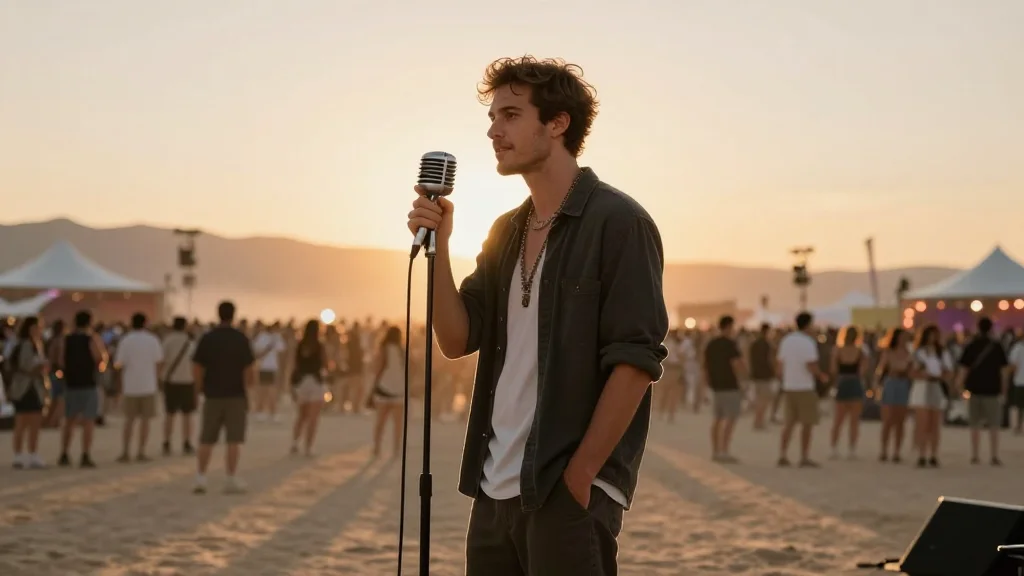
Justin Bieber Debuts Reworked “Daisies” At Coachella, Signaling a Measured Return

Why It Matters
Bieber’s low‑key debut at one of the world’s biggest music festivals underscores a shift in how top‑tier artists manage comebacks in an era where streaming data and social‑media buzz can replace traditional promotional cycles. By opting for a restrained release, he tests the market’s appetite without overexposing himself, a tactic that could influence how other legacy acts approach post‑hiatus returns. The move also highlights the evolving role of festivals as platforms for surprise content drops, blurring the line between live performance and product launch. As artists increasingly use events like Coachella to debut new material, the industry may see a redefinition of festival value beyond ticket sales, encompassing streaming spikes and media coverage that extend far beyond the event itself.
Key Takeaways
- •Justin Bieber performed a new version of “Daisies” at Coachella without a formal billing.
- •The track was released quietly on streaming platforms, lacking a traditional marketing campaign.
- •Bieber’s appearance marks his first live performance since his 2023 Ramsay Hunt syndrome diagnosis.
- •The low‑profile strategy reflects a broader industry trend toward selective visibility for legacy artists.
- •No tour dates have been announced; fans await a potential EP or further festival appearances.
Pulse Analysis
Bieber’s approach signals a maturation in how megastars navigate the post‑pandemic music economy. Where once a massive rollout—radio pushes, TV appearances, and a global tour—was the default, today’s data‑rich environment allows an artist to gauge impact in real time. By releasing “Daisies” quietly and pairing it with a surprise festival moment, Bieber leverages both streaming algorithms and the cultural cachet of Coachella to generate organic buzz. This hybrid model reduces upfront costs and mitigates the risk of a lukewarm reception, while still delivering a high‑visibility touchpoint that can be amplified across social platforms.
Historically, surprise festival performances have been used to reignite careers—think Beyoncé’s 2013 Coachella set or Kanye West’s 2010 debut of “Runaway.” Bieber’s iteration, however, is less about a dramatic comeback and more about a calibrated re‑entry. The decision to keep the performance low‑key suggests an awareness of his health constraints and a desire to avoid the intense scrutiny that accompanies a full‑scale return. This could set a precedent for other artists recovering from health or personal setbacks, offering a template that balances fan engagement with personal sustainability.
Looking forward, the success of this strategy will be measured by streaming metrics, social‑media sentiment, and ticket sales for any subsequent live dates. If the numbers hold, we may see a new playbook emerge where legacy acts treat festivals as launchpads for micro‑releases, using the event’s built‑in audience to seed momentum before committing to larger, riskier ventures. For the industry, this could mean a shift in how labels allocate promotional budgets, favoring targeted, event‑driven spend over blanket campaigns.
Justin Bieber Debuts Reworked “Daisies” at Coachella, Signaling a Measured Return
Comments
Want to join the conversation?
Loading comments...