Why It Matters
AI lowers production barriers, reshaping budgets and creative control, but also forces the hip‑hop industry to confront ethical, environmental, and brand‑risk challenges.
Key Takeaways
- •AI rap videos now span underground to major label releases
- •Artists cite AI for sub‑$300 video creation costs
- •Labels ban visible AI but use it for post‑production tasks
- •Debate centers on cultural appropriation, misinformation, and carbon impact
- •DIY editors can produce AI gore effects with minimal equipment
Pulse Analysis
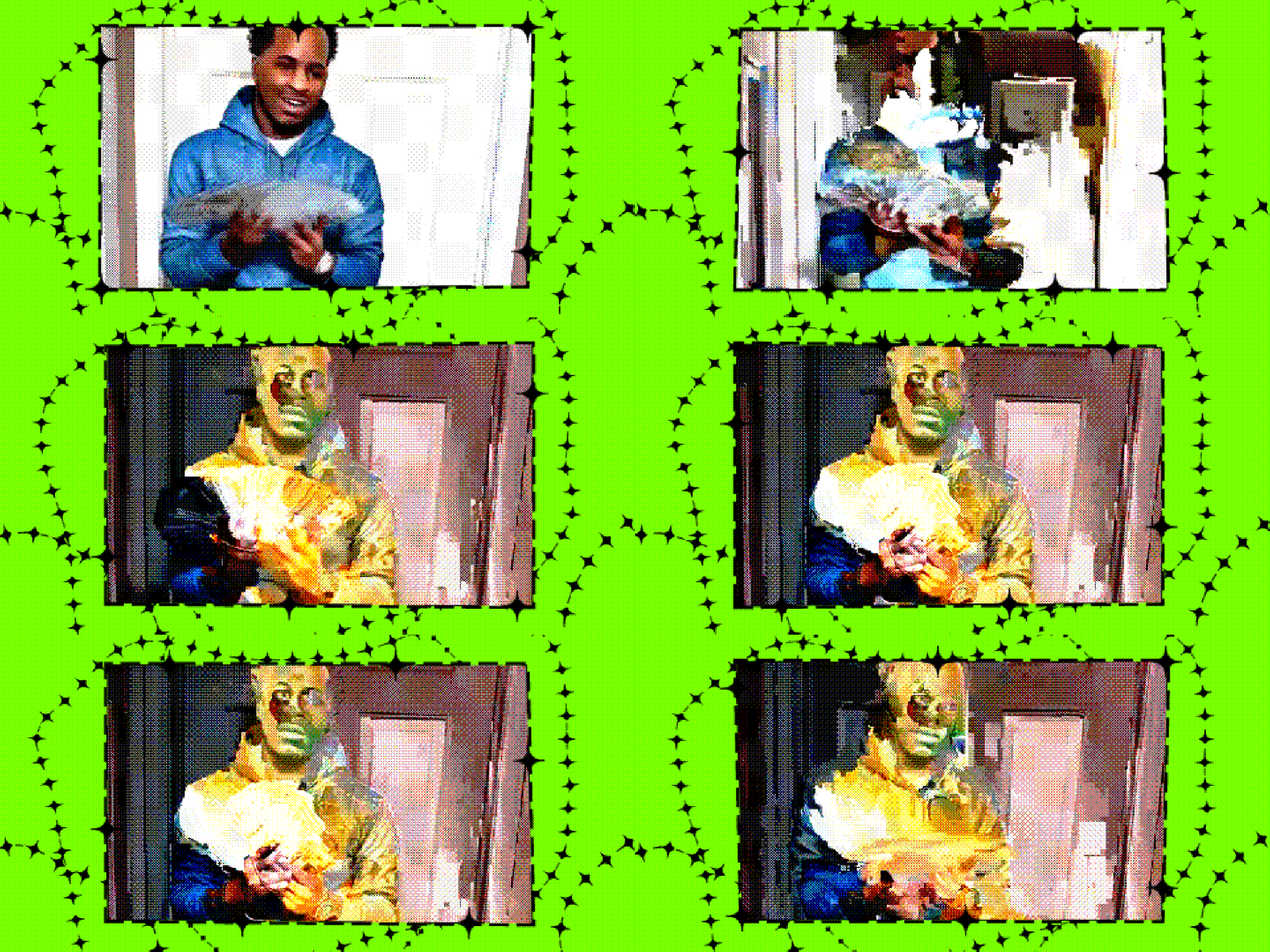
The surge of AI‑driven visuals in hip‑hop reflects a broader tech‑culture shift where creators chase novelty and cost efficiency. Early experiments like Kasher Quon's "Transported" used generative models to animate vivid, often controversial scenes, setting a template that quickly spread to artists such as 1900Rugrat, Peewee Longway, and mainstream stars like Kanye West. These videos blend AI‑generated characters with traditional editing, delivering hyper‑surreal aesthetics that resonate with a generation accustomed to rapid, meme‑driven content. The result is a visual language that feels both familiar and unsettling, blurring the line between human artistry and algorithmic output.
From a business perspective, AI offers a dramatic reduction in production expenses and turnaround time. Independent editors can now craft elaborate gore‑laden or psychedelic sequences for a few hundred dollars, a fraction of the cost of hiring crews, locations, and VFX houses. Labels, however, walk a tightrope: while publicly discouraging overt AI usage to protect brand integrity, they increasingly rely on the technology for background tasks such as rotoscoping, background removal, and color grading. This duality raises questions about transparency, intellectual property, and the environmental toll of data‑intensive models, prompting some executives to draft internal policies that balance creative freedom with corporate responsibility.
Looking ahead, the hip‑hop ecosystem will likely normalize AI as a standard production tool, much like Auto‑Tune once did. Artists who embrace the technology can maintain a competitive edge, delivering eye‑catching content at scale, while those who resist may face higher costs and slower release cycles. Industry stakeholders must therefore develop clear guidelines addressing attribution, ethical sourcing of prompts, and sustainability metrics. By doing so, they can harness AI’s creative potential without compromising the genre’s authentic, gritty roots or alienating audiences wary of synthetic art.
On AI in Hip-Hop
Comments
Want to join the conversation?
Loading comments...