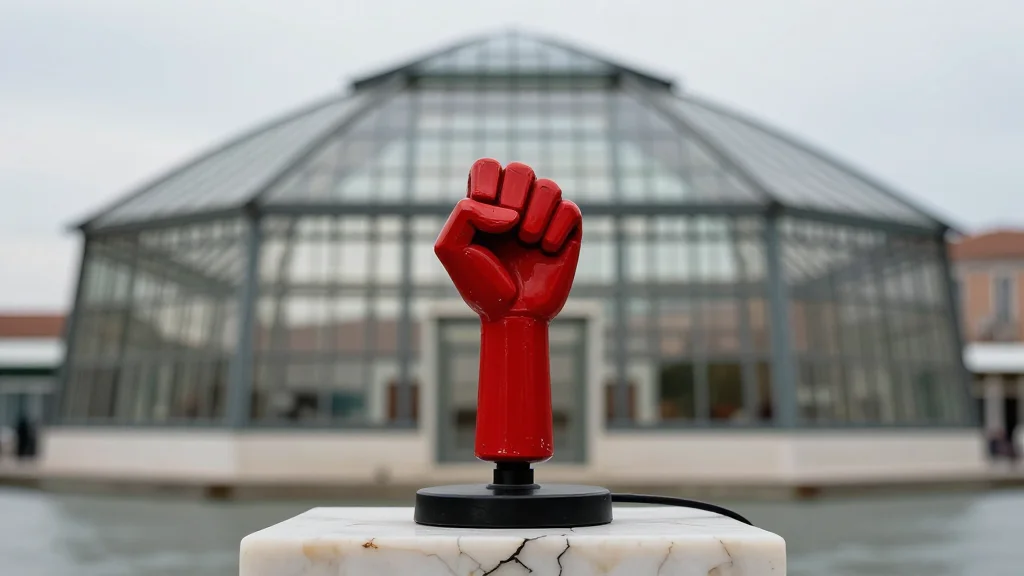
Pussy Riot Drops Debut Album “CYKA” With Venice Biennale Protest

Companies Mentioned
Why It Matters
Pussy Riot’s debut album launch demonstrates how music collectives can leverage high‑visibility art events to amplify political messages, reshaping the relationship between protest art and mainstream distribution. By intertwining a direct challenge to Vladimir Putin with a commercial music release, the group forces platforms, record labels, and cultural institutions to confront the limits of artistic freedom in the face of authoritarian pushback. The collaboration with Avenged Sevenfold also illustrates a strategic crossover that may broaden the audience for politically motivated music, potentially inspiring other artists to adopt similar hybrid tactics. The Biennale stunt further highlights the growing importance of cultural festivals as stages for geopolitical discourse. As governments increasingly monitor and regulate artistic expression, Pussy Riot’s approach could influence how activists plan releases, using global events to secure media coverage and public attention that might otherwise be muted.
Key Takeaways
- •Pussy Riot unveiled debut album CYKA at the Venice Biennale on June 12, 2026
- •Album includes single “CANDY DOPAMINE” featuring Avenged Sevenfold
- •Group publicly challenged President Vladimir Putin to a cage match during the protest
- •CYKA lists Putin as a credited contributor in the album’s liner notes
- •Upcoming live performance scheduled for June 20 at Paris’s BEYOND THE STREETS exhibit
Pulse Analysis
Pussy Riot’s launch strategy reflects a broader shift where activist musicians treat album drops as political events rather than purely commercial milestones. By commandeering the Venice Biennale—a venue traditionally insulated from overt political drama—the collective forced global media to cover both the artistic and geopolitical dimensions of the release. This tactic leverages the Biennale’s reputation for avant‑garde expression while subverting its usual detachment from state‑level controversies.
Historically, punk and protest music have thrived in underground circuits, but the digital age offers a platform for instant worldwide dissemination. Pussy Riot’s decision to credit Putin on the album is a calculated provocation that could trigger legal challenges, especially in jurisdictions with strict defamation or anti‑propaganda laws. The move may test the resilience of streaming services and record labels when faced with content that blurs satire and direct political accusation.
Looking ahead, the success of CYKA will likely be measured not only by streaming numbers but by its ability to sustain a dialogue about artistic freedom under authoritarian pressure. If the Paris performance and subsequent shows generate significant public engagement, other artists may adopt similar hybrid models—pairing high‑profile cultural events with politically charged releases—to amplify their messages. The industry should watch how record companies, distributors, and venues respond to the legal and reputational risks inherent in such bold statements.
Pussy Riot Drops Debut Album “CYKA” with Venice Biennale Protest
Comments
Want to join the conversation?
Loading comments...