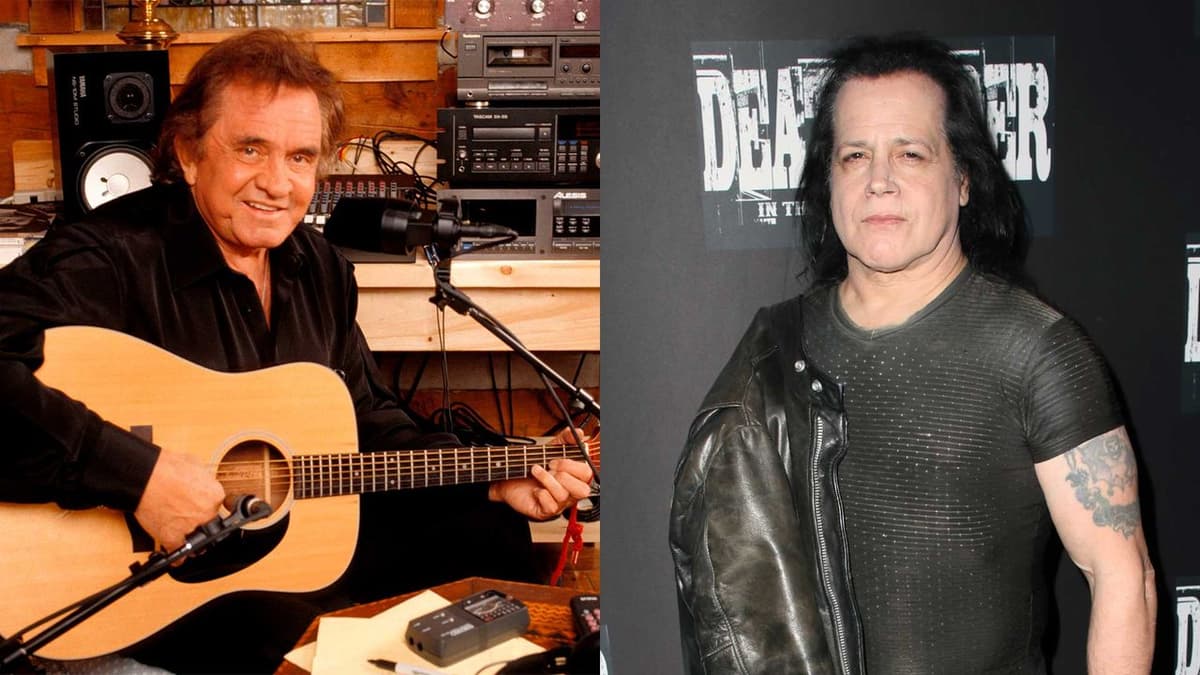
"They Asked if I Knew Who Johnny Cash Was. I Was Like, ‘Of Course I F**king Know Who He Is!" How a Punk Legend Helped Resurrect the Career of an American Icon in Less than Half an Hour
Why It Matters
The collaboration shows how cross‑genre partnerships can revive legacy artists, while highlighting Rick Rubin’s minimalist production that reshaped country music’s mainstream perception.
Key Takeaways
- •Rubin revived Cash with stripped‑down American Recordings
- •Danzig wrote “Thirteen” in ~15 minutes
- •Cash recorded the song the same night
- •Collaboration bridged punk and country audiences
- •Further joint projects stalled after label dispute
Pulse Analysis
By the early 1990s Johnny Cash had slipped from the spotlight, playing county fairs and small venues despite a storied catalog. Enter Rick Rubin, the hip‑hop and rock producer known for his bare‑bones aesthetic, who saw an opportunity to reframe the Man in Black for a new generation. Rubin booked a modest living‑room studio in Los Angeles and invited a handful of songwriters to present material for a stripped‑down record that would become American Recordings. The concept hinged on Cash’s raw voice, unadorned by elaborate arrangements.
Glenn Danzig, frontman of the Misfits and a longtime Rubin collaborator, answered the call after Rubin’s team heard his Orbison‑era composition. Within fifteen to twenty minutes Danzig penned “Thirteen,” a dark, melodic piece that matched Cash’s weathered timbre. The song was delivered to Rubin’s home studio on December 7, 1993, where Cash sat at a simple microphone, listened, and began singing immediately. The session was recorded live, capturing the interplay between Cash’s seasoned baritone and Danzig’s gritty songwriting, and the track was later included on the landmark album.
The inclusion of “Thirteen” helped cement American Recordings as a cultural reset, propelling Cash back onto the charts and earning multiple Grammy nominations. More importantly, the partnership demonstrated how genre boundaries could dissolve when a visionary producer pairs a legacy artist with an unexpected songwriter. While further collaborations fell through due to label politics, the episode remains a case study in music‑industry revival strategies and the power of minimalist production to spotlight authentic performance. Today, both Cash’s resurgence and Danzig’s re‑recording underscore the enduring appeal of cross‑genre creativity.
"They asked if I knew who Johnny Cash was. I was like, ‘Of course I f**king know who he is!" How a punk legend helped resurrect the career of an American icon in less than half an hour
Comments
Want to join the conversation?
Loading comments...