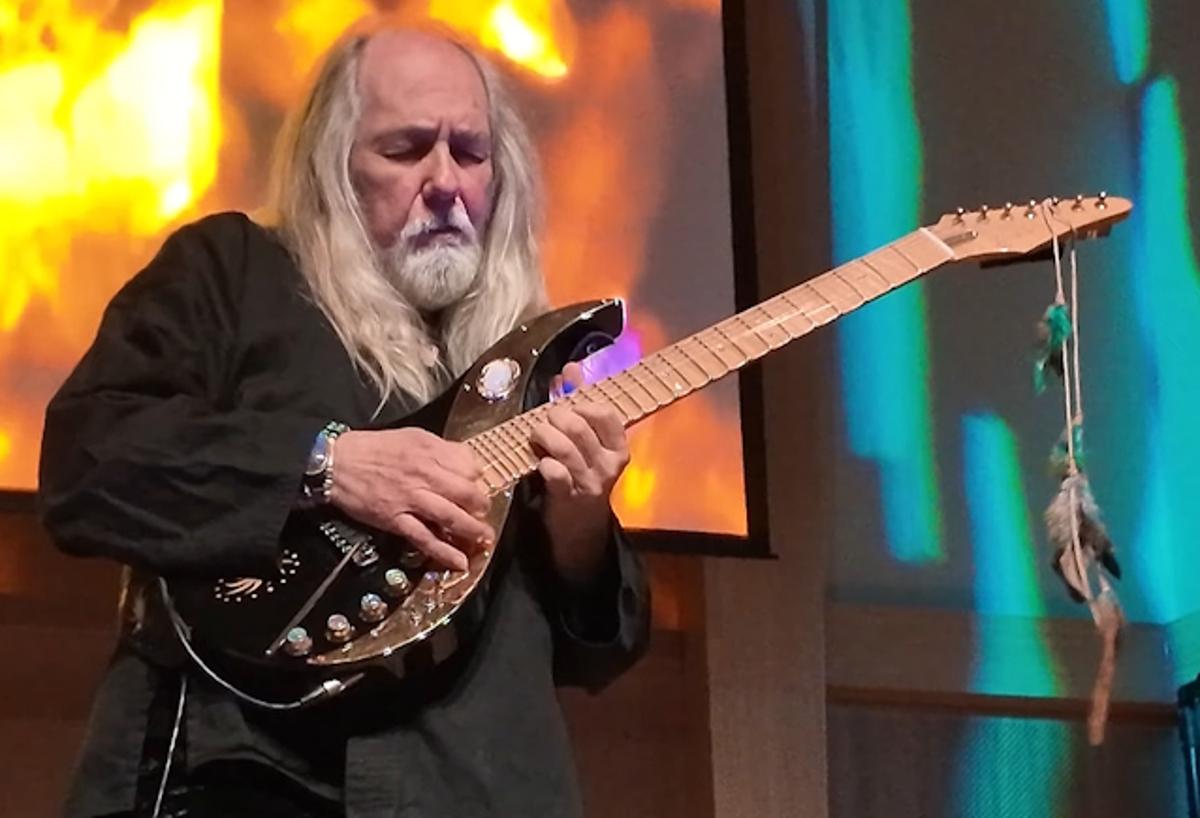
ULI JON ROTH On Guitarists' 'Pursuit Of Technical Brilliance': 'Too Many Players Start Sounding Like Typewriters'
Why It Matters
Roth’s perspective challenges the prevailing virtuoso‑first mindset, influencing guitar education and industry trends toward more expressive, dynamic playing. His critique of metal’s sonic excess also sparks debate about production values in modern rock music.
Key Takeaways
- •Roth urges players to prioritize emotion over speed.
- •He criticizes modern metal's constant hyper‑distortion and lack of dynamics.
- •Emphasizes mastering craft, harmony, rhythm, not just scales.
- •Credits 70s English guitar pioneers as primary influences.
- •Recent “Scorpions Revisited” releases revive his early work.
Pulse Analysis
Roth’s admonition to young guitarists arrives at a time when online tutorials and shredding contests dominate the learning landscape. By urging musicians to focus on "notes that go straight to the heart," he highlights a growing fatigue with endless scale drills and encourages a holistic approach that blends technical proficiency with storytelling. This mindset aligns with a broader industry shift toward authenticity, where audiences reward artists who convey genuine emotion over sheer speed, prompting educators to redesign curricula around phrasing, dynamics, and compositional context.
The guitarist’s critique of modern heavy‑metal production underscores a long‑standing tension between volume and nuance. He points out that today’s mixes often push every instrument to "11," sacrificing the ebb and flow that defined classic rock performances by Led Zeppelin, Jimi Hendrix, and Cream. This over‑compression not only flattens the listening experience but also limits creative expression for players who rely on dynamic contrast. As streaming platforms favor loudness for algorithmic visibility, Roth’s call for dynamic range serves as a reminder that musical depth can be a differentiator in a saturated market.
Beyond philosophy, Roth’s recent "Scorpions Revisited" double CD and "Tokyo Tapes Revisited" DVD/Blu‑ray illustrate how legacy artists can monetize archival material while re‑engaging fans. By remastering seminal recordings with modern fidelity, he bridges generational gaps and reinforces his influence on neoclassical metal and melodic rock. This strategy reflects a broader trend where veteran musicians leverage nostalgia and high‑resolution formats to generate new revenue streams, proving that artistic relevance can be sustained through thoughtful curation of one’s own history.
ULI JON ROTH On Guitarists' 'Pursuit Of Technical Brilliance': 'Too Many Players Start Sounding Like Typewriters'
Comments
Want to join the conversation?
Loading comments...