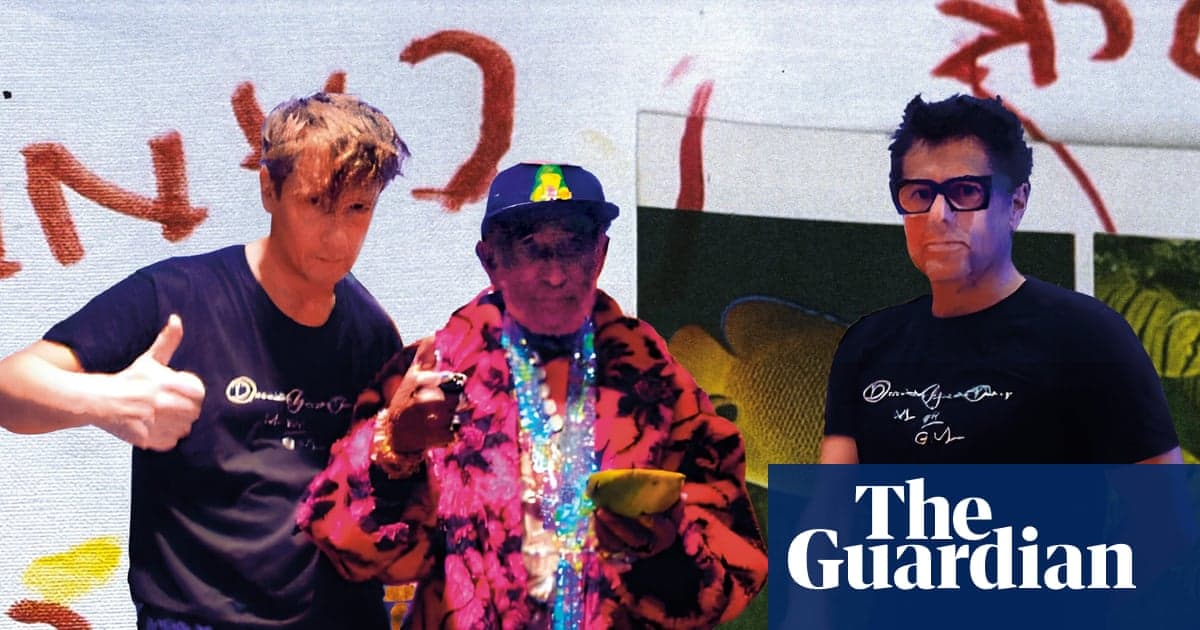
‘We’re Waiting for the Plan to Find Us’: Mouse on Mars on Working with Lee ‘Scratch’ Perry and 30 Years of Oblique Adventures in Sound
Why It Matters
The release fuses pioneering spatial‑audio technology with Perry’s iconic reggae influence, signaling new revenue and artistic models for legacy artists and experimental producers alike.
Key Takeaways
- •Mouse on Mars teams with Lee “Scratch” Perry for new album
- •Album recorded in 2019, released as spatial‑audio experience
- •Barbican will host immersive installation to showcase the record
- •Collaboration bridges experimental electronica with legendary reggae production
Pulse Analysis
Mouse on Mars has long occupied a singular niche in electronic music, blending glitch‑laden textures with pop sensibility and avant‑garde experimentation. Originating in the early 1990s, the Düsseldorf‑Cologne duo helped define Germany’s underground sound, influencing acts like Boards of Canada and Four Tet. Their willingness to adopt emerging tools—from early digital samplers to AI‑driven composition—has kept them relevant across three decades, earning them a reputation as innovators unbound by commercial expectations.
The forthcoming album *Spatial, No Problem* represents a rare convergence of two disparate musical legacies. Lee “Scratch” Perry, the Jamaican producer who reshaped reggae through dub’s studio wizardry, recorded his final sessions with Mouse on Mars in 2019. By employing spatial‑audio recording—a technique that maps sound sources in three dimensions—the project aims to deliver an immersive experience that mirrors live performance acoustics. This approach not only honors Perry’s experimental ethos but also showcases how legacy recordings can be revitalized through cutting‑edge technology, offering fans a fresh way to engage with historic material.
In an era where streaming algorithms dominate consumption, the duo’s decision to launch the album via an immersive Barbican installation signals a shift toward experiential music distribution. By integrating live performances, field recordings, and interdisciplinary dialogues on Afrofuturism, the event creates a multi‑sensory narrative that transcends traditional listening. Such models could inspire other artists to explore venue‑specific experiences, leveraging spatial audio and curated installations to differentiate their work in a saturated market, while also generating ancillary revenue streams beyond streaming royalties.
‘We’re waiting for the plan to find us’: Mouse on Mars on working with Lee ‘Scratch’ Perry and 30 years of oblique adventures in sound
Comments
Want to join the conversation?
Loading comments...