Why It Matters
The Radiophonic Workshop’s innovations laid groundwork for modern electronic production, influencing genres and media sound design. Understanding its history informs current debates on AI’s role in music creation.
Key Takeaways
- •BBC Radiophonic Workshop founded 1958 for sound effects
- •1969 video showcases early synthesiser techniques
- •Daphne Oram pioneered electronic music innovations
- •Workshop created iconic Doctor Who theme
- •AI debate mirrors early tech skepticism
Pulse Analysis
The BBC Radiophonic Workshop emerged in 1958 as a modest department tasked with generating sound effects for radio and television. Its engineers quickly turned to nascent electronic instruments—voltage‑controlled oscillators, tape loops, and custom-built synthesizers—to craft sounds that traditional orchestras could not produce. By the late 1960s, the Workshop had become a crucible for experimentation, attracting engineers, composers, and avant‑garde artists eager to explore the sonic possibilities of circuitry and tape manipulation.
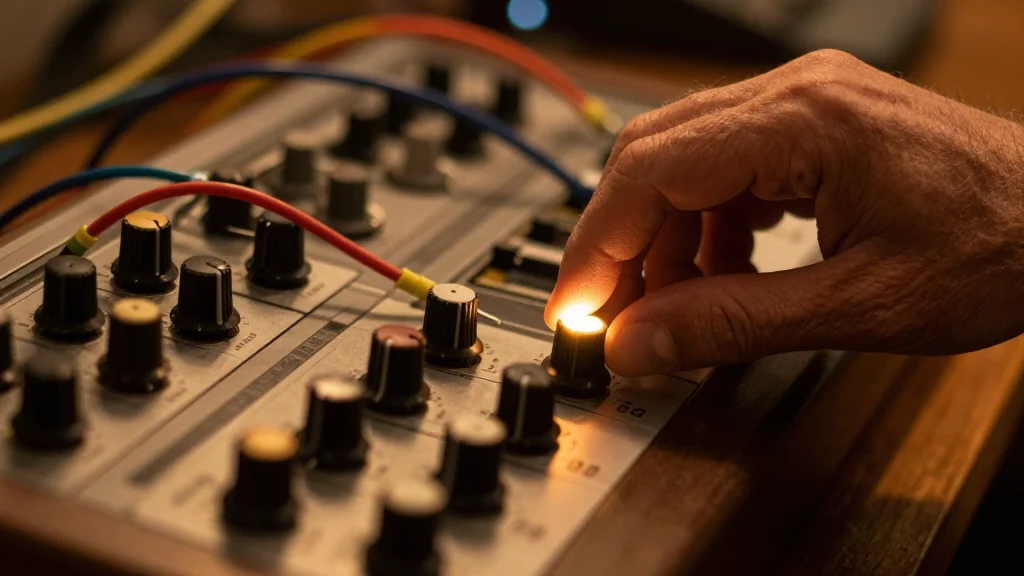
Central to this creative surge was Daphne Oram, a visionary who co‑founded the Workshop and later invented the Oramics technique, a graphical method of shaping sound directly on film. Oram’s demonstrations in the 1969 BBC documentary reveal a tactile, hands‑on approach: splicing tape, patching cables, and manually adjusting voltage to sculpt tones. The Workshop’s most celebrated output, the Doctor Who theme, fused these analog methods into a memorable, otherworldly motif that still resonates in contemporary media. This pioneering spirit inspired subsequent generations of electronic musicians, from Kraftwerk to modern EDM producers, who trace their lineage back to those early studio experiments.
Today, the conversation has shifted to artificial intelligence, with algorithms generating melodies, harmonies, and even entire tracks. The 1969 footage serves as a reminder that each technological leap—whether analog synths or AI models—initially sparks both excitement and skepticism. By studying the Radiophonic Workshop’s legacy, industry leaders can better gauge AI’s potential to augment creativity without eroding the human touch that defines compelling music. The historical parallel underscores the importance of balancing innovation with artistic intent in the evolving soundscape.
What is electronic music?
Comments
Want to join the conversation?
Loading comments...