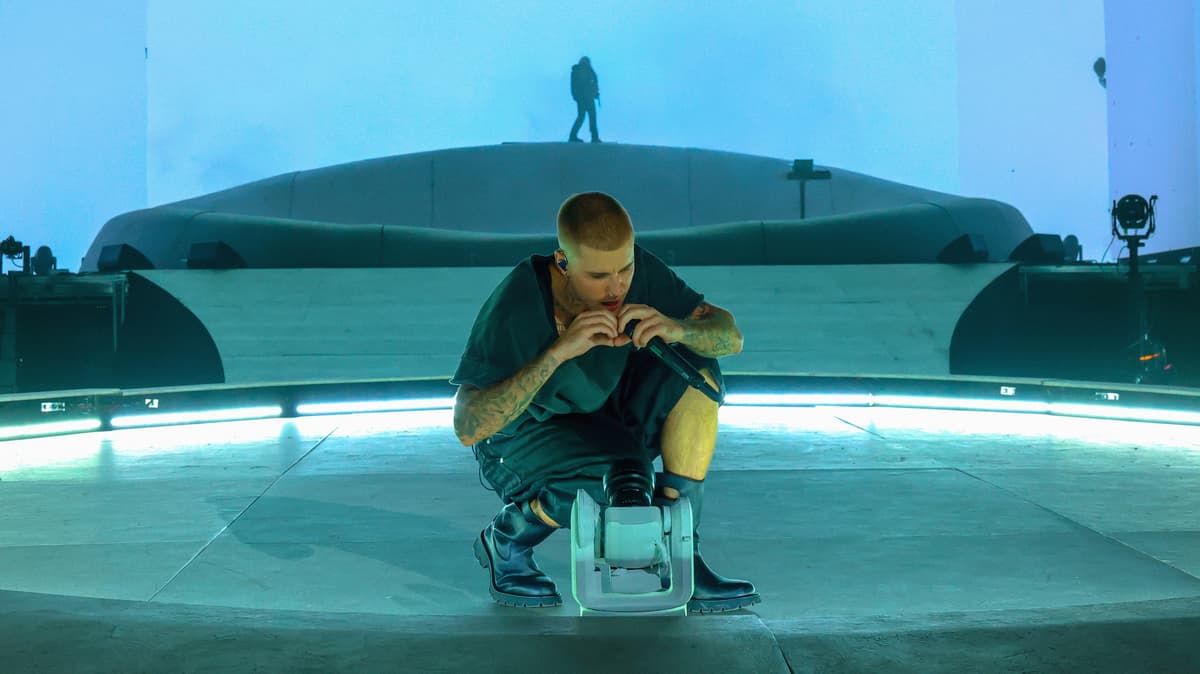
Why Justin Bieber Played YouTube Onstage for Thousands of People
Why It Matters
Bieber’s volatile performances directly affected Coachella’s secondary market and demonstrated how an artist’s on‑stage narrative can shape festival economics and digital‑culture perception.
Key Takeaways
- •Bieber's first Coachella set featured a live YouTube browsing segment
- •Minimalist stage and subdued show drew criticism for laziness
- •Ticket resale prices doubled after first‑set controversy
- •Second set delivered high energy, fan interaction, Billie Eilish cameo
- •Bieber's $200 million catalog sale underscores lasting commercial value
Pulse Analysis
Justin Bieber’s Coachella debut underscored the evolving relationship between pop stardom and digital culture. The Canadian singer, who first rose to fame through YouTube, turned the festival’s massive stage into a personal living‑room, pulling up early‑career clips and viral videos for a crowd of roughly 125,000 daily attendees. While the concept sparked curiosity, the stark beige set, hoodie‑clad look, and a setlist limited to tracks from *Swag* and *Swag II* left many observers labeling the act as "lazy" and "barren." The performance also arrived against the backdrop of Bieber’s $200 million catalog sale and his status as possibly the highest‑paid Coachella act, raising questions about whether the YouTube interlude was artistic expression or a time‑killing tactic before a lucrative paycheck.
The immediate fallout was measurable: online debates surged, and secondary‑market ticket prices more than doubled as fans scrambled for the remaining slots. This price spike illustrates how a single artist’s on‑stage narrative can ripple through festival economics, influencing resale dynamics and ancillary revenue streams. Moreover, the episode highlighted the growing importance of live‑streaming platforms; viewers watched the set on YouTube in real time, blurring the line between concert and digital content consumption. For promoters, the incident serves as a reminder that artist authenticity and audience expectations must be balanced to protect brand equity and ticket‑sale stability.
Bieber’s second‑weekend set dramatically shifted the story. He abandoned the laptop, engaged directly with the crowd, and even invited Billie Eilish onstage, creating viral moments that reignited fan enthusiasm. The renewed energy not only salvaged his reputation but also reinforced the power of live interaction in an era dominated by screens. For the music industry, the episode offers a case study in how artists can leverage vulnerability and digital nostalgia while still delivering a compelling live experience, ultimately driving both ticket sales and streaming engagement.
Why Justin Bieber Played YouTube Onstage for Thousands of People
Comments
Want to join the conversation?
Loading comments...