Podcast Episode 30: What a Decade of Iron Funding Has Taught Us
Key Takeaways
- •GiveWell spent ~ $50 M on iron programs over ten years.
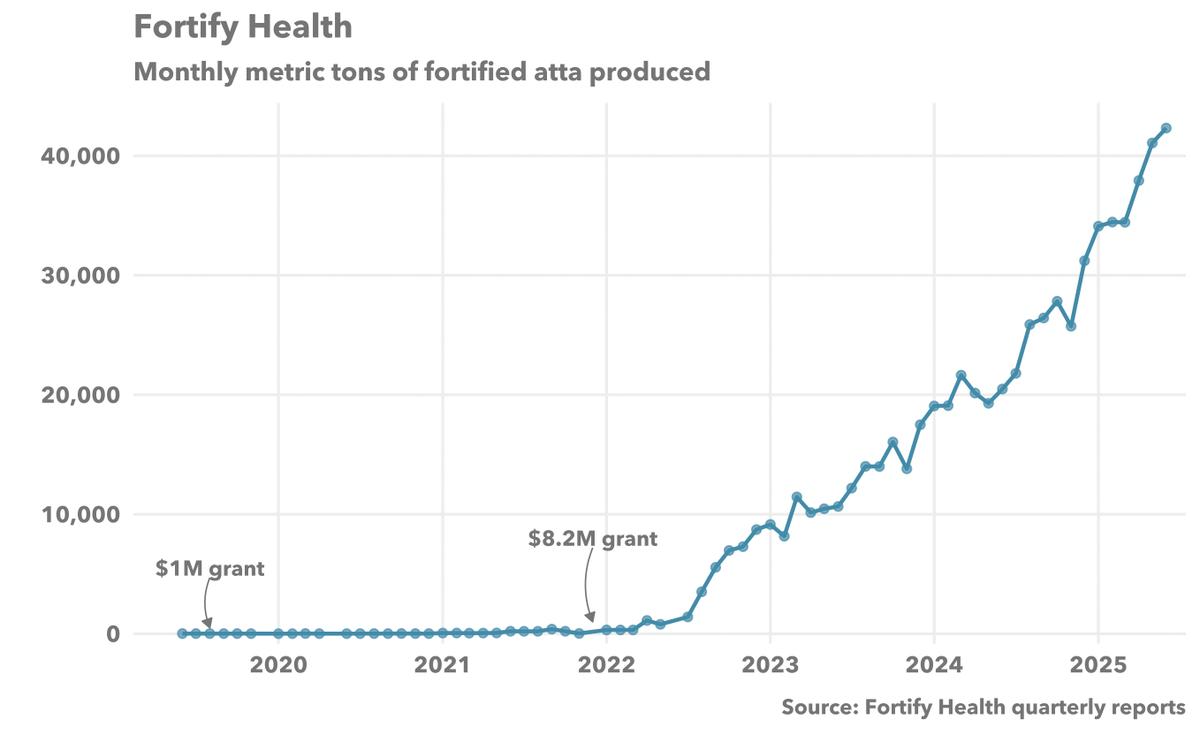
- •Fortify Health expanded from 7 to 125 mills, reaching 30× more people.
- •2021 grant proved twice as cost‑effective as initially projected.
- •New RFI seeks African iron projects in low‑malaria settings.
Pulse Analysis
Anemia, driven largely by iron deficiency, remains a silent crisis that impairs cognition, productivity, and maternal health for roughly a quarter of the world’s population. As a leading evidence‑focused charity, GiveWell has directed about $50 million toward interventions that promise high returns on health outcomes per dollar spent. By concentrating on low‑cost solutions such as iron‑fortified wheat flour and supplementation, the organization aligns with global health priorities while maintaining rigorous cost‑effectiveness standards that appeal to impact‑oriented donors.
The partnership with Fortify Health illustrates how scaling can dramatically improve both reach and efficiency. Starting with seven mills in India, Fortify’s network expanded to 125 open‑market mills, boosting flour production thirty‑fold and slashing per‑person costs by roughly 50%. This operational leap transformed GiveWell’s original $8.2 million grant into a program that now delivers twice the anticipated value, prompting a renewed $10 million commitment. Such outcomes demonstrate that strategic grantmaking, coupled with real‑time data, can unlock economies of scale that traditional aid models often miss.
Looking ahead, GiveWell’s investment in a Bangladesh randomized controlled trial aims to quantify the direct link between iron intake and fatigue, a metric that could refine eligibility thresholds for future programs. Simultaneously, a new request for information targets African contexts with low malaria risk, addressing lingering safety concerns about iron supplementation. By expanding research capacity and diversifying geographic focus, GiveWell positions itself to guide the philanthropic sector toward interventions that are not only cost‑effective but also backed by robust, actionable evidence.
Podcast Episode 30: What a Decade of Iron Funding Has Taught Us
Comments
Want to join the conversation?