Advancing Disability Inclusion in Agricultural Philanthropy and Rural Development Funding
Why It Matters
Inclusive agricultural programs empower a marginalized workforce, strengthening food security and economic resilience while providing donors a high‑impact, scalable model for rural development.
Key Takeaways
- •Sierra Leone has ~500,000 physically disabled people, ~5.5% of population.
- •Only 29% of population has electricity, hindering agricultural development.
- •Farming on Crutches trains amputees in sustainable, debt‑free agriculture.
- •Inclusive farming boosts climate resilience, nutrition, and local economies.
- •Philanthropic funders can replicate the model to amplify rural impact.
Pulse Analysis
Sierra Leone’s development challenges are stark: a post‑conflict economy, limited electrification, and a reliance on subsistence farming make the nation vulnerable to climate shocks and volatile fertilizer prices. With roughly half a million people living with physical disabilities—many war‑related amputees—the country faces a dual burden of poverty and exclusion. These demographics underscore the urgency for development strategies that address both economic and social inequities, especially as agriculture remains the backbone of livelihoods for the majority of its 9 million residents.
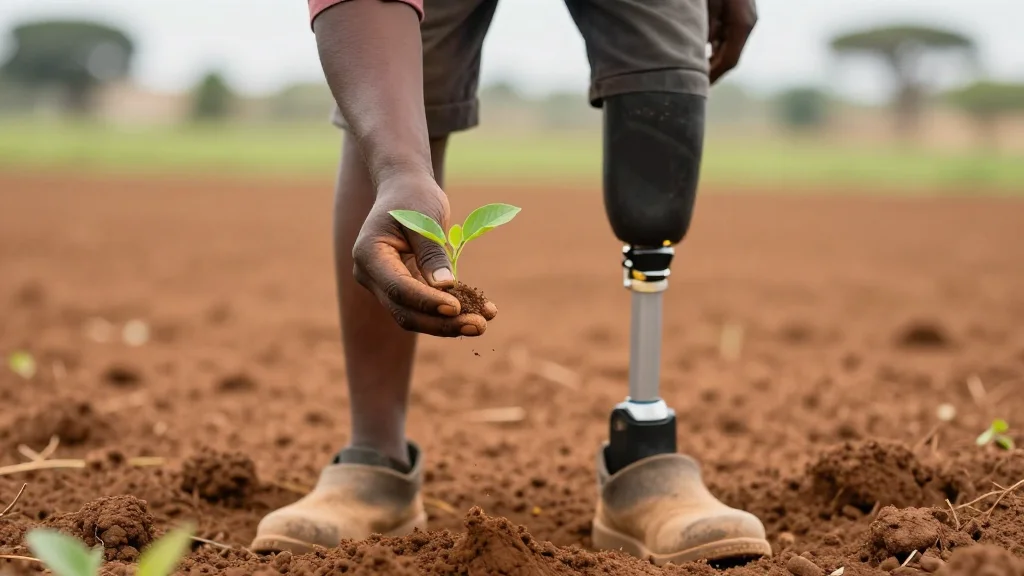
Founded in 2020, Farming on Crutches reimagines agricultural philanthropy by centering disabled farmers rather than treating them as peripheral beneficiaries. The organization equips amputee partners with training in regenerative techniques that avoid chemical inputs and eliminate debt cycles tied to expensive imported inputs. By leveraging locally appropriate tools and climate‑smart practices, participants not only increase yields but also enhance soil health and biodiversity, creating a self‑sustaining model that can be scaled across similar low‑resource settings.
For donors and development agencies, the initiative offers a compelling case study in impact‑driven inclusion. Funding inclusive agritech projects yields measurable returns: improved food security, diversified income streams, and stronger community cohesion. Moreover, the model aligns with global agendas such as the UN Sustainable Development Goals on zero hunger and reduced inequalities. Replicating this approach could unlock new pathways for rural development financing, encouraging investors to prioritize projects that deliver both economic and social dividends while building climate resilience in vulnerable regions.
Advancing Disability Inclusion in Agricultural Philanthropy and Rural Development Funding
Comments
Want to join the conversation?
Loading comments...