Awareness Isn’t a Funnel, It’s a Filter
Why It Matters
By separating reliability from identity alignment, nonprofits can allocate marketing spend to tactics that truly move donors, boosting fundraising efficiency and impact.
Key Takeaways
- •Brand personality and differentiation add no predictive power to donor giving
- •Trust conflates reliability and values alignment; treat them as distinct
- •Functional connection measures reliability; personal connection measures identity fit
- •Donor values, not income or education, predict awareness and commitment
- •Targeted messages that match donor values improve acquisition efficiency
Pulse Analysis
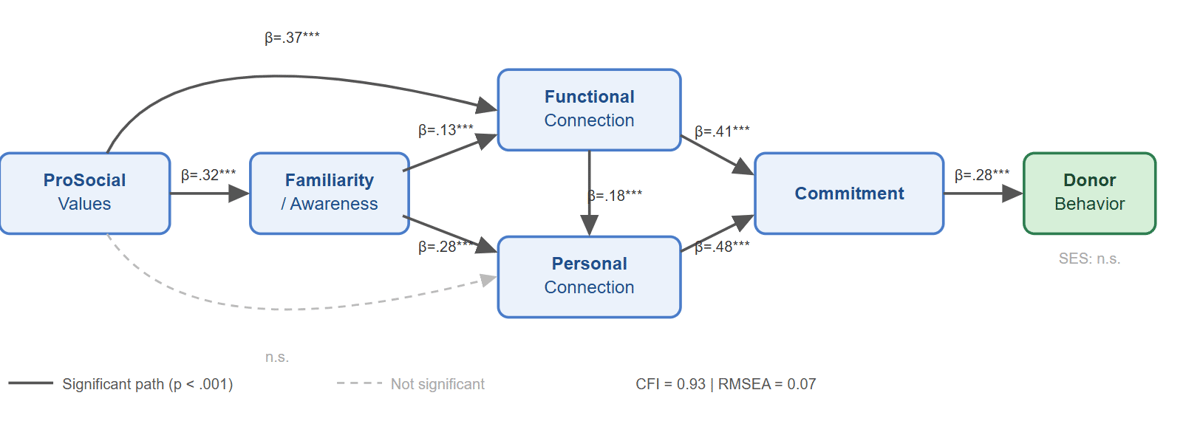
Recent research that pooled donor data from 26 charities challenges the nonprofit sector’s reliance on classic brand‑building tactics. The analysis found that brand personality, differentiation, and even a polished image offer little explanatory power for donor behavior. Instead, the strongest predictors are deeper relational factors—whether donors view the organization as reliable and whether its mission aligns with their personal values. For fundraisers, this means that costly workshops aimed at crafting a distinct brand voice may yield minimal return, prompting a shift toward evidence‑based relationship metrics.
The study also deconstructs the catch‑all term “trust” into two separate dimensions. Functional connection reflects an organization’s operational reliability—delivering on promises, transparent reporting, and consistent performance. Personal connection captures the identity fit, where donors see the cause as an extension of their own beliefs. Treating these as a single construct obscures the specific interventions needed: process improvements for reliability and storytelling that resonates with donor values for identity alignment. By addressing each side deliberately, nonprofits can build more resilient donor relationships.
Upstream of the relationship lies awareness, which the research frames as a filter rather than a funnel. Donor values, not demographic factors like income or education, predict whether a prospect even notices a charity. Consequently, acquisition strategies should prioritize targeting audiences whose values already align with the mission, using tailored messaging that confirms their intuition. Applying the diagnostic model enables nonprofits to allocate marketing dollars to high‑probability prospects, reducing waste and accelerating commitment, ultimately strengthening the financial health of the organization.
Awareness Isn’t a Funnel, It’s a Filter
Comments
Want to join the conversation?
Loading comments...