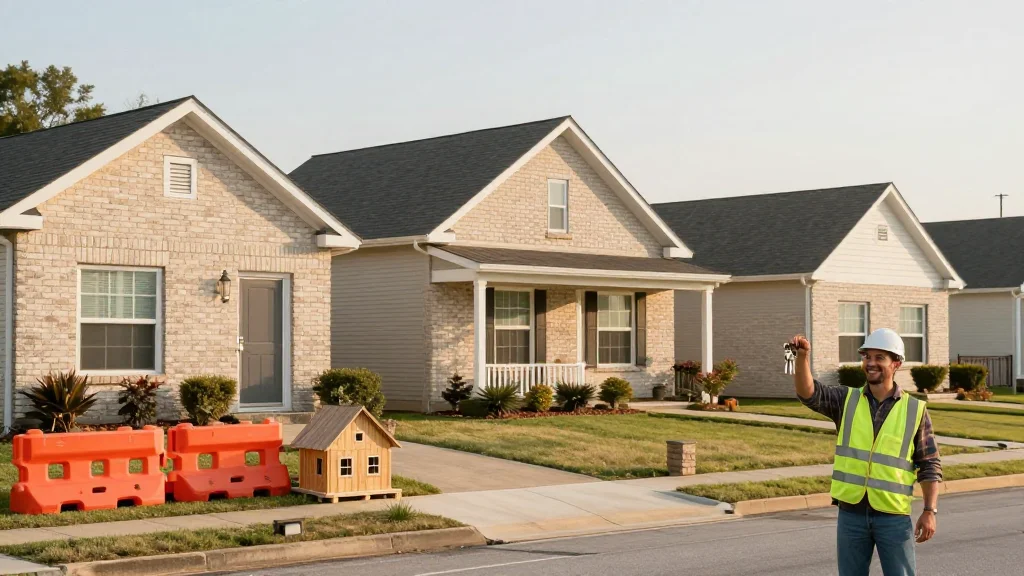
The Nonprofit Supporting Homeownership for a Black Town in Rural Mississippi
Why It Matters
Homeownership is a primary vehicle for generational wealth, and this initiative directly addresses the acute housing gap in a low‑income, all‑Black rural community where market forces have failed. Demonstrating success could inform broader affordable‑housing strategies in similar underserved regions.
Key Takeaways
- •But God Ministries builds 10 homes for Jonestown residents
- •Jonestown median income $21,700; 56% below poverty line
- •Rural housing shortage forces 50% of income on housing
- •USDA Rural Housing Service grants often ineligible for locals
- •New Hope Field baseball park spurs community engagement
Pulse Analysis
Rural America faces a deepening housing crisis, with nearly half of low‑income residents spending at least half their earnings on substandard dwellings. In towns like Jonestown, Mississippi, median incomes hover around $21,700 and more than 56% of households fall below the poverty line, creating a cycle where renting replaces homeownership and erodes pathways to generational wealth. National data from the National Rural Housing Coalition highlight overcrowded homes, lack of basic utilities, and a construction slowdown that disproportionately harms communities already grappling with limited job prospects.
Enter But God Ministries, a faith‑based nonprofit that has embedded itself in Jonestown over several years. Beyond its spiritual mission, the organization has launched a dental clinic, an after‑school program, and the $3 million Hope Field baseball and softball park—projects developed in partnership with Major League Baseball and local officials. Its latest venture, a 10‑home neighborhood, directly tackles the homeownership void by providing affordable, sustainable housing options. By leveraging relationships with the Coahoma County Board of Supervisors and tapping into limited federal Rural Housing Service resources, the nonprofit sidesteps eligibility hurdles that often exclude the town’s poorest residents.
The broader implications extend beyond Jonestown’s borders. Successful delivery of affordable homes in a high‑poverty, all‑Black rural setting could serve as a replicable model for policymakers and other nonprofits confronting similar challenges nationwide. It underscores the need for more flexible federal grant structures and targeted private‑sector partnerships to bridge the housing gap. As the nation seeks to close wealth disparities, initiatives that combine community engagement, strategic funding, and on‑the‑ground construction offer a pragmatic pathway toward equitable homeownership.
The Nonprofit Supporting Homeownership for a Black Town in Rural Mississippi
Comments
Want to join the conversation?
Loading comments...