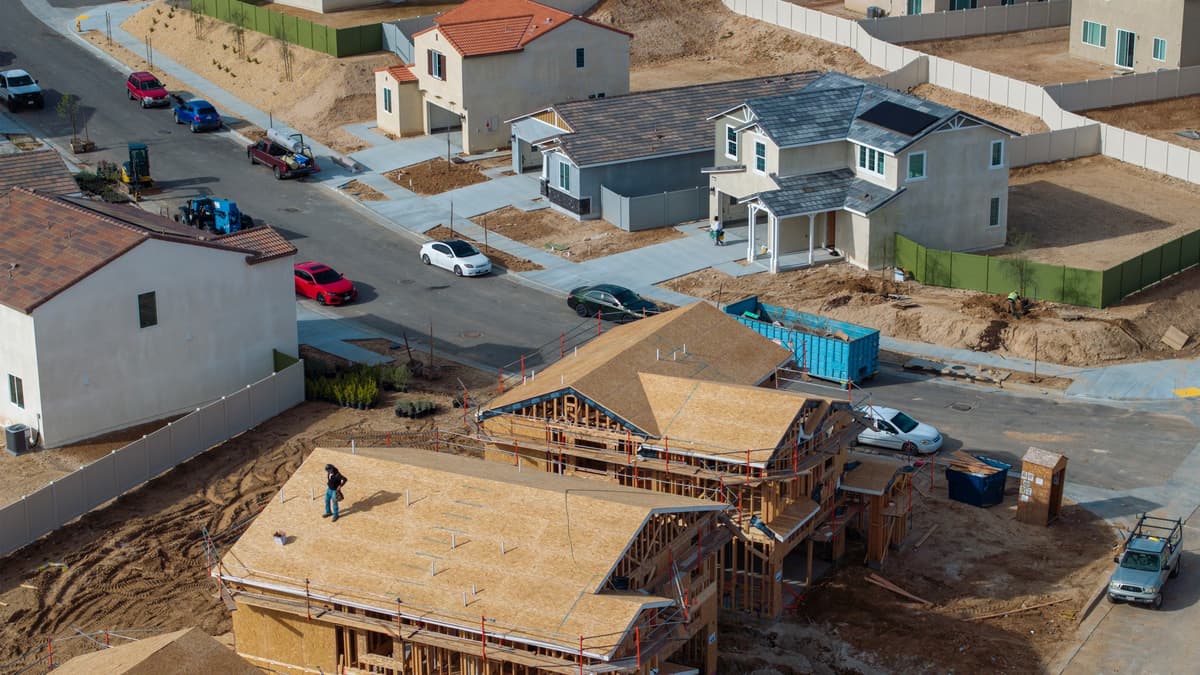
California Added More Homes Than People—But Buyers and Renters Still Aren’t Getting Relief
Why It Matters
Even a building boom cannot curb California’s housing shortage because demographic trends increase unit demand, keeping prices high for buyers and renters. The gap threatens economic stability and widens the wealth divide.
Key Takeaways
- •677,000 new units added, but population grew only 39,000
- •Owner vacancy dropped to 0.8%; rental vacancy 4.3%
- •Households with children fell 82,000; child‑free households rose 722,000
- •Older adults projected to be 24.9% of population by 2050
- •Only 712,000 of 1.2 million planned units target moderate‑income buyers
Pulse Analysis
California’s recent construction surge looks impressive on paper, but the data reveal a deeper structural mismatch. The Public Policy Institute of California’s analysis shows that while 677,000 new homes were built over six years, vacancy rates have continued to shrink, with owner vacancy at 0.8% and rental vacancy at 4.3%—both far below the national norm. This paradox stems from a demographic pivot: the state lost 82,000 households with children and added 722,000 child‑free households, meaning fewer people share a roof and more units are required per capita.
The aging of California’s population amplifies the pressure. Seniors now comprise 16.5% of residents and are expected to reach 24.9% by 2050, a group that typically lives alone or in two‑person households. Even if overall population growth stalls, the shift toward smaller households creates fresh demand for housing. Nationally, 72% of renters are 30 or older, underscoring a broader trend of delayed household formation that hits California hardest because of its chronic supply constraints and high price points.
Policy makers have responded with measures such as streamlined ADU approvals, yet the pace remains insufficient. California still requires an estimated 2.5 million additional homes over the next eight years, roughly double the current pipeline. Moreover, only about half of the 1.2 million units in planning are earmarked for moderate‑income households, leaving a sizable affordability gap. Without accelerating construction that targets lower‑cost units, the state’s housing crisis will continue to suppress homeownership, strain renters, and exacerbate economic inequality.
California Added More Homes Than People—but Buyers and Renters Still Aren’t Getting Relief
Comments
Want to join the conversation?
Loading comments...