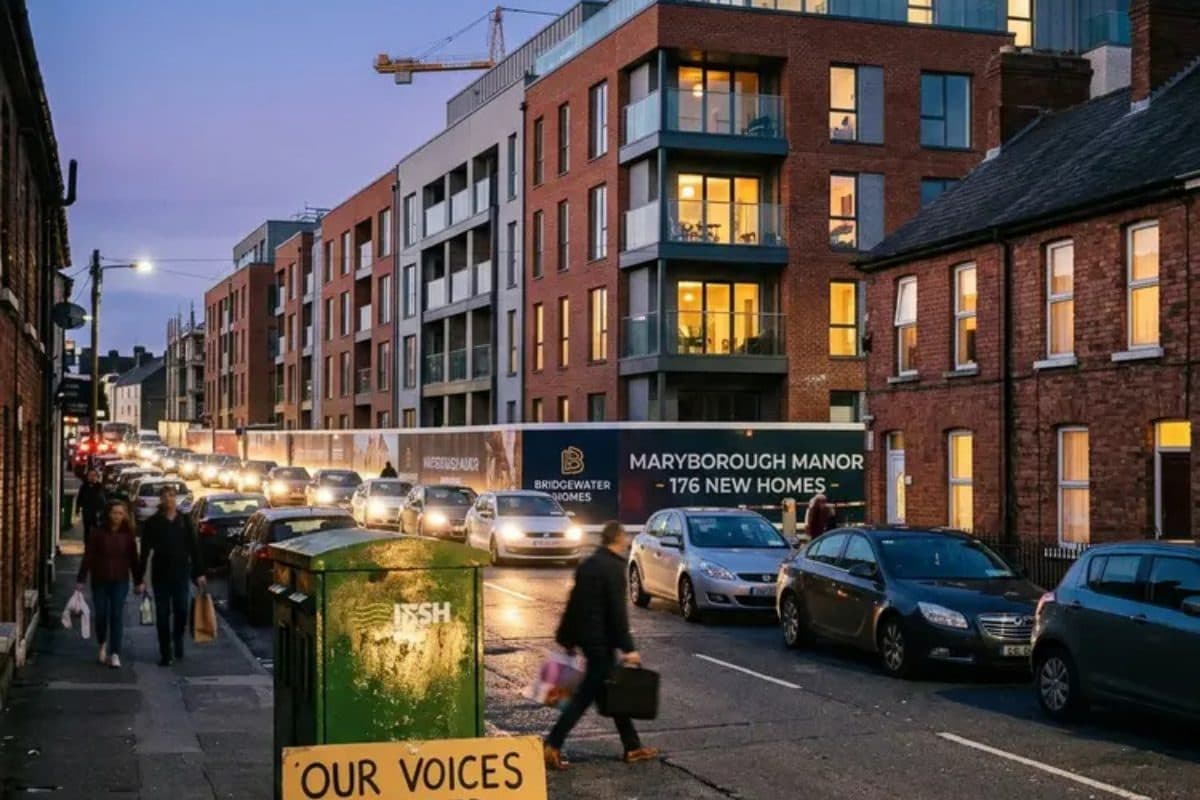
Are We Building Homes Communities Actually Want?
Key Takeaways
- •Maryborough Manor adds 176 units despite 16 local objections.
- •Ireland needs 52,000 homes annually; 2024 delivered only 30,300.
- •Infrastructure lag fuels community resistance across UK and Ireland.
- •Early, genuine engagement cuts redesign costs and planning delays.
- •High‑rise schemes face over 1,000 objections, highlighting design disconnect.
Pulse Analysis
The scale of Ireland’s housing shortage is stark: the Department of Finance projects a need for about 52,000 dwellings a year, yet 2024 saw just 30,300 completions. This gap forces planners to approve large‑scale projects quickly, often in neighborhoods already strained by existing infrastructure. The result is a cascade of objections, as seen in Cork’s Maryborough Manor development, where 16 families voiced concerns over traffic, noise and safety, and in London’s Hanwell, where more than 1,100 objections halted a 287‑home high‑rise proposal. These cases illustrate how supply pressure can clash with local capacity, creating friction that slows delivery and raises costs.
Beyond sheer numbers, the pattern reveals a deeper design disconnect. Residents repeatedly cite insufficient road capacity, overburdened schools, and loss of green space as core grievances. When developers submit finalized plans without meaningful pre‑application dialogue, objections mount, prompting costly redesigns or even project cancellations. The financial impact is tangible: redesign work can add millions of euros to a development’s budget, while delays erode investor confidence and extend financing periods. Moreover, community resistance can trigger political push‑back, leading to stricter planning regulations that affect the broader market.
Policy and practice offer a clear remedy: early, authentic engagement that treats community input as a design tool rather than a checkbox. The UK’s National Planning Policy Framework explicitly encourages this approach, noting that it can streamline approvals and improve outcomes. Developers who invest in transparent communication—explaining constraints, showcasing how feedback shapes plans, and offering multiple participation channels—tend to face fewer objections, reduce redesign expenses, and deliver projects that align with local expectations. By synchronising infrastructure upgrades with housing delivery and prioritising designs that complement existing neighbourhood character, the industry can meet urgent housing targets while rebuilding trust and ensuring long‑term viability.
Are We Building Homes Communities Actually Want?
Comments
Want to join the conversation?