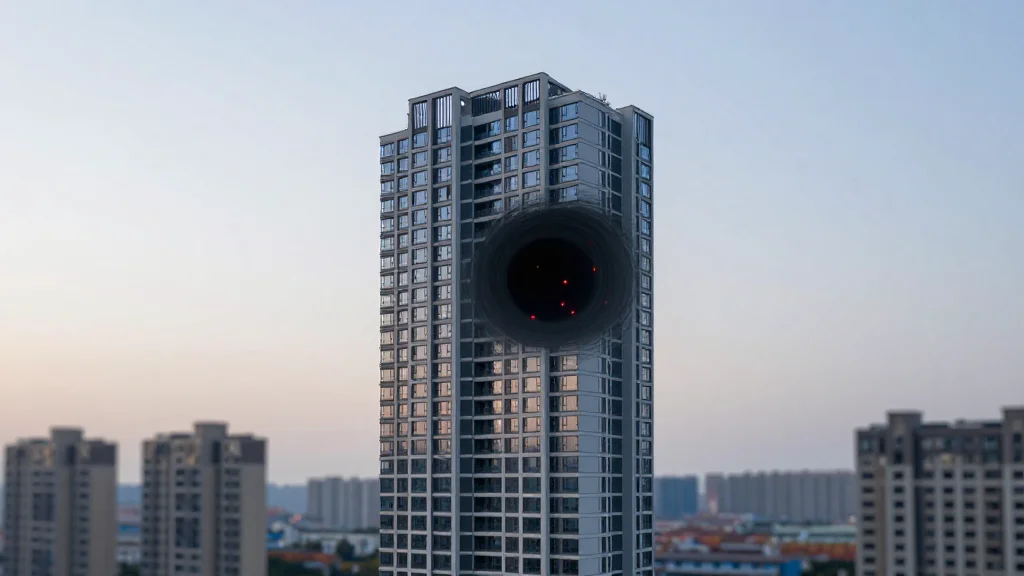
Chinese Property Turns Negative Equity Black Hole
Key Takeaways
- •Chinese property sales rose slightly week after slump.
- •Primary market volume improves across 30 cities.
- •Secondary market volume stable, +0.2% YoY.
- •Negative equity spreads slowly despite price supports.
- •Banking sector strained by lingering bad loans.
Pulse Analysis
The Chinese property sector has been in freefall for almost half a decade, dragging down growth and exposing systemic risks. Excess supply, slowing urbanization and a wave of developer defaults have left banks laden with non‑performing loans tied to real‑estate projects. Because housing accounts for roughly 30 % of China’s GDP and a large share of household wealth, the slowdown reverberates through consumer confidence and local‑government financing vehicles. Analysts have warned that without decisive intervention, the debt‑laden market could trigger a broader credit crunch.
Data released this week show a tentative uptick: the 30‑city average daily primary‑market transaction volume rose modestly, while the 16‑city secondary‑market index held steady at a 0.2 % year‑over‑year gain. These figures suggest that recent price‑support measures and targeted liquidity injections are beginning to restore buyer sentiment, albeit slowly. However, negative equity—where homeowners owe more than their property’s market value—continues to spread, reflecting lingering over‑building and insufficient price recovery. The gradual improvement masks underlying fragility in household balance sheets.
The persistence of bad loans remains a key concern for China’s banking system, which must provision for mounting real‑estate exposures. Regulators have responded with a mix of easing credit curbs, encouraging distressed‑asset sales, and piloting local‑government bond guarantees to shore up financing. For global investors, the sector’s partial rebound offers a narrow window to assess valuation discounts versus the risk of further de‑leveraging. Watching policy signals and the pace of negative‑equity resolution will be critical in judging whether China can transition from crisis management to sustainable growth in its property market.
Chinese property turns negative equity black hole
Comments
Want to join the conversation?