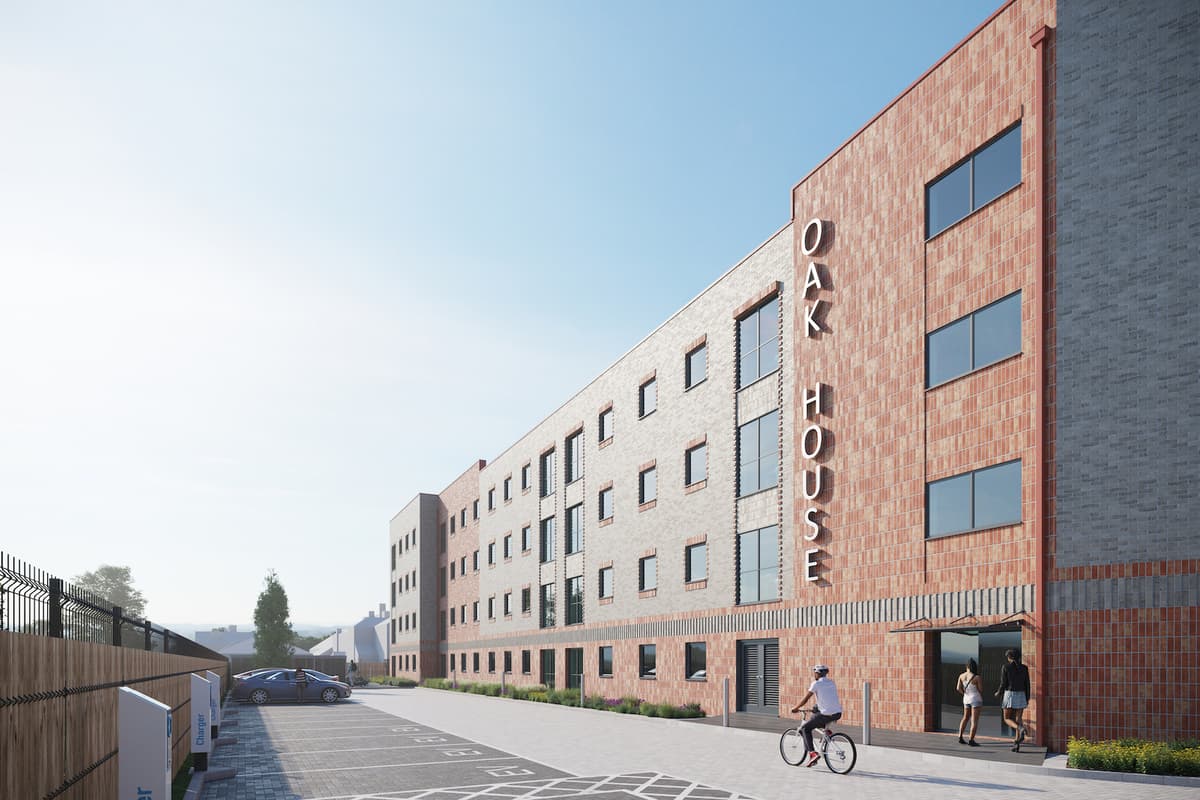
Developer Targets Key-Worker Housing Shortage with German Prefab System
•March 6, 2026
0
Key Takeaways
- •79-unit Oak House uses German-prefab construction.
- •Build time reduced up to 25% versus traditional methods.
- •First UK residential project for Goldbeck’s prefabrication system.
- •Funded by Royal London Asset Management, operated by Hyve.
- •Aims to alleviate key‑worker housing shortage nationwide.
Summary
Prime, a health‑care property developer, has partnered with German industrialised‑construction firm Goldbeck to deliver Oak House, a 79‑unit apartment block for key workers in Dorchester. The scheme will use Goldbeck’s prefabricated concrete frame, hollow‑core floors and modular walls, marking the first UK residential application of the German system. Completion is slated for early 2027, with construction time expected to be up to 25% faster than conventional builds. Funding comes from Royal London Asset Management and the building will be managed by Hyve by Prime.
Pulse Analysis
The United Kingdom faces a mounting crisis in affordable housing for essential workers, especially newly qualified nurses who struggle with private‑rental costs. Recent Shelter research shows nearly half of local authorities deem rents unaffordable for these staff, a figure that spikes to 93% in London and the South East. Modular construction, proven in continental Europe, offers a rapid response by standardising components and shortening on‑site assembly, thereby delivering units faster and at lower cost than traditional methods.
Oak House in Dorchester exemplifies this approach. Prime and Goldbeck have combined their expertise to prefabricate the building’s concrete frame, hollow‑core slabs, internal and external walls, façade panels, bathrooms and utility cupboards in a dedicated UK hub. The 79‑unit mix of studios to three‑bedroom apartments is slated for early‑2027 delivery, with construction timelines compressed by up to a quarter. Backed by Royal London Asset Management and operated by the not‑for‑profit Hyve by Prime, the project showcases how financing and nonprofit management can align with industrialised building techniques to serve key‑worker communities.
If the Oak House model proves successful, it could catalyse a broader shift toward modular housing across the country. Faster build cycles free up land and labour, while factory‑controlled quality reduces waste and long‑term maintenance costs. Policymakers and developers may increasingly view prefabrication as a viable tool for meeting housing targets, especially in regions where labour shortages and planning delays hinder traditional construction. Scaling this model could help close the affordability gap for essential workers, supporting both public health outcomes and economic stability.
Comments
Want to join the conversation?