Highest Rates in a Week But There's a Catch
Key Takeaways
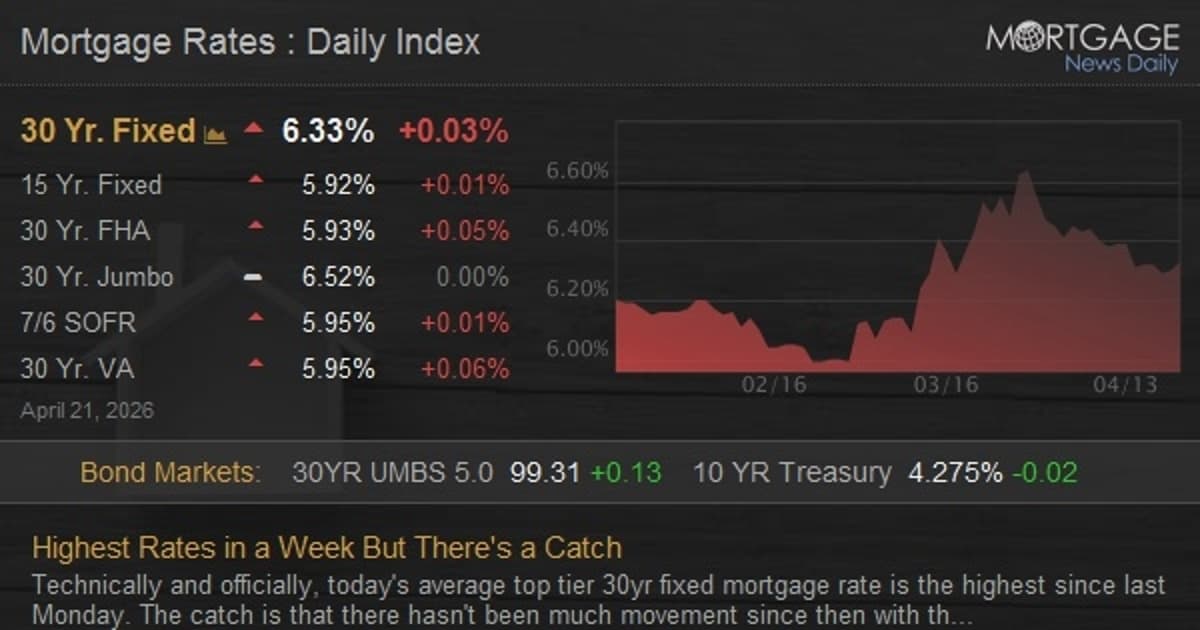
- •30‑yr fixed mortgage rate hit 6.33% on April 21, up 0.03%.
- •Weekly rate swing limited to 0.04 percentage points.
- •Strong jobs data added upward pressure on mortgage rates.
- •Market focus shifted to uncertain US‑Iran peace talks.
- •Elevated volatility expected as cease‑fire extension remains unclear.
Pulse Analysis
The 30‑year fixed mortgage rate climbing to 6.33% marks the highest level seen this week, a modest 0.03‑point increase but the steepest weekly jump since last Monday. The move reflects the latest round of strong employment reports that have kept inflation expectations elevated, prompting investors to price in a tighter monetary stance from the Federal Reserve. While the weekly range has been razor‑thin—only 0.04 percentage points—the upward tick signals that the housing finance market remains sensitive to macroeconomic data, especially labor market strength.
Borrowers now face higher monthly payments, which could dampen home‑buyer demand and curb the surge in refinancing activity that fueled the market last year. A rate above 6% typically squeezes affordability, pushing marginal buyers into the rental sector and slowing price appreciation in many metro areas. Lenders are likely to tighten underwriting standards as risk‑adjusted returns shrink, while builders may postpone new projects until financing costs stabilize. The ripple effect extends to consumer spending, as higher mortgage expenses leave less disposable income for other purchases.
Compounding the financial pressure is the lingering uncertainty surrounding the US‑Iran cease‑fire negotiations. Traders cite the diplomatic deadlock as a catalyst for heightened volatility, with bond yields and mortgage‑backed securities reacting to every diplomatic signal. Should the talks stall, risk‑off sentiment could push rates higher, while a breakthrough might provide a temporary reprieve. Market participants therefore watch both economic indicators and geopolitical developments closely, recognizing that the intersection of policy, employment data, and international affairs will shape mortgage pricing through the remainder of the quarter.
Highest Rates in a Week But There's a Catch
Comments
Want to join the conversation?