How Local Market Conditions Shape Housing Policy Outcomes: Terner Housing Policy Simulator
Key Takeaways
- •Simulator predicts multifamily development likelihood per parcel
- •Policy impact varies sharply across Denver, San Diego, Tucson
- •Local land values and zoning drive policy effectiveness
- •Tool helps cities set realistic housing supply expectations
- •Data-driven modeling reduces risk of ineffective reforms
Pulse Analysis
Housing shortages have become a defining challenge for U.S. cities, yet traditional policy analysis often treats markets as homogeneous. The Terner Housing Policy Simulator disrupts this approach by embedding granular data—ranging from parcel‑level land costs to city‑specific zoning constraints—into a predictive framework. By simulating how a given reform, such as upzoning or density bonuses, would alter developer behavior, the tool reveals that the same policy can yield dramatically different outcomes depending on local economics.
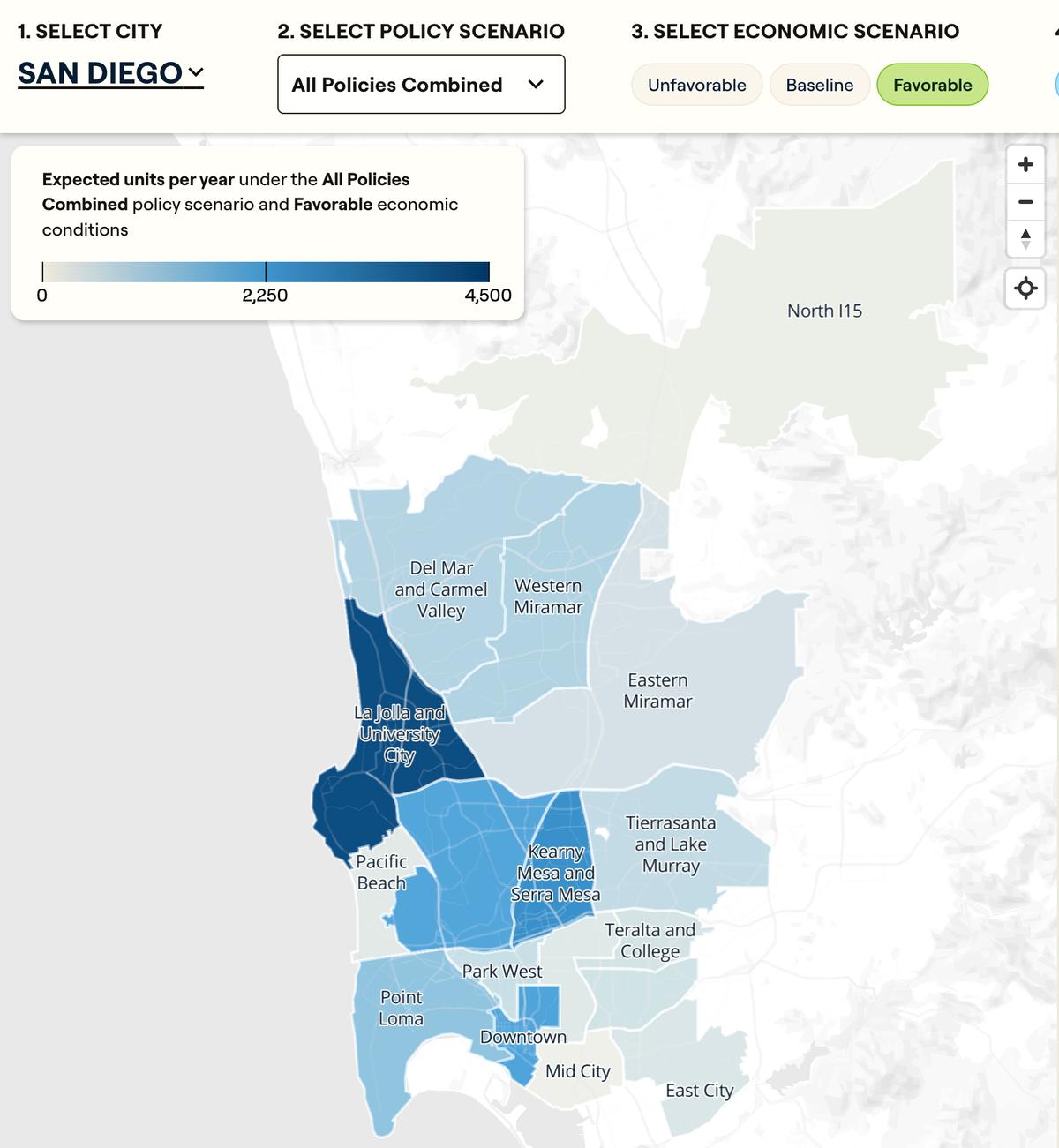
The simulator’s methodology blends econometric modeling with spatial analytics, drawing on thousands of inputs supplied by research partners. Users can adjust policy levers, explore sensitivity scenarios, and visualize projected unit counts across Denver, San Diego, and Tucson. This level of detail equips planners with evidence‑based expectations, allowing them to prioritize interventions that target the most binding constraints—whether it’s high land prices in San Diego or restrictive zoning in Tucson. Moreover, the public‑facing visualization democratizes access, enabling stakeholders from city councils to community groups to engage with the data.
Looking ahead, the platform’s modular design positions it for expansion to additional metros, fostering a national ecosystem of localized housing policy testing. As municipalities adopt data‑driven decision‑making, the simulator could become a benchmark for measuring policy efficacy, reducing the trial‑and‑error costs that have plagued past reforms. However, users must remain mindful of model assumptions and data quality, ensuring that projections are complemented by on‑the‑ground insights. In sum, the Terner simulator offers a pragmatic bridge between academic research and actionable urban policy.
How Local Market Conditions Shape Housing Policy Outcomes: Terner Housing Policy Simulator
Comments
Want to join the conversation?