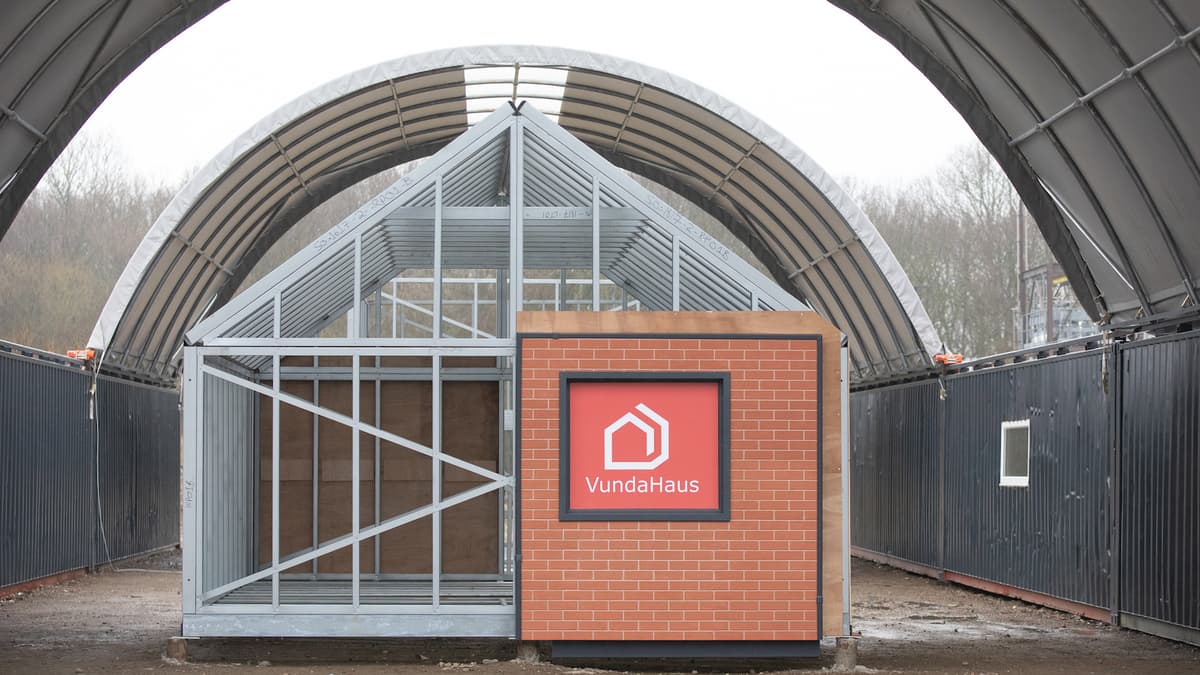
Video | Home Built in 10 Days Using ‘Factory-in-a-Box’ System
•March 3, 2026
0
Key Takeaways
- •Factory-in-a-box builds home in ten days.
- •On‑site modular factory eliminates transport logistics.
- •Weather‑shielded canopy protects construction from delays.
- •System designed for rapid, scalable affordable housing.
- •Partnership leverages Sheffield’s advanced manufacturing expertise.
Summary
University of Sheffield researchers, together with Seismic Group, have showcased a ‘factory‑in‑a‑box’ modular system that can construct a complete home in just ten days. The approach deploys a rapidly assembled, weather‑shielded manufacturing unit directly on the building site, eliminating traditional off‑site logistics and weather‑related delays. Funded by the South Yorkshire Mayoral Combined Authority, the demonstrator aims to prove that high‑quality, affordable housing can be delivered at scale. The next phase will involve creating a local supply chain with authorities and housing associations to enable broader rollout.
Pulse Analysis
The United Kingdom faces a pressing need for millions of new homes, a challenge amplified by rising construction costs and labor shortages. Traditional off‑site modular construction has helped, but it still relies on transporting large panels and components, which adds complexity and vulnerability to supply chain disruptions. Sheffield’s factory‑in‑a‑box concept reframes modularity by bringing the factory to the site, turning the construction zone itself into a controlled manufacturing environment. This shift reduces dependence on external logistics and aligns production timelines directly with on‑site progress, a critical advantage in a market where speed and reliability are paramount.
Technically, the system consists of a prefabricated, weather‑proof canopy that houses all necessary manufacturing equipment. Once erected, the canopy creates a stable micro‑climate, allowing workers to assemble structural elements, install services, and finish interiors without interruption from rain, wind, or temperature swings. By integrating advanced manufacturing methods—such as robotic assembly and digital design—into the on‑site process, the demonstrator achieved a fully habitable dwelling in ten days, a timeline that rivals or surpasses many conventional builds. The approach also promises lower carbon footprints, as reduced transportation and waste translate into measurable sustainability gains.
If scaled, this model could reshape the housing supply chain, encouraging regional hubs that combine academic research, industry expertise, and local authority support. The involvement of the South Yorkshire Mayoral Combined Authority signals policy interest in replicating the model across other regions, potentially creating a network of mobile factories that respond to localized demand. For developers, the promise of faster delivery and fewer weather‑related setbacks could improve project financing and risk profiles. Ultimately, the factory‑in‑a‑box may become a cornerstone of the UK’s strategy to meet its ambitious housing targets while fostering innovation in construction technology.
Comments
Want to join the conversation?