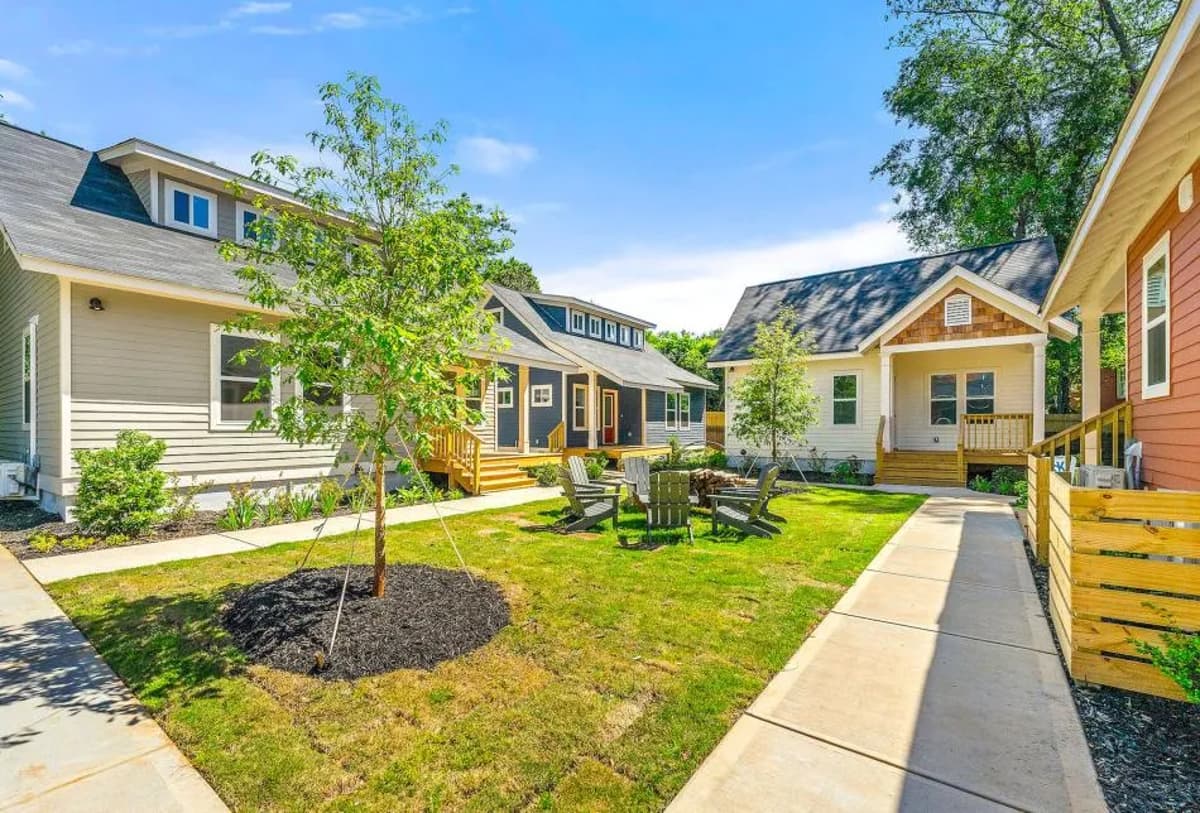
You Have More Land Than You Think
Key Takeaways
- •Five units fit on a 0.15‑acre lot (50 × 135 ft)
- •Eleven units fit on a 0.31‑acre double lot with central courtyard
- •Smaller homes lower costs, spreading land expense across more residents
- •Faith‑based groups can repurpose underused fields for affordable housing
- •Design focus on beauty and shared green space boosts resident well‑being
Pulse Analysis
Infill development has become a cornerstone of urban housing strategy, especially as cities grapple with rising land prices and a shortage of affordable units. Faith‑based institutions, which often sit on sizable but underused parcels, are uniquely positioned to contribute to this solution. By applying compact studio, one‑ and two‑bedroom prototypes, congregations can achieve densities comparable to multi‑family projects while preserving the character of their neighborhoods. This approach not only stretches limited budgets but also aligns with broader policy goals aimed at reducing homelessness and fostering mixed‑income communities.
The Homelessness & Incremental Housing Toolkit provides concrete illustrations of what is possible on modest sites. A single 0.15‑acre lot—roughly the size of a typical church parking pad—can accommodate five self‑contained units, while a doubled‑size 0.31‑acre parcel supports eleven units arranged around a central courtyard. These layouts prioritize natural light, private outdoor space, and a communal green area that mitigates the perception of crowding. Such design tactics demonstrate that even the smallest footprints can deliver livable, dignified housing when planners think vertically and use shared amenities wisely.
For congregations, the benefits extend beyond financial efficiency. Integrating beautiful, tree‑lined courtyards and thoughtful landscaping creates a sense of place that resonates with both residents and worshippers, reinforcing the mission of service and stewardship. Moreover, by generating affordable housing on existing land, churches avoid costly land purchases and can leverage tax‑exempt financing or charitable grants. This model offers a replicable blueprint for other faith‑based and nonprofit landowners seeking to address housing scarcity while enhancing community cohesion.
You Have More Land Than You Think
Comments
Want to join the conversation?