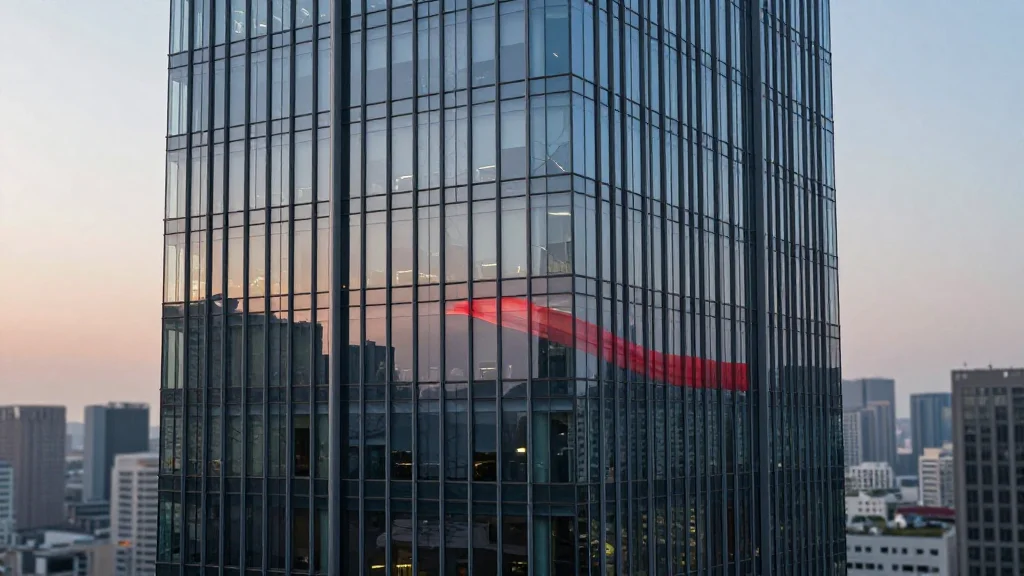
191 Peachtree Loan Flagged Due To Dwindling Tenants And Revenue
Companies Mentioned


Why It Matters
The loan’s distress signals tightening credit conditions for office‑centric CMBS assets and underscores the refinancing challenge for owners of under‑occupied skyscrapers in a softening market.
Key Takeaways
- •191 Peachtree occupancy fell to 58% from 84% in 2024
- •Cash flow dropped over 30% as major tenants left
- •$80M CMBS tranche placed on watchlist, loan matures Nov 2026
- •Refinancing risk heightened by higher commercial mortgage rates (5‑7%)
- •Downtown Atlanta office market lags Midtown, limiting tenant demand
Pulse Analysis
The 191 Peachtree Tower’s financial woes illustrate how a once‑prime downtown asset can quickly become a liability when tenant demand evaporates. Acquired at a premium when the building was over 90% leased, the property now generates just $30.7 M in revenue, down from $38.7 M a decade ago. The loss of anchor tenants like Deloitte and Ogletree Deakins triggered a cascade of vacancies, driving occupancy to a historic low of 58% and compressing rents to $29.40 per square foot—well below the downtown Class‑A average of $32.50. This performance deterioration forced Morningstar Credit to flag the $80 M CMBS tranche, while Fitch’s downgrade of the broader Morgan Stanley pool reflects systemic stress in the office‑focused CMBS market.
Compounding the asset‑specific challenges is a wave of CMBS maturities projected to exceed $100 B in 2026, with many loans unlikely to refinance at current market rates. Commercial mortgage rates have risen to the high‑5%‑to‑7% range, far above the 3.73% cost of the original 2016 loan. As a result, owners like Banyan Street face a narrow window to secure new financing before the November 2026 maturity, especially given lenders’ heightened scrutiny of cash‑flow stability. The $4.5 M planned lobby renovation and signage incentives aim to attract a marquee tenant, but the broader market shift toward Midtown’s stronger absorption rates makes a quick turnaround uncertain.
For investors and lenders, the 191 Peachtree case serves as a cautionary tale about over‑reliance on legacy office assets in secondary submarkets. The downtown Atlanta office segment continues to lag, with a net negative absorption of 93 K SF in Q1, while Midtown recorded a robust 345 K SF gain. Stakeholders must weigh the cost of capital, potential value‑add renovations, and the likelihood of tenant migration when assessing refinancing prospects. In an environment where half of 2026‑due CMBS loans may default, disciplined underwriting and proactive asset repositioning will be critical to preserving portfolio health.
191 Peachtree Loan Flagged Due To Dwindling Tenants And Revenue
Comments
Want to join the conversation?
Loading comments...