3 Human-Centric Office Design Strategies That Win Back Employees
Key Takeaways
- •Employees value purposeful, quiet, and flexible office zones.
- •Neighborhood layouts balance collaboration with reduced noise.
- •Quiet cars use soft seating and warm lighting for focus.
- •Family suites support working parents, boosting loyalty.
- •Human‑centric design correlates with higher attendance rates.
Pulse Analysis
Hybrid work has reshaped expectations, making the traditional office feel optional rather than essential. Yet data from Gensler’s 2026 Workplace Survey reveals that employees will choose an office when it aligns with personal comfort, technology needs, and a sense of belonging. Leaders who ignore these preferences risk higher turnover and lower engagement, especially in tech sectors where talent scarcity amplifies the cost of disengagement. By treating the office as a strategic asset rather than a cost center, companies can leverage physical space to reinforce culture and productivity.
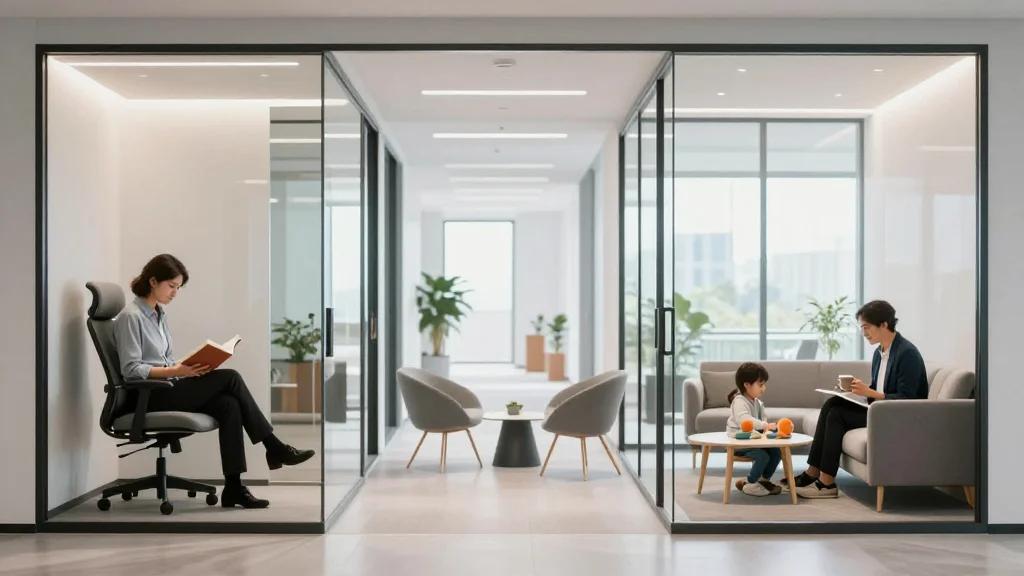
Neighborhood clusters, quiet‑car zones, and family suites each address a distinct pain point. Neighborhoods break up open‑plan chaos into smaller, purpose‑driven zones that foster spontaneous collaboration while curbing noise. Quiet cars employ sound‑absorbing materials, soft seating, and warm lighting—often around 2700K—to mimic home‑like tranquility, boosting focus and well‑being. Family suites provide on‑site childcare‑adjacent workstations, reducing parental stress and signaling a commitment to work‑life integration. Early adopters such as McAfee’s Frisco hub report measurable lifts in attendance and employee sentiment, underscoring the ROI of empathetic design.
The broader implication is clear: office design is now a talent‑management lever. Companies that embed flexibility, acoustic control, and family‑friendly amenities can differentiate themselves in a competitive hiring market, improve retention metrics, and drive higher per‑employee output. Executives should audit current spaces, gather granular employee feedback, and pilot at least one human‑centric element before scaling. As the line between home and office blurs, the workplaces that succeed will be those that anticipate and accommodate the full spectrum of employee needs.
3 Human-Centric Office Design Strategies That Win Back Employees
Comments
Want to join the conversation?