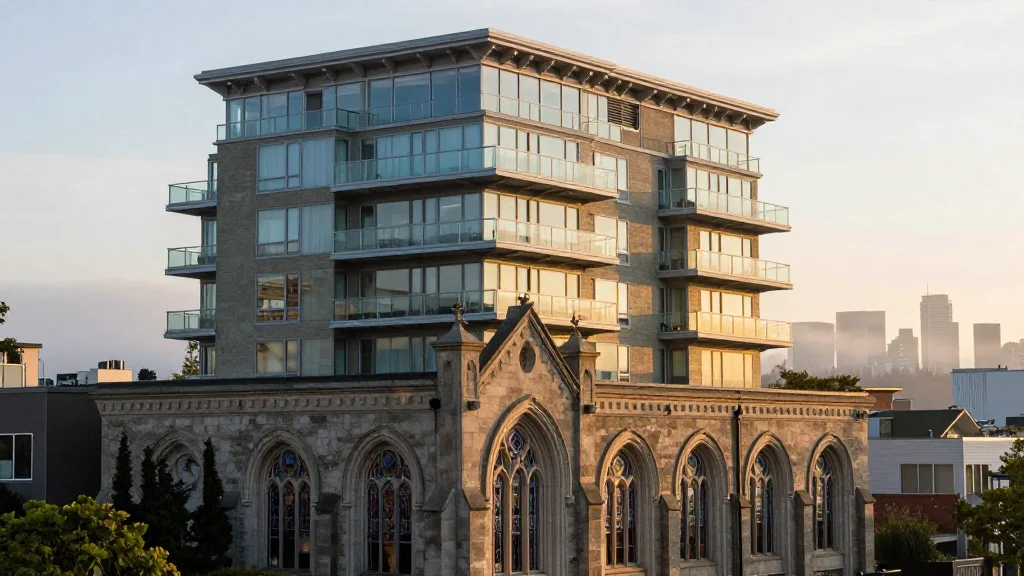
84-Unit St. Luke’s Apartments Opens in Ballard, Preserving Historic Church Site

Why It Matters
The addition of 84 affordable units directly addresses Seattle’s ongoing housing affordability crisis, offering low‑income families a stable place to live in a high‑cost market. By preserving the historic church façade, the project also demonstrates that heritage conservation and modern development are not mutually exclusive, potentially reshaping how cities approach vacant historic properties. If the model proves successful, it could inspire other municipalities to revisit underutilized historic sites, turning them into community assets rather than demolition candidates. This approach could accelerate the delivery of affordable housing while maintaining the cultural fabric of neighborhoods, a balance that many urban areas struggle to achieve.
Key Takeaways
- •84 affordable housing units opened in Ballard, Seattle
- •Eight‑story building constructed on historic St. Luke’s Church site
- •Units priced for households earning up to 80 % of area median income
- •Project retains key architectural elements of the original church
- •Development aligns with Seattle’s 2025 affordable‑housing targets
Pulse Analysis
Seattle’s housing market has long been characterized by soaring rents and a chronic shortage of low‑income units. The St. Luke’s Apartments development is noteworthy not just for the number of units it adds, but for the method of delivery. By integrating historic preservation into the development pipeline, the city sidesteps the often‑contentious debate between preservationists and developers. This collaborative framework could become a template for other high‑density cities where land is scarce and historic structures are abundant.
From a policy perspective, the project illustrates the practical impact of inclusionary zoning mandates. The city’s ability to fast‑track permits for a development that meets affordability criteria signals a shift toward more proactive facilitation of low‑income housing. However, the modest scale—84 units—highlights that while such projects are valuable, they alone cannot close the affordability gap. Scaling the model will require consistent funding streams, clear preservation guidelines, and community buy‑in.
Looking ahead, the success of St. Luke’s will be measured by occupancy rates, resident satisfaction, and the durability of the preserved historic elements. If the development delivers on its promises, it could catalyze a wave of similar projects, turning Seattle’s historic inventory into a reservoir of affordable housing potential. For investors and developers, the project signals that heritage‑sensitive builds can be financially viable, especially when paired with public incentives and streamlined approvals.
84-Unit St. Luke’s Apartments Opens in Ballard, Preserving Historic Church Site
Comments
Want to join the conversation?
Loading comments...