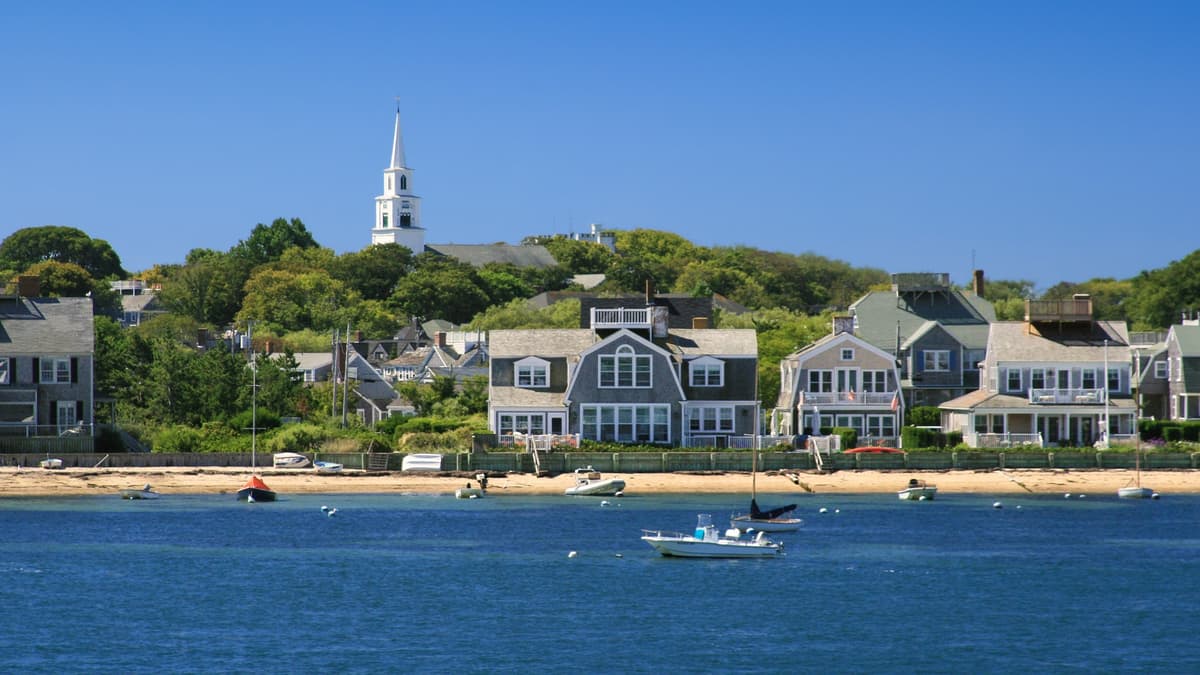
A $3 Million Nantucket House Is Being Given Away for Free—With One Small Catch
Why It Matters
The program turns costly demolition into valuable housing, easing landfill pressure while offering investors a low‑cost entry into Nantucket’s ultra‑expensive real‑estate market. It also highlights how land scarcity is reshaping property strategies on high‑priced coastal islands.
Key Takeaways
- •Nantucket’s Demolition Delay Bylaw lets owners give away houses.
- •140 Surfside Rd home must be moved within 180 days.
- •Moving costs $150k‑$500k, cheaper than new island homes.
- •Land averages $1.65 million per 0.46 acres, fueling demand.
- •Local movers shift 15‑20 homes yearly, respecting seasonal limits.
Pulse Analysis
Nantucket’s real‑estate market has long been defined by scarcity; with virtually no undeveloped land, the island’s median home price hovers around $4.4 million. To mitigate the environmental impact of demolition, the town enacted the Demolition Delay Bylaw in 1997, allowing owners to transfer structures rather than consign them to the landfill. This policy has evolved into a quasi‑auction system where houses, like the 1,736‑sq‑ft Colonial at 140 Surfside Road, are offered free of charge—provided a buyer can relocate the building within a 180‑day window. The arrangement preserves historic architecture and creates a unique entry point for investors seeking a foothold on the island.
Economically, the free‑house model reshapes the cost calculus for prospective buyers. While moving a home costs $150,000 to $500,000, that expense is still markedly lower than acquiring a comparable new build, which can exceed $5 million once land premiums are added. For developers, the ability to acquire a structure and the accompanying acre for roughly $1.85 million—land plus moving costs—offers a compelling value proposition. This dynamic fuels a niche market where investors purchase land, wait for a free‑house notice, and then either relocate the building or demolish it for a new, higher‑margin project, intensifying competition for limited parcels.
The logistical side is equally intricate. Local firms such as Toscana Corp. move 15‑20 homes each year, contending with narrow roads, historic district reviews, and seasonal restrictions that confine moves to September‑June. Relocation can take three to twelve months, depending on route complexity and foundation work. Environmental considerations also play a role; moving homes off eroding bluffs reduces landfill waste and preserves the island’s fragile ecosystem. As wealth concentration grows and land becomes ever more precious, Nantucket’s free‑house tradition may expand, prompting other coastal communities to adopt similar policies to balance preservation, affordability, and sustainability.
A $3 Million Nantucket House Is Being Given Away for Free—With One Small Catch
Comments
Want to join the conversation?
Loading comments...