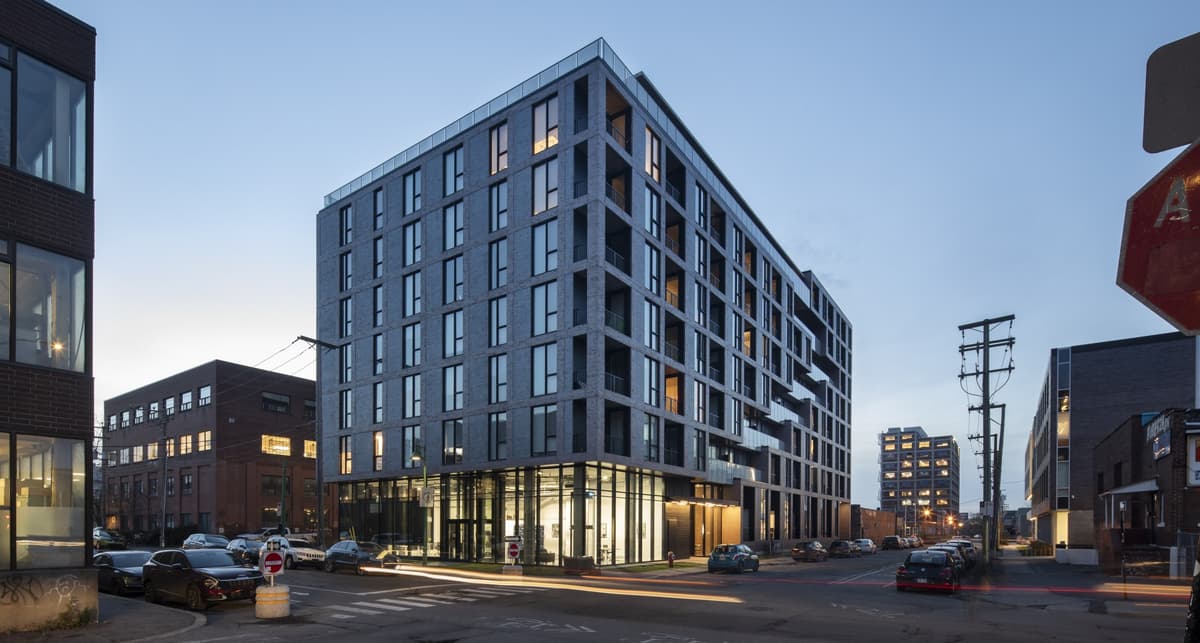
A Residential Building that Honours Its Industrial Past
Why It Matters
The development demonstrates how adaptive reuse can meet housing demand without erasing cultural identity, setting a precedent for sustainable urban densification across Canadian cities.
Key Takeaways
- •Vivre 2 converts a former industrial site into 120 residential units.
- •Ground‑level common spaces along the alley foster community interaction.
- •Two shades of clay brick echo the neighborhood’s historic warehouse grid.
- •Project earned the 2026 Prix d’Excellence d’Architecture du Québec.
- •Design boosts residential density while preserving the area’s industrial character.
Pulse Analysis
Montreal’s Outremont district, once dominated by brick warehouses and light‑industrial factories, is undergoing a quiet transformation driven by rising housing demand and a city‑wide push for higher density. Adaptive‑reuse projects like Vivre 2 illustrate a broader shift in Canadian urban planning, where municipalities encourage developers to retrofit existing sites rather than expand outward. This approach preserves the historical fabric of neighborhoods, reduces infrastructure strain, and aligns with sustainability goals by minimizing demolition waste and embodied carbon.
Vivre 2’s architecture deliberately references its industrial past. ACDF Architecture selected two complementary shades of clay brick: one highlights the structural grid reminiscent of old warehouses, while the other fills the interstitial spaces, creating a rhythmic façade. By situating shared amenities—gym, lounge, and co‑working areas—along the alley, the design invites street‑level activity, enhancing safety and fostering a sense of community among residents. Such human‑scaled interventions contrast with monolithic high‑rise towers, offering a more integrated urban experience.
The project’s recognition with the 2026 Prix d’Excellence d’Architecture underscores the market’s appetite for heritage‑sensitive development. For investors, Vivre 2 signals that preserving cultural context can coexist with profitable density gains, potentially commanding premium rents. Cities across North America can look to this model when addressing affordable‑housing shortages in legacy industrial zones, balancing economic imperatives with the preservation of place‑based identity.
A residential building that honours its industrial past
Comments
Want to join the conversation?
Loading comments...